
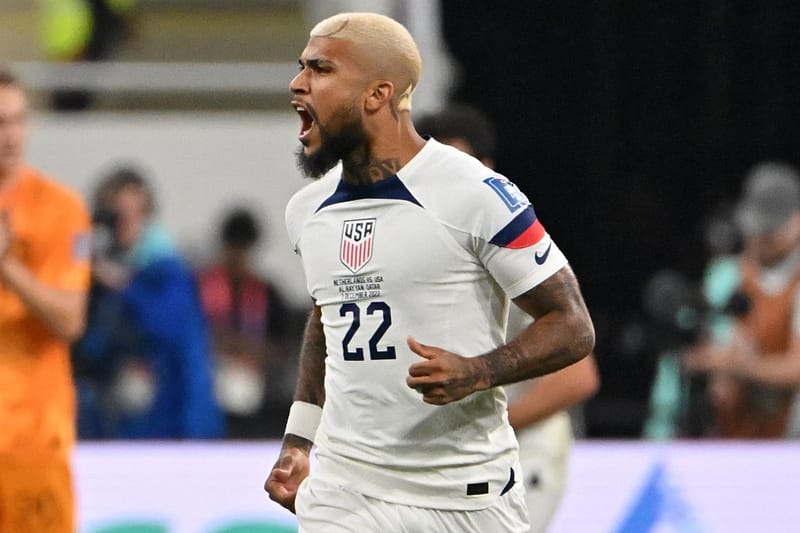

The United States did not need a perfect performance against Australia to prove Mauricio Pochettino’s plan is working.
It needed a mature one.
That is exactly what arrived on June 19, 2026, in Seattle, where the USMNT beat Australia 2-0 in its second Group D match and secured a place in the FIFA World Cup 2026 Round of 32 with one group game still left to play. The goals came through an 11th-minute Cameron Burgess own goal forced by Folarin Balogun’s pressure and a 43rd-minute strike from Alex Freeman, giving the co-hosts a second straight win after their 4-1 opening victory over Paraguay.
This was not simply another home-soil celebration. It was evidence that the United States is starting to show shape, purpose, and control under a coach hired to make those exact traits visible when the world is watching.
Pochettino’s Plan Is No Longer Theoretical
Before the tournament, Pochettino’s biggest task was not talent identification. The U.S. player pool had enough recognizable names, enough European-based experience, and enough athletic range to compete.
The issue was structure.
Could this team press without becoming reckless? Could it control momentum without slowing itself down? Could it survive a World Cup game without Christian Pulisic carrying the entire emotional weight of the attack?
Against Australia, those questions started to receive serious answers. The official FIFA match report credited the U.S. with overwhelming Australia and moving into the knockouts with a game to spare, a phrase that matters because American teams have rarely made the World Cup group stage look this calm.
That calm is new.
The U.S. did not just run. It managed. It pressed in moments, protected spaces, and found enough attacking variety to keep Australia from settling into a comfortable defensive rhythm.
The Two-Striker Look Changed The Conversation
One of the most revealing parts of the win was Pochettino’s attacking setup.
With Pulisic sidelined, Pochettino paired Ricardo Pepi and Folarin Balogun, creating a front line that gave the United States more central presence than usual. Pepi made his first World Cup start, and Balogun’s early pressure helped create the opening goal when Burgess turned the ball into his own net.
That matters tactically.
For years, the U.S. attack has often felt dependent on wide moments, transitional bursts, or Pulisic’s individual gravity. Against Australia, the threat came through a more collective front-line structure. Pepi’s movement occupied defenders. Balogun’s pressure created panic. Freeman’s late runs added another layer.
The result was an attack that looked less predictable.
New York Post reporting on Ricardo Pepi’s World Cup resurgence highlighted how his recovery from injury struggles and his partnership with Balogun gave Pochettino a different kind of attacking option. For a team trying to build depth across a long tournament, that is no small development.
Alex Freeman’s Moment Was A System Moment
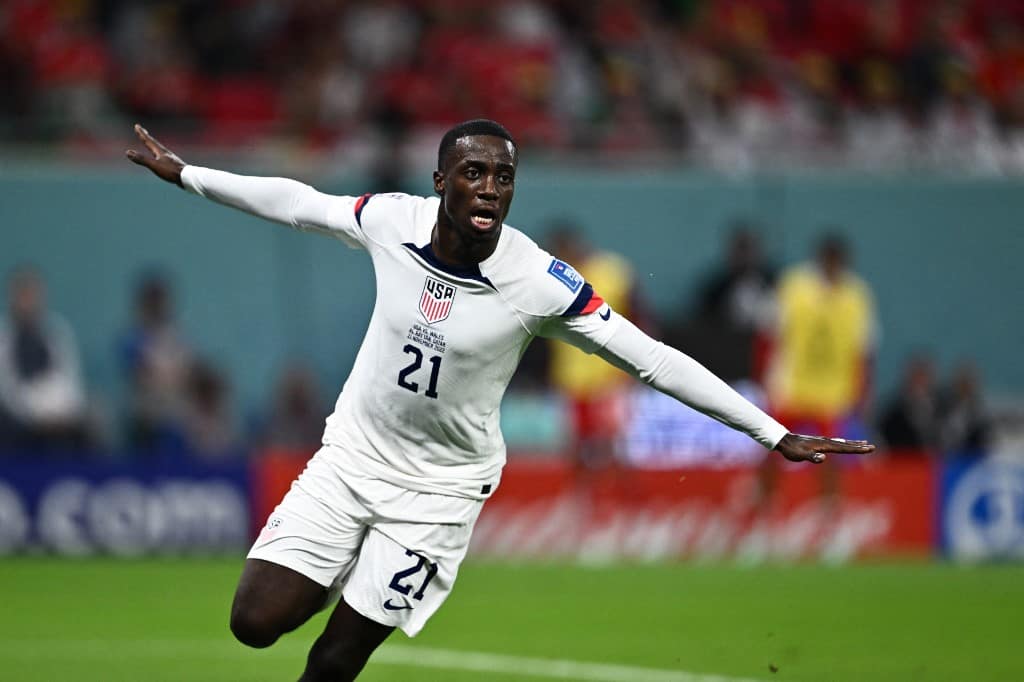
Alex Freeman’s 43rd-minute goal will be remembered as a personal breakthrough, and rightly so.
U.S. Soccer noted that Freeman became the sixth-youngest American to score in a FIFA World Cup, an achievement that instantly pushes him into the national-team spotlight. Yet the goal also said something about the team’s structure.
Freeman did not score because the U.S. was chasing chaos. He scored because the hosts kept pressure on Australia, recycled attacks, and forced the Socceroos to defend repeated actions before halftime. That is where Pochettino’s fingerprints are starting to show.
The U.S. is creating goals from sequences rather than waiting for isolated magic.
That distinction is central to any serious World Cup run. Individual brilliance can win a match. Repeatable patterns can carry a team through a tournament.
| Tactical Area | What USA Showed vs Australia | Why It Matters |
|---|---|---|
| Pressing | Balogun forced early pressure that led to the own goal | Creates scoring chances without long buildup |
| Central Attack | Pepi and Balogun gave Australia two reference points | Reduces reliance on wide isolation |
| Fullback Timing | Freeman attacked space aggressively | Adds a surprise scoring threat |
| Game Management | U.S. protected the lead after halftime | Shows tournament maturity |
The U.S. Soccer match recap framed the win as a knockout-clinching result with one group match remaining. That is the headline. The deeper point is how the U.S. got there.
Game Management Is Becoming The Real Sign Of Growth
The U.S. has produced exciting World Cup moments before.
What it has not always produced is control.
Against Australia, the second half was not flawless. The Socceroos pushed more physically, found moments of urgency, and asked questions of the American back line. That part matters because the knockout stage will not be clean. No serious World Cup path is.
The growth came in the response.
The U.S. did not lose its shape. Matt Freese kept the clean sheet. The midfield stayed connected enough to prevent the game from turning into a track meet. Pochettino’s team understood that a 2-0 lead in tournament football does not require style points. It requires discipline.
That is how contenders behave.
The win also arrived without Pulisic, which gives the result added weight. If the United States can win World Cup matches without its most famous attacker available, the rest of the tournament starts to look different.
Australia Exposed The Test Still Ahead
Australia did not make this easy emotionally, even if the scoreline looked comfortable.
The Socceroos entered the match after a 2-0 win over Turkey and had every reason to believe they could turn Group D into a more complicated race. Tony Popovic’s side struggled early, then pushed harder after halftime, testing the U.S. physically and forcing moments of defensive concentration.
That is the lesson.
The United States is improving, but it is not beyond stress. Pochettino will know that better than anyone. A cleaner opponent with more elite attackers could punish the loose moments Australia could not convert.
ESPN’s USA-Australia game analysis included Pochettino’s reminder that good performances and wins help, but the team still has to keep belief and maintain standards. That tone is right. The U.S. has earned optimism. It has not earned comfort.
There is a difference.
Group D Now Looks Like A Confidence Engine
Through two matches, the U.S. has six points, six goals scored, and one goal conceded.
That is a strong tournament opening under any circumstances. For a host nation carrying the pressure of American soccer’s biggest stage, it is even more valuable.
The 4-1 win over Paraguay gave the team momentum. The 2-0 win over Australia gave it proof. The June 25 match against Turkey in Los Angeles now becomes less about survival and more about sharpening details before the knockout round.
That is a powerful shift.
Teams that clinch early gain breathing room. They can manage minutes, refine partnerships, and avoid the emotional drain of a must-win final group match. Pochettino may still demand urgency, but the table has given him options.
For a program often judged by whether it can meet the moment, this is the kind of start that changes the national mood.
Pochettino’s USMNT Is Becoming More Than A Host Story
There was always going to be noise around the U.S. as a World Cup co-host.
The stadiums, fan culture, travel scale, and national attention made that inevitable. Yet the soccer still had to hold up.
Now it is starting to.
This team is no longer interesting only because it is playing at home. It is interesting because Pochettino appears to be building a side with multiple attacking plans, a stronger tournament temperament, and enough confidence to treat knockout qualification as a step rather than a ceiling.
That connects naturally to the larger World Cup conversation around American soccer’s cultural rise and global visibility. In WorldFootballIdol’s broader look at World Cup star power, the spotlight sat on how football icons shape attention across platforms. The U.S. now has a chance to create a different kind of visibility: one built through results.
Winning changes perception faster than marketing ever can.
The Knockout Question Is Now About Ceiling
The United States has already shown it can handle its group.

The next question is how high the ceiling really is.
Can Pepi and Balogun keep functioning together against more compact defensive blocks? Can Freeman’s attacking timing survive against elite wide players? Can the midfield control matches when the opponent has more technical quality? Can the back line handle long stretches without possession?
Those are not criticisms. They are the questions ambitious teams invite.
CBS Sports noted after the match that Pepi pressed Australia’s back line throughout the game, with Sergino Dest and Weston McKennie combining often on the right side to trouble Australia’s defensive shape. That kind of USMNT tactical analysis points to a team with developing patterns, not just good vibes.
That is why the Australia result matters.
It showed signs of a plan becoming repeatable.
Why This Win Could Age Well
Some World Cup wins fade quickly.
Others become reference points.
The 2-0 victory over Australia has a chance to become the latter because it brought together several things the U.S. needed to show at once: tactical flexibility, early pressure, goals from outside the obvious stars, defensive concentration, and composure after halftime.
That combination is more meaningful than the score alone.
Pochettino’s team still has tougher tests ahead. The knockout stage will bring opponents with sharper finishers, deeper benches, and greater tournament experience. The U.S. will not be able to rely on home energy alone.
Yet the Australia match showed that this team may not need to.
It has a coach with a clear plan, young players seizing specific roles, and enough attacking variety to survive beyond the first wave of World Cup emotion.
The U.S. did not just beat Australia.
It made the idea of a serious American run feel less like hope and more like a football argument.