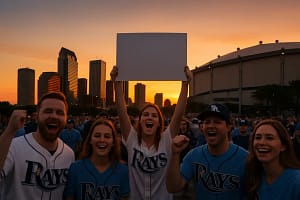

The United States wanted the 2026 World Cup to become a competitive breakthrough for the USMNT. Instead, the run ended in familiar pain: a 4-1 Round of 16 loss to Belgium in Seattle on July 6. That scoreline made the football argument difficult to soften. Mauricio Pochettino’s team reached the expanded knockout stage, won a Round of 32 match, then crashed out before the quarterfinals. On the pitch, it was not the leap American soccer wanted.
The larger tournament story is different. America’s World Cup exit did not erase what the past month has shown FIFA, global clubs, sponsors, visiting supporters, and host cities. The United States has become one of the most powerful destinations in world football, not because the USMNT solved its knockout-stage problem, but because the country proved it can turn soccer into a national-scale stadium, tourism, media, and fan-culture event.
Why The USMNT Exit Hurt More Than Past Knockout Losses
The U.S. did not enter this tournament as a plucky outsider. It entered as a host nation with a high-profile manager, a deeper player pool, a stronger club-career generation, and a public expectation that home soil had to mean more than respectable survival. The 4-1 loss to Belgium cut against that ambition.

Belgium’s win in Seattle carried echoes of 2014, when the Red Devils eliminated the U.S. in extra time after Tim Howard’s famous 16-save performance. This time, the story was less about American resistance and more about the gap that still appears when the U.S. faces a sharp European opponent at knockout speed. World Football Idol’s preview of USA vs. Belgium in Seattle framed the match as a chance to move beyond the memory of heroic defeat. The result showed how hard that step remains.
That failure matters. A host-country World Cup can create a rare window for a national team. Stadiums are friendly. Travel is familiar. Crowds are loud. Media attention is enormous. The U.S. had the kind of home platform that does not come often, and it still failed to reach the quarterfinals.
Yet the sport’s growth in America can no longer be measured only by whether the USMNT wins a Round of 16 match. That may frustrate fans who wanted a football-first verdict, but it reflects the full scale of the 2026 event. The U.S. team fell short. The American soccer market did not.
How The Tournament Separated Team Failure From Market Strength
One of the clearest signs of America’s new status is that FIFA’s long-term interest in the U.S. did not collapse with the USMNT’s elimination. The Guardian reported on July 9 that the United States has held talks with FIFA about hosting the 2029 Club World Cup. The same report cited 6.5 million tickets sold for the 2026 World Cup and projected revenues above $11 billion as part of the commercial case for keeping major FIFA properties in the American market.
That is a major signal. In many countries, a host nation’s early exit can drain energy from the tournament. In the United States, the event remains commercially and culturally valuable because the fan base is not limited to one national team. Mexican supporters, Colombian communities, Argentine fans, Brazilian travelers, Moroccan supporters, European club followers, neutral American sports fans, and tourists from across the world all help fill the tournament ecosystem.
The U.S. is not a single-team soccer market. It is a multi-community football marketplace.
That matters for FIFA because modern global tournaments are shaped by more than the match schedule. They need airports, broadcast hubs, sponsor infrastructure, premium hospitality, large venues, training sites, public fan spaces, security coordination, and cities able to absorb international crowds. The U.S. offers all of that at scale.
Why Host Cities Became The Real American Success Story
The 2026 World Cup has turned American host cities into football destinations in their own right. FIFA has emphasized that the expanded tournament includes 104 matches across 16 host cities, spread across the United States, Mexico, and Canada. That structure made the tournament more than a national-team competition. It became a continental infrastructure test.
Dallas, Seattle, Atlanta, Los Angeles, New York/New Jersey, Miami, Philadelphia, Boston, Houston, Kansas City, San Francisco Bay Area, and other host regions did not simply stage matches. They created civic soccer environments.
Dallas became a case study in mega-event logistics through its nine-match stadium workload and security operation. Atlanta drew attention for neutral-match crowd energy. Seattle became the stage for the USMNT’s elimination, but also for one of the tournament’s loudest American soccer environments. Los Angeles and New York/New Jersey remain central to the tournament’s closing commercial pull.
The host-city story is powerful because it shows America’s soccer identity spreading beyond traditional national-team windows. A World Cup match in the U.S. can be a Colombian cultural gathering, a Mexico road-trip event, a Morocco fan festival, a Brazil tourism week, or a neutral sports spectacle for locals who simply want to experience the biggest tournament in the world.
| American World Cup Strength | What 2026 Showed | Why It Matters After The USMNT Exit |
|---|---|---|
| Stadium Scale | Massive NFL venues became global football stages | FIFA can sell huge match inventory in the U.S. |
| Fan Diversity | Support came from many national communities | The tournament does not depend only on the USMNT |
| City Infrastructure | Host regions managed fan zones, transport, security, and media | The U.S. can support repeated FIFA events |
| Commercial Power | Ticket sales and revenue projections remained enormous | FIFA has incentive to return with future tournaments |
| Cultural Reach | Soccer mixed with American travel, food, and public-event culture | Visiting fans remember more than the match result |
That is why the U.S. exit is not the end of the story. The team lost. The host ecosystem kept growing.
How Fan Culture Made America Feel Like A Global Soccer Hub
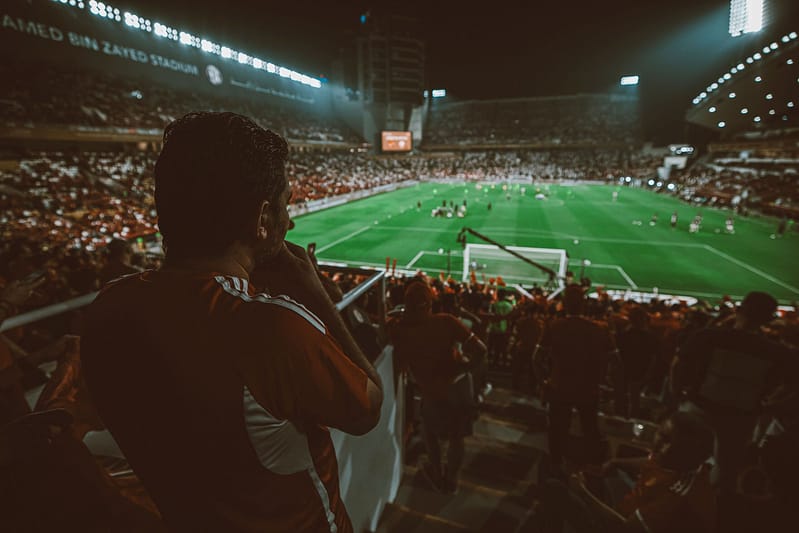
The 2026 World Cup has also shown that America’s soccer future is not only in stadium seating. Fan festivals, watch parties, pre-match gatherings, airport arrivals, merchandise culture, food stops, and citywide movement have become part of the tournament’s identity.
This is where the United States has a special advantage. American sports culture already understands tailgating, road trips, downtown event districts, big-screen public viewing, sponsor villages, and stadium-adjacent entertainment. The World Cup imported global football passion into that environment. The result has been a different kind of host-country atmosphere: not traditional in the European or South American sense, but massive, mobile, multicultural, and commercially powerful.
The scale also fits FIFA’s wider economic argument. A FIFA-WTO study estimated that the 2026 World Cup could help drive up to USD 40.9 billion in global GDP impact, along with social benefits and job creation tied to the tournament economy. Whether every projection is fully realized or not, those numbers show how FIFA views North America: not just as a collection of stadiums, but as an event economy.
For visiting fans, the U.S. World Cup experience has included more than football. It has included Walmart runs, Buc-ee’s stops, airport reunions, regional food, long drives, fan collectibles, public screens, and tourist routines built around matchdays. That may sound secondary, but these details matter. They turn a tournament trip into memory.
A country becomes a football destination when supporters want to travel there even if their team is not playing in the biggest match. America is starting to show that pull.
Why The 2029 Club World Cup Talk Matters
The reported U.S.-FIFA discussions around the 2029 Club World Cup are important because they show how FIFA may view America after 2026. The question is no longer whether the U.S. can host soccer. That question has been answered repeatedly through the 1994 World Cup, Copa América events, major friendlies, the 2025 Club World Cup, and now the 2026 World Cup.

The better question is whether the U.S. has become FIFA’s preferred commercial stage for expanded global events.
A 48-team Club World Cup would need exactly the things America offers: large stadiums, big media markets, international airports, sponsor-heavy environments, premium ticketing, broad immigrant fan communities, and a sports audience accustomed to traveling for major events. For European clubs, South American giants, Mexican clubs, MLS teams, and global sponsors, the U.S. is not just a neutral venue. It is a growth market.
That is the key distinction. Hosting the 2029 Club World Cup would not be charity for American soccer. It would be a business decision shaped by FIFA’s view of the United States as a football marketplace.
The USMNT’s Belgium loss may sting fans, but it does not weaken that marketplace. In some ways, it clarifies the split between two American soccer projects. One project is competitive: turning the national team into a true quarterfinal-or-better World Cup threat. The other is structural: making the United States a recurring home for elite global football. The first project remains unfinished. The second is already advanced.
Why The USMNT Still Has To Match The Country’s Stage
The danger for American soccer is becoming a great host without becoming a great national team. That tension is now unavoidable. The U.S. can sell tickets, build spectacles, and stage global events. The team still has to prove it can beat elite opponents when the bracket tightens.
Pochettino’s group showed pieces of progress during the tournament. Malik Tillman’s free kick against Bosnia and Herzegovina gave the U.S. a shared-attacking-identity moment. Folarin Balogun’s scoring form gave the team a genuine striker story. Ricardo Pepi’s role showed useful forward depth. Matt Freese and the back line had stretches of stability before Belgium exposed the gap.
That does not make the campaign a success. It makes it complicated.
The U.S. now has a national-team standard that must rise to match the platform around it. A country capable of turning the World Cup into a massive commercial and cultural event should not be satisfied with repeating the same knockout exit pattern. The environment is ready for a bigger team. The team has to grow into the environment.
What America’s Exit Really Proved
America’s exit proved two things at once. First, the USMNT is not yet where it wants to be. A 4-1 loss to Belgium at home is not a minor setback, and it cannot be spun into a tactical victory. It was a painful reminder that hosting power and playing power are not the same thing.
Second, the United States has become too important to global football to be judged only through one national-team result. FIFA sees the stadiums. Sponsors see the audience. Clubs see the market. Visiting fans see the cities. Broadcasters see the time zones, production capacity, and venues. Local organizers see soccer filling public space in ways that would have seemed much harder to imagine a generation ago.
That is the real lesson of 2026. The USMNT’s World Cup ended in Seattle. America’s global soccer role did not.
If FIFA’s future events continue moving toward bigger formats, larger revenue targets, and more citywide fan experiences, the United States will remain central to the conversation. The next challenge is making sure the national team becomes more than a host-country storyline. The country has already become a global soccer destination. Now the USMNT has to become a team worthy of that stage.