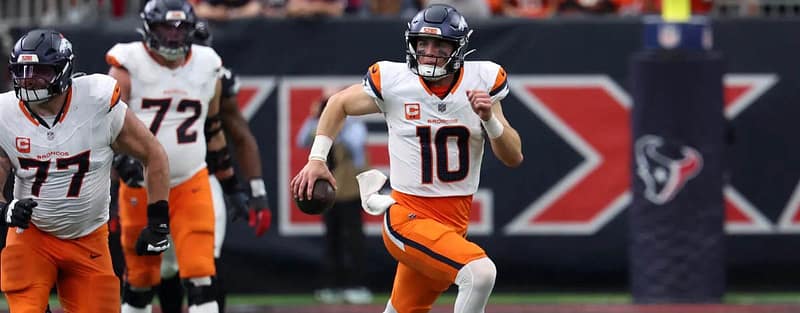

The Denver Broncos enter 2026 with the kind of problem every franchise says it wants: expectations. A year ago, Denver’s rise still felt like a developing story. Now the Broncos are coming off a 14-3 season, an AFC Championship Game appearance, and a division breakthrough that finally interrupted the Kansas City Chiefs’ long grip on the AFC West.
That changes the way training camp will be judged. The Broncos are no longer trying to prove they are interesting. They are trying to prove they are still in control.
That starts with Bo Nix’s right ankle. The injury he suffered in the AFC Divisional Round against the Buffalo Bills changed Denver’s playoff run, forced Jarrett Stidham into the AFC Championship Game, and turned the Broncos’ offseason into a recovery watch. Now, with rookies reporting July 22 and veterans July 28 at Broncos Park Powered by CommonSpirit in Englewood, Nix’s health may decide whether Denver’s 2025 leap becomes a lasting AFC West power shift or a one-year spike.
Why Bo Nix’s Recovery Is Denver’s First Camp Story
The Broncos have plenty of camp questions, but Nix’s ankle sits above all of them. A quarterback can say he feels ready. A coach can say the timeline looks good. A workout video can calm fans. Training camp is different. It tests the body through repetition, pocket movement, rollout timing, pressure reaction, scramble decisions, and the daily strain of returning from surgery.
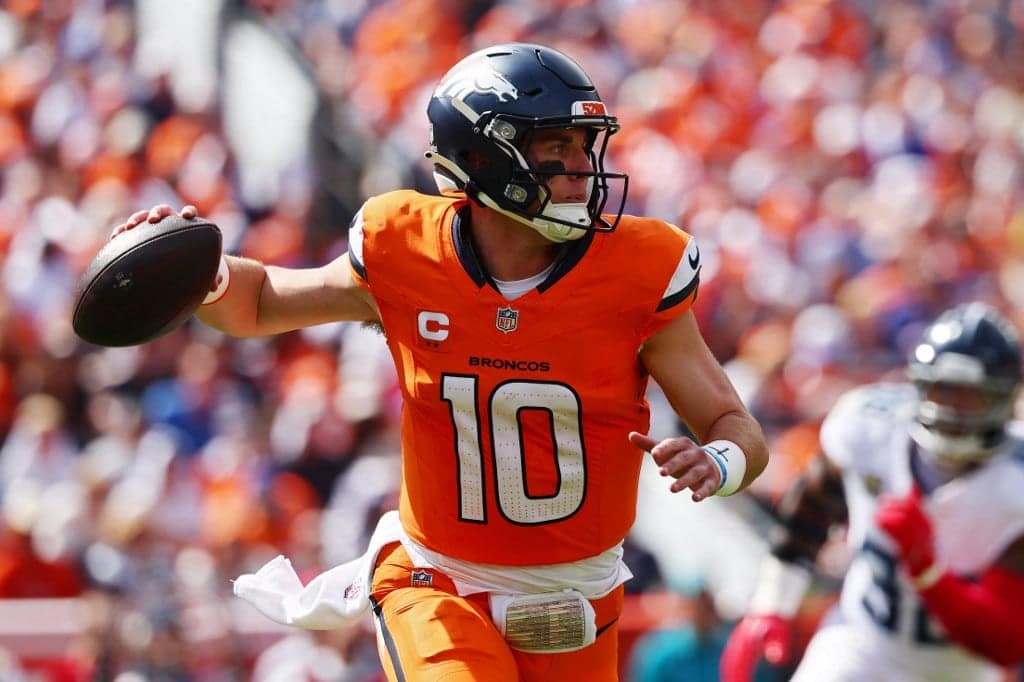
Sporting News reported that Nix had two separate procedures after fracturing his right ankle against Buffalo: one initial surgery after the injury and a follow-up operation in April to address bone spurs. The encouraging part for Denver is that Nix said doctors told him the ankle looked “good as new,” while Sean Payton said the quarterback would “clearly be ready in time for training camp” in the report on Bo Nix’s ankle recovery.
That matters because Nix’s game is not built only on standing still and distributing. He needs rhythm. He needs movement. He needs the ability to reset his base, escape a muddy pocket, carry out play-action, and threaten defenses with enough mobility that they cannot treat him like a stationary passer.
Denver does not need Nix to be reckless in July. It needs him to be normal. Normal movement, normal tempo, normal confidence, normal recovery after practice. That is what will decide whether the Broncos can spend camp building their offense or managing around their quarterback.
How Denver’s 14-3 Season Changed The Pressure
The Broncos’ 2025 record changed the whole conversation. NFL.com’s AFC West training camp preview listed Denver at 14-3, with Nix’s full return from injury as the first Broncos storyline. That is not an accident. A 14-win team cannot enter camp like a hopeful underdog. It enters as a team others are studying.
That makes Nix’s recovery a division issue, not just a medical issue. The Chiefs are trying to regain control. The Chargers are trying to sharpen their offense. The Raiders are building around rookie quarterback Fernando Mendoza and veteran Kirk Cousins. Denver’s edge is that it already proved it can win at a high level. But that proof is tied directly to Nix.
Without him, Denver’s playoff run changed immediately. With him, the Broncos looked like a team capable of controlling games through balance, efficiency, defense, and late-game confidence. That is why the injury still hangs over the 2026 camp story. The Broncos’ ceiling depends on whether Nix returns as the quarterback who helped drive a 14-win season, not merely as a cleared player wearing a red practice jersey.
World Football Idol’s earlier look at Bills vs. Broncos in the Divisional Round captured the scale of that playoff moment. Denver won the game, but the ankle injury changed what came next. Training camp is where the franchise starts trying to close that unfinished loop.
Why Davis Webb’s Promotion Raises The Stakes
Nix is not returning to the exact same offensive setup. Davis Webb, Denver’s former quarterbacks coach, has been promoted to offensive coordinator and play caller. That shift adds another test to camp because Nix is not only getting healthy. He is adjusting to a new voice in his helmet.
Heavy reported that Webb noticed a recent Nix workout video and that his promotion from quarterbacks coach to offensive coordinator includes play-calling duties. The same report noted that Webb has been learning under Payton, so the system should not feel unrecognizable, but Nix still has to adapt to a different rhythm and communication style through Denver’s Davis Webb transition.
That is a bigger deal than it might sound. Quarterback-play caller chemistry is built on timing and trust. The quarterback needs to know how quickly calls arrive, how the play caller thinks in second-and-medium, which answers are preferred against pressure, and how aggressive the offense will be when the game script changes.
Nix’s ankle recovery and Webb’s play-calling transition overlap. If Nix is fully comfortable physically, Denver can use camp to build chemistry. If he is limited, the Broncos lose valuable live-rep time at the exact moment they need their quarterback and new play caller to sync.
That is why July could decide so much. The Broncos are trying to defend a division title while changing one of the most important lines of communication in the building.
How Jaylen Waddle Changes Denver’s Passing Game
The Broncos did not just promote Webb and wait for Nix to heal. They also added Jaylen Waddle, giving Nix a speed element that can stretch defenses and open the field for Courtland Sutton. That addition changes the way Denver’s offense can look if Nix is healthy enough to operate the full menu.
The Raiders’ AFC West roundup identified Waddle as one of Denver’s major offseason additions and framed him as a fast, physical receiver acquired from Miami to give Nix another weapon after the ankle rehab became the team’s central storyline. That kind of weapon matters because speed does more than create deep shots. It changes spacing.
If Waddle threatens the top of the defense, Sutton gets cleaner intermediate access. Tight ends and backs can work underneath. Safeties have to declare intentions earlier. Play-action becomes more dangerous. Defenses become less comfortable crowding the line.
But again, it comes back to Nix’s ankle. Deep shots require lower-body confidence. Boot action requires movement. Quick resets require trust in the plant foot. Timing with Waddle cannot fully develop if the quarterback is protecting himself or if the staff is limiting movement-heavy periods.
| Broncos Camp Question | Why It Matters | What Denver Needs To See |
|---|---|---|
| Bo Nix’s Ankle Response | The offense depends on full movement and confidence | Normal pocket resets, rollout comfort, and no visible hesitation |
| Davis Webb’s Play Calling | New voice changes game flow | Fast communication and clear situational rhythm |
| Jaylen Waddle’s Fit | Denver needs more explosive spacing | Timing with Nix on deep, crossing, and motion concepts |
| Run-Game Balance | Protects Nix and stabilizes the offense | Efficient early-down work and cleaner play-action setup |
| AFC West Readiness | Denver is defending a division breakthrough | A camp that looks organized, not cautious |
That table shows why the ankle story is not isolated. It touches everything Denver wants to become in 2026.
Why The Broncos Cannot Just Manage Their Way Through Camp
There is a temptation with injured franchise quarterbacks to treat training camp like a protection exercise. Limit the reps. Avoid risk. Keep the quarterback clean. Let him build slowly. That approach makes sense medically, but it can become a football problem if the team needs offensive growth.
Denver needs Nix to practice enough to build. The Broncos are not simply trying to survive September. They are trying to stay ahead of Kansas City, Los Angeles, and Las Vegas. They are trying to prove their 14-3 record was the beginning of a window, not the product of one excellent season.
The team’s official training camp announcement said Denver will host 14 free and open practices beginning July 31, with capacity limited because of construction at Broncos Park Powered by CommonSpirit. The Broncos noted that practices will start at 10 a.m. and that the first open practice is July 31, followed by Back Together Weekend on Aug. 1 in their 2026 training camp schedule.
Those public practices will make Nix’s status visible. Fans and reporters will watch how he moves. They will watch whether he takes normal reps. They will watch whether the offense looks explosive or conservative. They will watch whether Waddle’s speed is actually being used or merely discussed.
That visibility can create pressure, but it can also give Denver a chance to calm the entire story. A normal-looking Nix in late July could shift the conversation from recovery to contention.
How The AFC West Makes Every Detail Louder
The AFC West is not a division where a team can drift through camp and figure things out later. The Chiefs still have Patrick Mahomes. The Chargers still have Justin Herbert and a changing offensive identity. The Raiders have a No. 1 overall quarterback storyline with Mendoza and a veteran bridge option in Cousins. Every team has a reason to believe its camp matters.
That is why Nix’s ankle recovery is so central to Denver’s divisional control. The Broncos’ 2025 rise did not happen in a vacuum. It happened in a division long shaped by Kansas City’s dominance. Staying on top means Denver has to show that last season was not only a Chiefs down year or a Broncos hot streak. It has to show that its quarterback, coaching, defense, and roster are sturdy enough to hold the top spot under expectation.
The Raiders’ official AFC West roundup described Nix’s rehab as Denver’s central storyline and noted that team officials emphasized his ahead-of-schedule progress. Even division rivals understand the stakes. Denver’s position in the AFC West looks different if Nix is fully healthy.
If he is moving well, Denver remains the division’s most complete immediate threat. If he is limited, the Chiefs, Chargers, and Raiders all gain oxygen before Week 1.
Why Mobility Is More Than Scrambling
Nix’s ankle recovery should not be reduced to whether he can run. Quarterback mobility is about much more than scrambling for first downs. It is about pocket movement, play-action mechanics, throwing base, and confidence under pressure.

A quarterback with a healthy ankle can subtly slide away from pressure without abandoning the play. He can reset after a fake. He can throw with proper weight transfer. He can keep his eyes up while moving laterally. He can make defenses respect the possibility of movement without needing to run often.
A quarterback protecting an ankle plays differently. He may drift. He may throw early. He may avoid stepping into deep passes. He may take fewer movement throws. He may become easier to rush because defenders sense limited escape options.
That is why Nix’s camp should be evaluated through details, not just participation status. Being “cleared” is not the same as being fully functional. Denver needs the functional version.
The Broncos do not need Nix to prove toughness. He already did that by reaching this point after two procedures. They need him to prove efficiency, comfort, and repeatability.
How Webb Can Help Protect Nix Without Shrinking The Offense
Webb’s first camp as play caller will be judged partly by how he balances protection and ambition. Denver cannot build an offense around fear of Nix’s ankle. It also cannot pretend the injury never happened.
That balance might show up in quick-game rhythm, motion, screens, play-action, running-back usage, and designed throws that create easy completions. It might also show up in how Webb sequences deep shots to Waddle and Sutton. The best version of the Broncos’ offense does not ask Nix to carry every snap physically. It asks him to distribute, manipulate, and attack at the right moments.
That is where Webb’s familiarity with Nix helps. As the former quarterbacks coach, he knows Nix’s habits, processing style, and comfort zones. As the new play caller, he now has to turn that knowledge into weekly structure.
The camp question is whether the offense looks smoother because of that continuity. If Nix and Webb look connected early, Denver’s ceiling rises. If they look like a quarterback and play caller still learning each other’s rhythm, the Broncos’ margin gets thinner.
Why Denver’s Defense Still Shapes The Conversation
Nix’s ankle is the headline, but Denver’s defense remains part of why the Broncos can stay atop the AFC West. A strong defense gives the quarterback room to return intelligently. It prevents the offense from needing to chase 34 points every week. It lets Denver win games through field position, pressure, and situational control.
That matters for a recovering quarterback. The best way to protect Nix is not only through offensive play design. It is through a complete team structure. If the defense keeps games manageable, Webb can call with patience. If the run game supports early downs, Nix can avoid constant third-and-long. If special teams and field position help, the Broncos can control tempo.
The danger comes if Denver expects Nix’s return to solve every problem. A healthy quarterback is essential, but the Broncos’ 2026 title defense in the AFC West will require balance. Training camp will show whether the team looks like a complete contender or a roster waiting nervously for one player’s ankle to answer every question.
What Would Make Nix’s Camp A Success
A successful Nix camp would not require dramatic headlines. In fact, the best outcome might be boring. Full participation. Normal movement. Strong timing with Waddle and Sutton. Smooth communication with Webb. No recurring setbacks. Efficient red-zone periods. Comfortable play-action work. Gradual but visible confidence in movement throws.
The signs of concern would be just as clear: repeated rest days, reduced rollout work, limited deep-ball mechanics, visible hesitation under pocket movement, or public comments that sound more like management than progress.
The Broncos have enough talent to compete deep into January again. But their 2026 season depends on whether the quarterback’s body lets them install the offense they actually want, not a safer version of it.
That is why Nix’s ankle recovery could decide the AFC West. The Broncos are not defending an abstract idea. They are defending a real advantage, and that advantage starts with the quarterback being himself.
Why The AFC West Race May Start In Englewood
The AFC West will not be won in July, but it may begin to tilt there. If Nix looks fully recovered, Webb’s offense clicks, and Waddle gives Denver real vertical stress, the Broncos will look like a team ready to defend its 2025 breakthrough. If camp feels cautious, Denver’s rivals will see vulnerability.
That is the central tension. Denver has earned the right to be treated like the team to catch. But staying there is harder than arriving there.
The Broncos’ 2025 season proved they could climb. Nix’s 2026 camp will help decide whether they can hold ground.
The ankle is not just a medical update. It is the first major test of Denver’s new standard.