
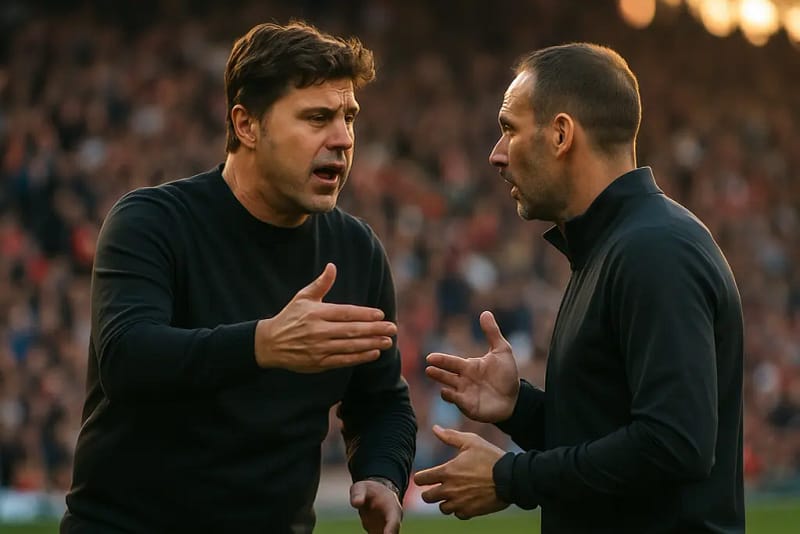

The Pochettino Contract Extension, announced by the U.S. Soccer Federation on August 3, 2026, was more than a reward for a better World Cup showing. It gave Mauricio Pochettino and his staff control of the USMNT project through the 2030 FIFA World Cup, creating a rare second-cycle structure for a national team that has often changed coaches before ideas could mature.
The extension followed a 2026 FIFA World Cup in which the United States won three matches, defeated Paraguay, Australia, and Bosnia and Herzegovina, and reached a knockout-stage win for the first time since 2002. U.S. Soccer also stated that Pochettino’s role would include “expanded impact on technical areas of U.S. Soccer,” covering youth programs, pathways, coaching education, and league relations through the official extension announcement.
Why The Pochettino Contract Extension Matters
Pochettino Contract Extension And Technical Control
The most direct effect is continuity. A national-team coach does not get daily training access in the way a club coach does, so development gains often depend on consistency across camps, age groups, and communication with clubs. That makes the Pochettino Contract Extension a structural decision, not only a senior-team appointment.
Since taking over in October 2024, Pochettino had used 62 different players in caps from 16 leagues in 12 countries by the time of the extension notice. That spread matters because the USMNT player pool is not concentrated in one domestic league or one tactical environment. A longer contract gives the staff more time to evaluate players across MLS, Europe, and other markets without treating every camp as a reset.
Continuity Without A Free Pass
Continuity should not be confused with certainty. The reported record at the time of the announcement was 17 wins, 12 losses, and 2 draws, which points to progress but not dominance. In his first year, starting from September 10, 2024, the team went 10 wins, 7 losses, and 1 draw, including a trip to the 2025 Concacaf Gold Cup final. The record supports a cautious reading: the federation saw enough improvement to extend the project, but the data did not remove every performance question.
Roster Breadth And Selection Pressure
Why A Larger Player Pool Helps Development
A second cycle under the Pochettino Contract Extension gives the staff a clearer mechanism for sorting the next group of players. Using 62 players is not automatically a sign of depth; it can also reflect injuries, availability issues, fixture demands, or search behavior. The development value depends on whether those auditions produce a more settled hierarchy by major tournaments.
The better sign is the distribution of scoring. U.S. Soccer credited 23 different goal scorers among 53 goals across Pochettino’s tenure through the extension period. That suggests the attack was not built around one narrow source of production. For a national team, that can protect against absences and reduce tactical predictability, especially when players arrive from different club roles.
- Wider selection can raise standards by making roster places less automatic.
- Multiple scorers can reduce dependence on one attacking profile.
- Repeated camps can help younger players understand positional demands before major matches.
- Consistent staff messaging can align senior-team expectations with youth-team development.
The Risk Of Too Much Rotation
The caution is that player testing must eventually become role clarity. National teams have limited training windows, and too much rotation can slow chemistry in pressing triggers, defensive spacing, and final-third timing. Pochettino’s staff now has a longer runway, but that runway carries a responsibility: selection variety needs to become a stronger core, not a permanent trial phase.
Tactical Gains And Open Questions
World Cup Output Raised The Ceiling
The 2026 World Cup gave the extension its clearest competitive case. The USMNT scored 11 goals, the most by a U.S. team in a single World Cup, and scored in all five matches. The team also produced at least two goals in four of those five games. Those facts support the view that Pochettino moved the group toward a more aggressive attacking identity.
The 2-0 win over Bosnia and Herzegovina on July 2, 2026, was especially meaningful because it ended a 24-year wait for a World Cup knockout-stage victory. Development is often measured in player minutes and youth integration, but senior-team proof matters. A young player pool benefits when the tactical plan has already worked in pressure matches.
Chance Creation Still Needs Testing
The attacking record was encouraging, but it should not end the tactical debate. ESPN’s analysis during the Pochettino period highlighted a concern that the team controlled possession and territory in several matches but produced lower non-penalty expected goals than prior norms, around 1.5 per game compared with a past mark near 2.0, while goals conceded per game sat around 0.7 in that sample through ESPN’s USMNT analysis.
That tension is useful for evaluation. The USMNT looked more capable of scoring in the 2026 World Cup, yet underlying chance quality had already been questioned during the broader tenure. The next stage of development is not simply about adding attackers. It is about producing cleaner chances against compact teams while keeping the defensive structure that helped limit goals conceded.
Development Links Below The Senior Team

Youth Pathways Are Now Part Of The Job
The extension’s development angle is strongest because U.S. Soccer tied Pochettino’s role to technical areas beyond the senior roster. Youth programs, coaching education, player pathways, and league relations were all named in the announcement. That matters because the United States has a large player base, but senior-team growth depends on how well talent is identified, prepared, and moved into higher-level matches.
For a coach with a contract through 2030, the question becomes less about one tournament squad and more about repeatable standards. What does an international-level fullback need to show at under-20 level? How should a midfielder be trained to handle pressure from elite opponents? Which center backs can defend space in a higher line? Those are development questions that connect youth teams, clubs, and the senior staff.
League Relations Could Decide The Pace
The U.S. player pool cuts across MLS, European leagues, and smaller overseas paths. Coordination with clubs affects camp availability, player workload, position usage, and recovery patterns. Pochettino cannot control club minutes, but a longer federation mandate can support more consistent dialogue about what players need to become senior internationals.
That is where cross-sport thinking has value. Baseball organizations have long studied development pipelines, role progression, and talent timing, and readers who track those systems can find related context at Books on Baseball. The sports differ, but the central lesson is similar: development improves when evaluation, coaching language, and opportunity are aligned.
For a soccer-specific companion piece, our assessment of Pochettino’s USMNT vision tracks how the 2030 timeline can be judged through roster depth, culture, and style markers.
Pochettino Contract Extension And USMNT Development
The Federation Chose Stability With Measurable Pressure
The extension placed Pochettino among the few USMNT coaches in the 21st century trusted with two World Cup cycles. That is a major institutional choice because the federation accepted that development requires time, repetition, and shared technical language. It also raised the standard for accountability, since a longer deal gives the coach more influence over the system around the senior team.
The evidence supports a balanced reading. The 2026 World Cup brought three wins, 11 goals, and a long-awaited knockout victory. The broader record showed inconsistency. The player pool expanded, but the next task is defining roles. The attack produced memorable tournament output, but earlier chance-creation concerns still deserve attention.
For the USMNT, the extension is best understood as a bet on continuity backed by recent results, not a declaration that development problems have been solved. Its value will be measured by whether more players become ready for high-level international minutes, whether youth pathways feed the senior team more efficiently, and whether the tactical gains from 2026 become repeatable against different opponents. That is the real impact of keeping Pochettino in charge through 2030.