


USL revenue sharing became a new reference point for lower-division American soccer finance after men’s professional clubs unanimously approved the model on September 10, 2026. The key change is direct: for the first time in league history, clubs were set to receive a defined share of centrally generated revenue, according to the USL announcement. For club operators, coaches, and technical staffs, the question is not whether the policy matters. It is how much practical planning room it creates.
The timing matters. The approval came one week after a new five-year collective bargaining agreement was ratified for USL Championship and the forthcoming USL Premier, which is scheduled to launch in 2028. That sequence placed club finance, labor structure, and divisional planning in the same window. It also gave the league a clearer business framework before promotion and relegation begins in 2028 under the planned three-tier men’s professional structure.
Why USL revenue sharing Arrived After The CBA
The new model should be read as part of a broader governance reset rather than as an isolated accounting decision. A five-year CBA gives clubs and players a labor baseline. Revenue distribution then gives owners a clearer argument that central growth can be tied to local investment. That combination is especially relevant in a system preparing to connect USL Premier, USL Championship, and League One through sporting movement.
Labor Stability And Club Planning
From a roster-building view, predictability is the useful part. Clubs do not build squads only with transfer fees or headline contracts. They also need scouting coverage, academy staffing, medical support, travel planning, coaching depth, and front-office capacity. The USL statement framed the model as a way to give clubs a stronger foundation to keep investing in communities and to reward ambition through meaningful competition. That language is broad, but it points toward areas that influence player development and match preparation.
This does not mean every club received immediate relief on September 10, 2026. The league did not publish club-by-club distribution figures in the provided material. Without those figures, the safe reading is that the model created a formal pathway for shared central revenue, not proof that every budget gap was closed. For readers comparing closed-league and open-system squad incentives, our separate analysis of MLS roster rules offers a different framework for how roster policy can shape team development.
The Old Club Finance Problem
The case for change was strengthened by criticism of the previous setup. Prior reporting described a model in which existing clubs did not receive meaningful shared revenue from some central streams. Expansion fees, in particular, had stayed with league headquarters rather than being distributed to existing clubs, according to Guardian reporting. That structure left many clubs leaning heavily on local revenue sources such as matchday income, merchandise, and player sales.
What The Detroit Example Shows
The Guardian report also cited Detroit City FC’s co-owner saying in 2026 that losing about US$4 million per year still placed the club in the “top quartile of most profitable teams” under the previous setup. That figure should not be stretched across the entire league because each club has its own stadium situation, market size, ownership profile, and staffing plan. Still, it is a useful warning sign: a club can be comparatively well run and still operate under major financial pressure.
For technical departments, that pressure tends to show up away from the main scoreboard. It can affect how many scouts a club can deploy, whether a team can expand youth programming, how much it spends on sports science, and how deep the bench is behind the first XI. None of those items guarantees better results, but they shape the environment around players and coaches.
How Clubs Can Use The New Model
For clubs, USL revenue sharing offers a formal link between league-wide growth and local operations. The most direct benefit is planning confidence. A club that knows a portion of central revenue will be distributed can treat the league office less like a separate commercial center and more like a partner in the operating model. That matters in a soccer structure where promotion and relegation will place more sporting consequence on year-to-year execution.
USL revenue sharing And Club Budgets
The supported implications are practical rather than dramatic. The league statement referenced investment in clubs and communities. In club terms, that can connect to infrastructure, staffing, player development, and community work if distributions are large enough to influence budgets. The evidence available does not establish exact amounts, so any claim about a specific payroll increase, academy expansion, or stadium project would go beyond the record.
The model also changes the incentive map. If USL Premier clubs receive larger distributions than lower tiers, as the league structure develops, sporting status can become more closely tied to commercial return. The exact distribution scale was not included in the approved public details cited here, so the size of that gap remains an open question. The direction is clear enough: division placement will carry financial weight as well as competitive meaning.
- Clubs gained a defined claim on centrally generated revenue for the first time in USL history.
- The policy followed a five-year CBA covering USL Championship and the planned USL Premier.
- The model was introduced before promotion and relegation begins in 2028.
- The available record does not provide club-by-club distribution amounts.
Competitive Effects Across The Pyramid
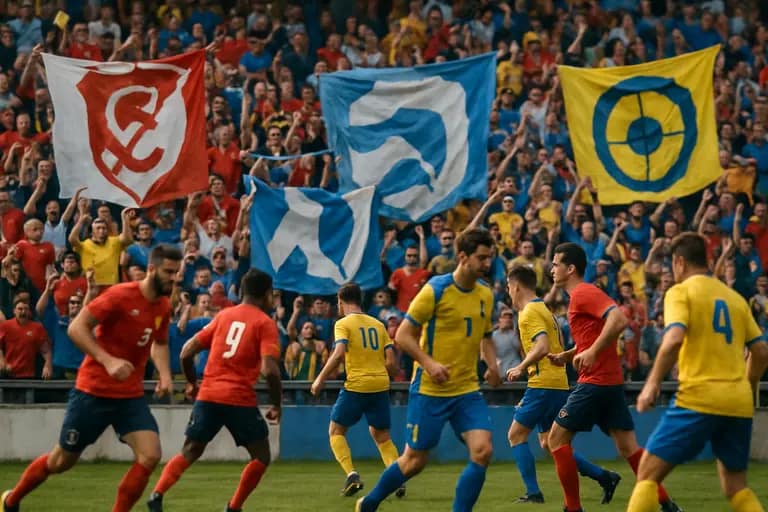
The planned USL pyramid changes how revenue policy should be evaluated. In a closed system, shared revenue is mostly about stability and parity. In a promotion and relegation system, it also affects the risk profile of ambition. A club that pushes for promotion may need deeper staffing, stronger player identification, and greater operational capacity. A club facing relegation risk may need enough financial base to avoid sharp cuts that damage sporting standards.
Player Development And Roster Depth
USL revenue sharing is not a player-development program by itself. It is a financial mechanism. Its value for player development depends on how clubs use the money and how consistent the distributions become. A club can direct new revenue toward first-team wages, academy coaching, facilities, analytics, or community programming. Each path has a different sporting return profile.
Roster depth is a useful example. In USL Championship and future USL Premier planning, squad reliability can be affected by travel demands, fixture timing, and the gap between starters and reserves. A stronger financial base can help a club carry more credible depth, but that depends on the amount received and the club’s spending discipline. The current evidence supports the possibility of greater stability; it does not support a claim that competitive balance has already improved.
Risks Still Facing Clubs
The main uncertainty is scale. If the shared pool is modest, the model may help at the margins without changing the deeper economics of operating a professional soccer club. If the pool grows through central commercial activity, then the policy can become more meaningful over time. The public information available on September 21, 2026, does not give enough detail to measure that effect.
Expansion Revenue And Trust
Expansion fees remain central to the discussion because past frustration was tied to whether existing clubs benefited from league growth. A model that shares central revenue can address that concern, but only if clubs see distributions that feel connected to the costs they carry. Transparency will matter. Owners need enough information to make long-term decisions, and supporters will judge whether the policy produces visible improvements in clubs, facilities, and squad quality.
There is also a competitive fairness issue. If larger-market clubs can add shared revenue to already stronger local income, the gap between clubs may not close. If smaller-market clubs receive enough support to professionalize operations, the system can become healthier. The answer depends on formulas and amounts not publicly detailed in the research provided. Readers following related football-business coverage across this publishing network may also encounter club finance discussions at a related site, Banat Zayed, but the USL policy itself should be assessed through league documents and reputable reporting.
USL revenue sharing And Club Strategy
The main analytical value of USL revenue sharing is that it connects three areas that had often been discussed separately: league growth, club sustainability, and sporting ambition. Its approval on September 10, 2026, did not solve every financial issue in the USL system, and the absence of public distribution figures limits firm judgment. What it did do was create a formal mechanism for clubs to receive part of central revenue at a time when the men’s professional structure is preparing for USL Premier and promotion and relegation in 2028.
For clubs, the strategic task is straightforward but demanding: turn any shared revenue into repeatable football value. That can mean stronger technical departments, better player pathways, more stable operations, and clearer community investment. For the league, the task is to make the model credible enough that clubs believe central growth benefits the whole system. Until the distribution amounts are known, the cautious assessment is that the policy is a significant structural change with real upside, but its competitive impact will depend on execution rather than the announcement alone.