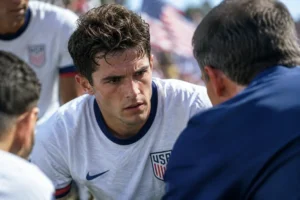
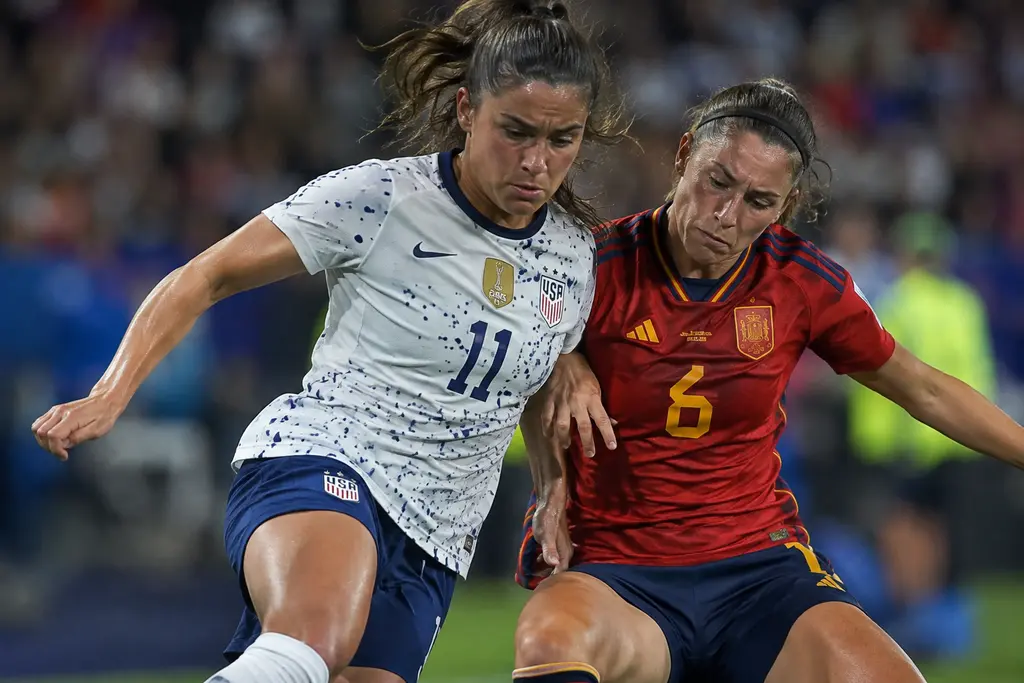

The USWNT friendlies against Spain in October 2026 were useful because they placed Emma Hayes’ group against the World No. 1 team and reigning FIFA Women’s World Cup champion across two closed-cycle tests before Concacaf competition. U.S. Soccer’s opponent profile listed the matches for October 10, 2026, in Washington, D.C., and October 13, 2026, in Chester, Pennsylvania, against a Spain side carrying the strongest ranking status in the women’s game at that point U.S. Soccer opponent profile.
The results were different in tone. The United States lost 2-0 at Audi Field on October 10 after conceding in the 3rd minute through Patricia Guijarro and the 14th minute through Eva Navarro. Three days later, the rematch at Subaru Park ended 2-2 after Spain led 2-0 at halftime through Alexia Putellas and Salma Paralluelo, before Ashley Sanchez scored in the 49th minute and Mallory Swanson equalized in the 86th. For roster evaluation, the draw mattered less as a morale point than as evidence that the attack could respond after the opening match exposed finishing and defensive-start problems.
What The USWNT Friendlies Showed Against Spain
Why The USWNT Friendlies Tested Attack Depth
The first match was a clear example of how shot volume can mislead if chance quality, timing and execution do not follow. The United States finished with 13 shots and 10 on target on October 10, while Spain scored twice from three shots. That does not mean Spain controlled every phase, but it did show how quickly elite opponents can punish loose early defending and how costly missed chances become when the margin is narrow.
For the USWNT friendlies, that attacking read is central. Hayes needed more than possession phases or late pressure. She needed to know who could make an impact against a top opponent under tournament-like pressure. Swanson and Sanchez supplied the clearest answers in the second game, while the inclusion of Trinity Byars in the broader camp pointed to a forward pool still being tested for depth and role clarity.
The Scorelines Gave Different Evidence
The October 10 defeat offered a warning on match starts. Conceding twice inside 14 minutes against Spain left the United States chasing structure rather than building from it. The October 13 draw gave a more useful response profile. The United States still allowed Spain to build a two-goal lead, but the second-half comeback showed better attacking persistence and more effective use of returning players.
That contrast matters for player evaluation. One match showed how the group handled early damage; the other showed whether attacking changes could alter the game state. In that sense, the two fixtures formed a practical roster test rather than a simple win-loss sample.
Key Player Returns And Roster Evidence
Mallory Swanson And Ashley Sanchez
Swanson’s return was one of the main roster stories. She made her first USWNT appearance in 710 days on October 10 and became the 19th mother to play for the national team. Her equalizer on October 13 gave the staff a concrete attacking data point: she was not only present in the squad, but able to affect the result late against Spain.
Sanchez’s role was also significant. She was recalled after a 2024 absence, and her 49th-minute goal in Chester showed why her profile remains relevant. The Guardian reported before the series that Ashley Sanchez earned the call, with Mallory Swanson and Naomi Girma also part of the roster story around the Spain matches The Guardian roster report. For a staff assessing attacking midfield and forward-zone combinations, Sanchez’s goal was not just a comeback moment; it was evidence that her timing and final-third instincts still fit the national-team conversation.
Midfield Experience Still Mattered
Lindsey Heaps entered the October 10 match with 179 caps, including 46 as captain. Rose Lavelle had 123 caps, tying Julie Ertz for 34th in USWNT history. Those numbers matter because Spain’s midfield quality forces opponents to make fast decisions under pressure. A team can test newcomers only if enough experienced players stabilize the match around them.
Lavelle’s return to full international action after injury and club-duty context also gave the staff a higher-skill midfield option in a demanding fixture. Heaps’ value was different: leadership, tempo control and game-state management. Against Spain, both profiles were relevant, even if the first match started poorly.
Tactical Signals From Two Spain Matches
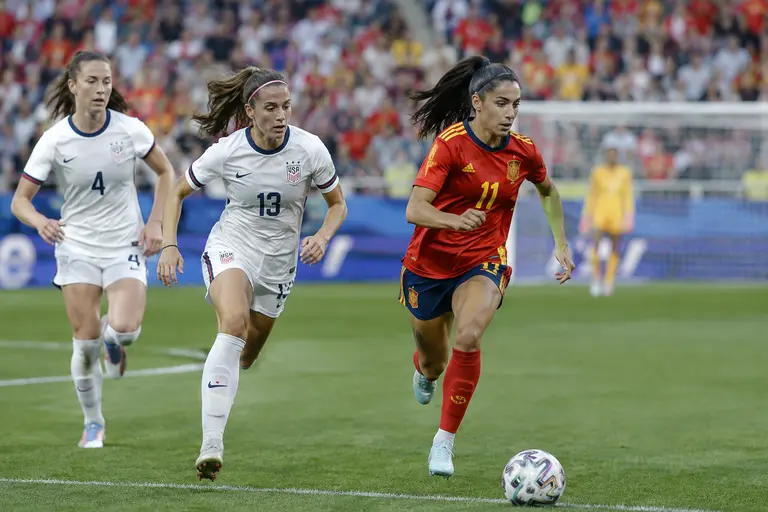
Defensive Starts Remained A Concern
The October 10 back line of Emily Fox, Tierna Davidson, Kennedy Wesley and Avery Patterson made its first start together. That context helps explain some of the early-game issues without excusing them. Spain’s first two goals came quickly, and that placed the defensive group in a difficult evaluation window. A new defensive unit can build chemistry, but top-tier opposition often exposes spacing and communication gaps before a team settles.
The more useful question is not whether that back line should be judged permanently on one start. It is whether Hayes gained clearer information on which combinations can handle pressure from the opening whistle. Tournament football leaves little room for slow starts, especially against technical teams that can convert limited chances.
Finishing Was The Sharpest Attacking Question
The United States created enough shooting activity on October 10 to make the shutout feel avoidable. Ten shots on target without a goal is a finishing concern, but it can also reflect goalkeeper performance, shot placement and defensive pressure. The more cautious read is that the attack reached productive areas but did not turn volume into scoreboard pressure.
The Chester match changed that read. Sanchez scored early in the second half, and Swanson’s late finish gave the United States the equalizer. That did not erase the first-match problem, but it did show that the staff had players capable of changing the attacking rhythm after halftime.
- Swanson gave the forward pool a proven late-game option after a long national-team absence.
- Sanchez strengthened her case as a final-third connector after being recalled.
- Heaps and Lavelle supplied experience around a roster carrying several development evaluations.
- The defense still needed cleaner starts after Spain scored early in both match narratives.
- First-time call-ups Jordan Silkowitz, Evelyn Shores, Trinity Byars and Pietra Tordin widened the evaluation pool.
For those interested in exploring sports analytics handling and publishing workflows, you might find CadCamNet to be of interest as it is a related site in the same network. A more direct roster thread for this match set is also available in our USWNT roster updates analysis.
USWNT Friendlies Player Read Before Concacaf
The best reading of the USWNT friendlies is that Hayes received both warnings and useful answers. The warnings were clear: early defending against Spain was not sharp enough, and the first match showed that shot count alone cannot carry the attack. The answers were just as concrete: Swanson returned with real end-product, Sanchez made a strong scoring case after her recall, and the staff gained a live look at a broader group before the Concacaf W Championship began on November 27, 2026.
Because both matches had already been played by October 29, 2026, the series should be viewed as evidence rather than preview material. The United States did not get a win, but the October 13 comeback gave more roster value than a quiet friendly draw would usually provide. It separated players who could influence a match against Spain from players still being assessed for fit, minutes and role. That is the useful player-watch takeaway from a demanding October window.