
The Sam Coffey injury became one of the key availability changes before the U.S. Women’s National Team’s October 2026 friendlies against Spain. As of October 29, 2026, those matches had already been played, so the most accurate way to assess the situation is retrospectively: Coffey withdrew before camp, did not return for the games on October 10 and October 13, and the staff had to adjust the midfield group without her.
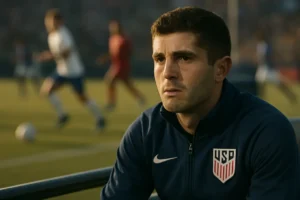
U.S. Soccer announced on October 5, 2026, that Coffey was ruled out of the Spain friendlies after being injured while playing for Manchester City against Arsenal in the Women’s Super League on October 4. She was substituted in the 70th minute of Manchester City’s 4-2 win, according to Yahoo Sports. That timing mattered because the injury occurred one day before the roster change was announced, leaving little runway for the national team staff to reassess the group before Spain camp.
Sam Coffey Injury Timeline Before Spain
October 4 Club Match Trigger
The club match context is central to the injury report. Coffey’s issue came while she was playing for Manchester City, not during U.S. camp. That distinction matters for how the situation was managed. A player injured with her club typically remains under club medical oversight unless the national team and club medical staffs determine another plan. In this case, the available reporting said Coffey stayed in England to rehabilitate with Manchester City’s medical staff rather than joining the U.S. group for the Spain fixtures.
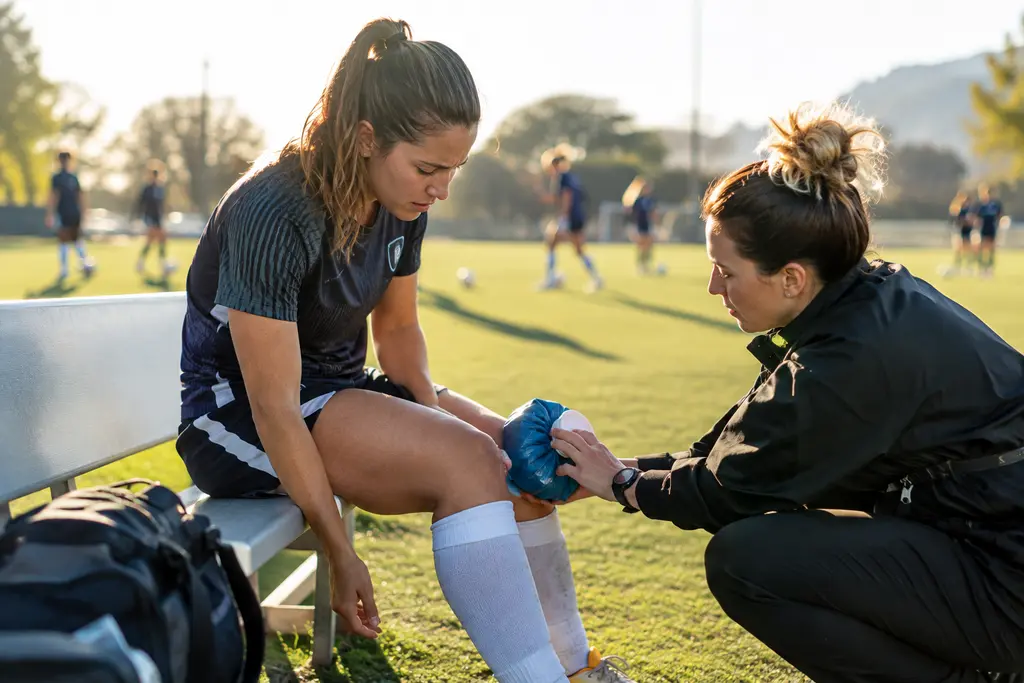
The injury was reported as an ankle issue. The Philadelphia Inquirer reported that Coffey hurt her ankle against Arsenal and that social media images showed her ankle in a boot. The same report placed her absence alongside Naomi Girma’s earlier withdrawal, making Coffey the second U.S.-based player from the originally announced roster to miss the Spain camp because of injury, via The Philadelphia Inquirer.
October 5 Roster Decision
The roster decision came quickly. On October 5, U.S. Soccer confirmed Coffey was out for the matches against Spain. Jaelin Howell of Gotham FC was called in as the replacement. The research notes identify Howell as having six USWNT caps and one international goal at the time of the call-up. For a short international window, that type of replacement profile gave the staff a player with prior senior national team experience rather than a first-time camp addition.
Because the matches were friendlies, the staff had space to evaluate options. Still, Spain represented a high-level opponent, and losing a midfielder one day after a club injury limited the time available to prepare alternative midfield combinations. The key point is not that the team’s entire plan depended on Coffey, but that her removal changed the available mix before camp opened.
Roster Impact For The USWNT Midfield
What The Sam Coffey Injury Changed In Midfield
The Sam Coffey injury narrowed the midfield pool for the Spain matches and forced a direct roster substitution. From an evaluation standpoint, that matters because international windows are short. Coaches do not have weeks to build rhythm, adjust roles, and test every pairing. A late withdrawal reduces the number of full camp reps available for the replacement and changes the balance of midfield options.
Howell’s inclusion addressed the immediate roster vacancy. The more cautious reading is that the staff gained a replacement body and another midfield profile, but did not get a like-for-like continuation of Coffey’s camp plan. Without verified tactical details from the staff, it would be wrong to claim exactly how every midfield assignment changed. What can be said with confidence is that Coffey’s absence removed one selected midfielder from the original Spain group and gave Howell the opportunity to enter camp in her place.
How Howell Fit The Availability Need
Howell’s call-up was primarily an availability solution. She was not added as part of the original list; she entered after Coffey was ruled out. That sequence is relevant because replacement call-ups often carry a different preparation burden. The player must adapt quickly to the camp environment, while coaches decide how much match involvement is realistic based on arrival timing, fitness, and tactical familiarity.
For readers tracking the broader October camp context, our related USWNT coverage reviewed the injury and roster picture around those Spain fixtures in a separate USWNT injury report. The Coffey case fits that wider pattern because it was not the only availability issue in the group.
Medical Information And Reporting Limits
Confirmed Ankle Details
The available reporting supports a limited set of medical facts: Coffey sustained an ankle injury in Manchester City’s October 4 match against Arsenal, left the game in the 70th minute, withdrew from the USWNT roster on October 5, and did not return for the Spain friendlies. Reports also described her ankle being in a boot after the match.
Those details are enough to explain the roster move, but they are not enough to assign a diagnosis, grade the injury, or create a recovery timetable. The public information did not support that level of detail. In injury reporting, that boundary matters. A boot can indicate protection or immobilization, but it does not, by itself, confirm severity. A substitution can show that a player could not continue, but it does not define the medical condition.
No Supported Return Date
There was no supported return date in the research provided. That means any estimate about full training, club return, or next national team availability would be speculation. The only responsible framing is that Coffey remained out of the USWNT squad for the two Spain matches and that her rehab was handled away from U.S. camp.
From a roster analysis view, the absence carried immediate consequences but not enough public data for a longer-term forecast. The national team staff could evaluate Howell and the remaining midfielders during the October window. Manchester City, meanwhile, retained the direct medical context because the injury happened in club play.
Venue Context After The Spain Friendlies
Two Match Sites, Both Now In The Past
The Spain friendlies were scheduled for October 10, 2026, at Audi Field in Washington, D.C., and October 13, 2026, at Subaru Park in Chester, Pennsylvania. As of October 29, 2026, both fixtures had already concluded. Any analysis of Coffey’s status should therefore avoid treating the matches as upcoming or advising fans to attend.
The venue detail still matters because the camp was built around two East Coast match sites and a short turnaround between games. A late injury withdrawal before that type of window compresses planning. Coaches must manage training loads, travel, match preparation, and substitution planning with less continuity than originally expected.
Additionally, for those exploring sports venues within the same network, Copeland Hills Golf is part of the affiliated sports network, offering options beyond the usual soccer focus, even though the specifics of Coffey’s situation are strictly linked to USWNT responsibilities.
What The Sam Coffey Injury Meant For Spain Matches
The most accurate read on the Sam Coffey injury is narrow but meaningful. It was an ankle issue sustained with Manchester City on October 4, it led to her withdrawal from the USWNT roster on October 5, and it kept her out of both Spain friendlies. Howell replaced her in the squad, while the midfield group had to be assessed without one player from the initial roster.
That does not justify a sweeping claim about the team’s performance or Coffey’s longer-term outlook. The public record supports an availability analysis, not a medical projection. The supported story is that the U.S. staff lost a midfielder shortly before a high-level friendly window and responded with a replacement who had prior senior national team experience.
For roster evaluation, the case shows how quickly club injuries can affect national team planning. A player can be selected, play a club match, leave injured, and be replaced before the international camp fully takes shape. Coffey’s October 2026 withdrawal was a clear example of that timing pressure, and the most useful analysis is to separate confirmed facts from unanswered medical questions.