
Cavan Sullivan potential is no longer only a youth-development talking point after his senior U.S. men’s national team involvement in the September-October 2026 window. As of October 31, 2026, the friendlies against Peru on September 26, Chile on September 29, Mexico on October 3, and Canada on October 6 had already been played, so the proper read is retrospective: what did the call-up, MLS production, and international minutes say about his level?
The safest answer is that Sullivan moved from prospect status toward senior evaluation without yet becoming a settled USMNT attacking piece. His 2026 Philadelphia Union output gave Mauricio Pochettino a clear reason to test him, while the friendlies gave Sullivan early exposure to senior international tempo. That combination matters, but it should not be stretched into a finished verdict.
Cavan Sullivan Potential After The Call-Up
Why The Senior Invitation Mattered
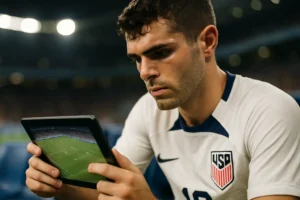
Sullivan’s first senior USMNT call-up was officially reported on September 17, 2026, as part of a group brought in for four friendlies in the September-October window, with Neil Pierre, Mathis Albert, Adri Mehmeti, and Zavier Gozo also named in that report by The Philadelphia Inquirer. That timing was significant because it followed a strong attacking run at club level rather than arriving as a purely symbolic youth selection.
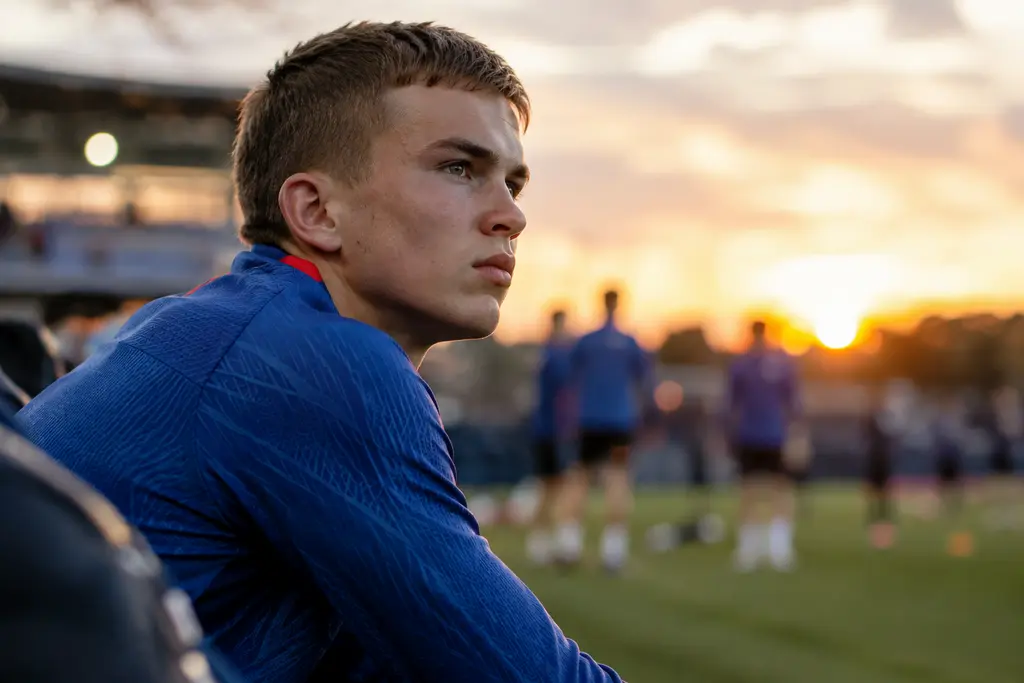
The age context made the evaluation sharper. NBC10 Philadelphia reported that Sullivan was 16 at the time of the call-up and turned 17 on September 28, placing him on track to be among the youngest players to appear for the senior U.S. men’s national team, behind Freddy Adu in that specific historical framing in NBC10’s report. That did not automatically define his readiness, but it did raise the threshold for how carefully his minutes needed to be read.
Why Cavan Sullivan Potential Needed Context
The senior call-up came after a productive stretch with Philadelphia Union. The research record lists his 2026 MLS regular-season line as 26 games, 19 starts, 1,619 minutes, seven goals, and 14 assists. It also lists a separate all-competitions snapshot of 33 matches, 10 goals, 11 assists, 2,087 minutes, two yellow cards, and one red card. Because those assist totals come from different statistical frames, the cleaner interpretation is not to force one exact comparison across sources, but to recognize a clear attacking contribution across meaningful minutes.
That distinction matters for a player of his profile. Sullivan was not being assessed only on isolated flashes. He had started often enough, scored enough, and created enough to turn the September call-up into a performance-based selection. For a teenager, volume of minutes is part of the evidence. Production in those minutes is the stronger layer.
MLS Form And Production Markers
The September Scoring Run
Sullivan’s club form before the USMNT window included a standout September 14 performance, when the research notes credit him with a two-goal game in Philadelphia Union’s 5-0 win over San Diego FC. That brace was described as his fifth goal in as many matches, a run that strengthened the case for a senior look.
The same research record says he became the first teenager to record a goal contribution in five straight MLS games, then extended the streak to six with three assists in a September 10 match against FC Cincinnati. Those details should be handled with care because streaks can depend on competition definitions and statistical providers, but the direction of the evidence is clear: he was affecting matches as both scorer and creator before entering the national-team setting.
What The Numbers Say About His Role
The profile emerging from the data is an attacking midfielder trusted to operate near chance creation. The research describes Sullivan as a left-footed player who can work centrally or from wide areas, with strengths in vision, close control, passing in tight spaces, and the ability to create and score. That profile fits the production pattern: goals show box threat, while assists and goal-contribution streaks point toward final-third decision-making.
The strongest case for Cavan Sullivan potential is not built on one number. It is built on the combination of starts, minutes, goals, assists, and positional flexibility. A teenager producing in one category can still be treated cautiously. A teenager producing across several categories while earning senior international minutes deserves a different level of evaluation.
USMNT Minutes And Role Evidence
What The Friendlies Showed
The September-October window gave Sullivan appearances against Peru, Chile, Mexico, and Canada, according to the research notes. The listed examples include 62 minutes against Peru on September 26 and 30 minutes against Mexico on October 3. Those appearances did not produce a reported senior goal in the research material, so the useful reading is developmental rather than statistical.
For a young attacking midfielder, first senior minutes can clarify two things quickly: whether he can receive the ball under stronger pressure, and whether his choices remain clean when the game speeds up. The available research supports that he gained international experience during the window, but it does not provide enough match-by-match technical data to claim a full tactical breakthrough.
The Limits Of Early Senior Exposure
That caution is central. A debut window can make a player more visible without making him a regular. Sullivan’s minutes showed trust from the staff, but not yet a confirmed role. With attacking midfielders, the difference between promising involvement and reliable senior impact often sits in repeatability: receiving under pressure, making the next pass on time, defending the wide or central channel, and choosing when to force the final ball.
For readers comparing young players across sports development models, the same network also includes FS Golf, offering a broader context for talent development in different fields. However, this assessment stays with the soccer evidence: Sullivan’s senior value after October 6 should be measured through role clarity, ball security, and chance creation rather than age alone.
Development Path And Club Context
Philadelphia Union As The Evidence Base
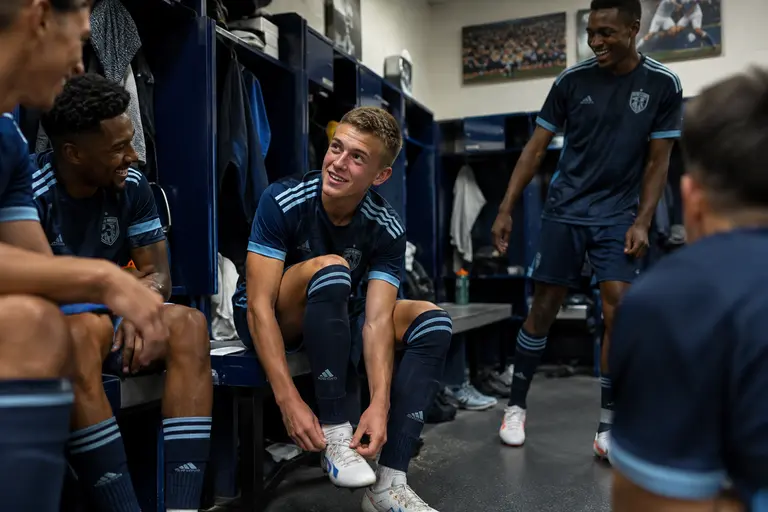
Philadelphia Union remain the key evidence base because Sullivan’s senior minutes and production came there. The research says his Philadelphia contract, signed when he was 14 in 2024, included an agreement for a transfer to Manchester City at the end of 2027. That long-range move is relevant, but it should not be treated as proof of future USMNT status. The stronger evidence is what he already did in MLS matches during 2026.
The Union context also helps explain why the national team staff could test him. He was not only training with professionals; he was starting regularly and producing in league play. That matters because the jump to senior international soccer is difficult enough without asking a player to move straight from youth dominance into senior minutes.
Where The Evaluation Still Has Gaps
The open questions are still real. The research identifies the need to sustain productivity, handle defensive pressure at senior international level, manage physical play against older opponents, and maintain consistency across competitions. Those are not minor items. They are the standard barriers for any young creator trying to move from promising minutes to trusted national-team usage.
A related internal read on Sullivan’s fall camp assessment fits the same theme: the call-up was meaningful, but the larger judgment depends on how his club form and international responsibilities continue to match up over repeated windows.
Cavan Sullivan Potential In The Player Pathway
Cavan Sullivan potential now rests on a balanced evidence file. The positive side is strong: a productive MLS regular season, a September scoring and assisting surge, a first senior USMNT call-up, and minutes across a demanding friendly window. The cautious side is just as necessary: the available research does not support declaring him a finished senior international, and his friendlies were more about exposure than decisive output.
His pathway toward future events such as the 2028 Olympics or the 2030 FIFA World Cup should be framed as an evaluation track, not a guarantee. By October 31, 2026, Sullivan had done enough to earn serious attention inside the U.S. player pool. The next layer of evidence will have to come from repeat senior performances, cleaner role definition, and continued production against adult professionals.
That is the proper performance spotlight: not hype, not dismissal, but a measured read of a teenager whose 2026 form forced the senior national team to take a closer look.