
Dallas’ 2026 World Cup role is too large to be measured only by packed seats at Dallas Stadium. The North Texas tournament footprint includes nine matches in Arlington, a semifinal on July 14, a major Fan Festival at Fair Park, the International Broadcast Center at the Kay Bailey Hutchison Convention Center, team movements, media operations, drone restrictions, pedestrian planning, and coordination between local, state, and federal agencies. That is why Dallas has become one of the clearest examples of a bigger truth about this World Cup: host cities are not just hosting matches. They are being tested as full civic systems.
Why Dallas Is Carrying One Of The Heaviest World Cup Loads
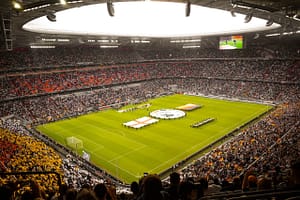
Dallas Stadium in Arlington has one of the most demanding assignments of the 2026 World Cup. The North Texas organizing committee confirmed that the venue is hosting a tournament-high nine matches: five group-stage games, two Round of 32 matches, one Round of 16 match, and a semifinal on July 14. For any host city, that schedule would be a major sports calendar. For Dallas-Fort Worth, it turns the tournament into a month-long regional operation.
That matters because a city can manage one major event through intensity. It needs stronger systems to manage nine. Each match brings different teams, fan groups, traffic patterns, arrival windows, media needs, security briefings, weather variables, and emotional stakes. A group-stage match with neutral fans does not feel the same as a knockout game involving a global power. A semifinal has a different security profile from an early afternoon group fixture.
Dallas’ workload is also tied to geography. The stadium is in Arlington, while major fan activity and media operations are centered in Dallas. Airports, hotels, fan zones, entertainment districts, team bases, and training locations spread the event across the broader North Texas region. That turns matchday into a networked operation rather than a stadium-only event.
FIFA’s Dallas host city profile captures the scale of the assignment: Dallas is not just a stop on the schedule. It is one of the tournament’s operational anchors.
How Security Moves Beyond Stadium Gates
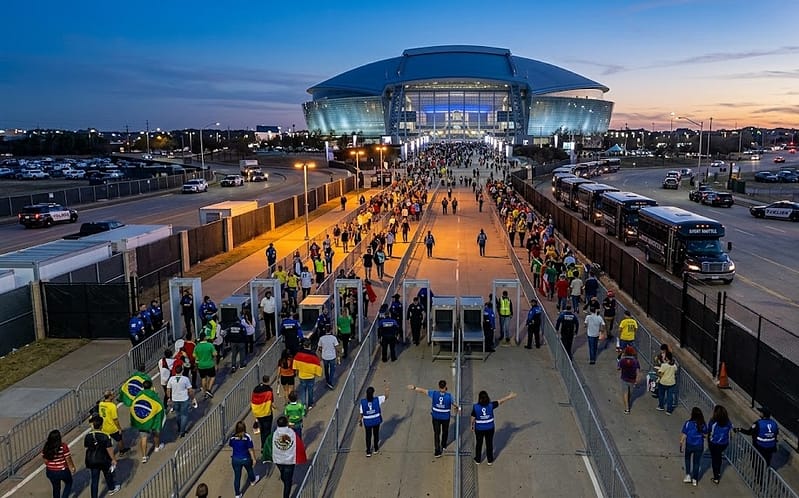
A World Cup crowd entering a stadium sees the visible part of security: bag checks, credential lanes, barriers, police officers, volunteers, cameras, and controlled entry points. Dallas’ real security challenge starts before that moment. It begins with traffic control, pedestrian routing, team transport, hotel movement, rideshare staging, parking flow, and public gathering areas.
NBC 5 Dallas-Fort Worth reported that Dallas officials planned for a large-scale operation involving the FBI, 27 venues and event sites, and Fan Fest crowds of up to 35,000 daily visitors at Fair Park. That kind of planning shows why the stadium gates are only one piece of the event. The biggest safety pressure may come from areas where ticketed and non-ticketed fans mix.
This is especially important in a World Cup environment. Fans may gather hours before kickoff, arrive from other countries, use unfamiliar transport systems, walk through entertainment districts, attend Fan Festival events, or watch matches without ever going to Arlington. A security plan has to protect all of those experiences without making the city feel locked down.
World Football Idol’s recent article on FIFA Fan Festival growth explained how the tournament is becoming a “stadium without walls.” Dallas is where that idea becomes a public-safety test. The more the World Cup spreads into public space, the more host cities must manage safety beyond the match ticket.
Why The Joint Operations Center Matters
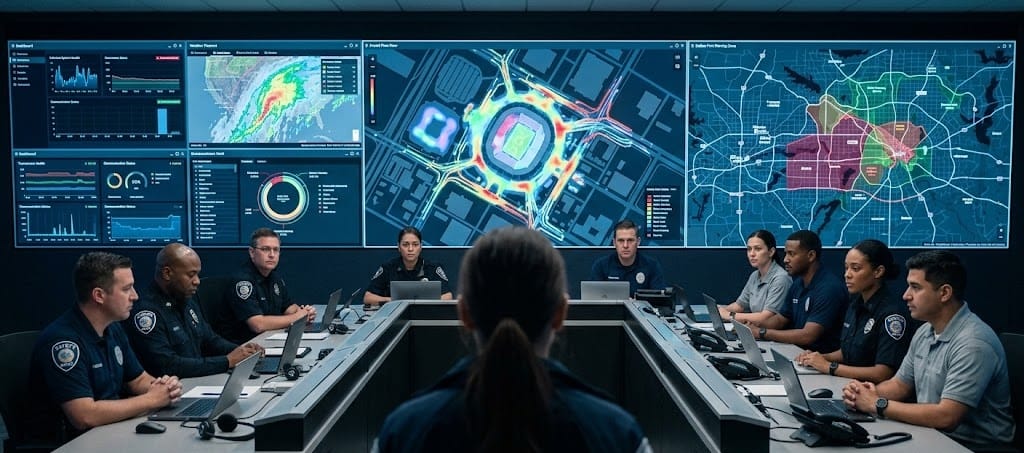
The Joint Operations Center is one of the most important parts of Dallas’ World Cup operation because it turns scattered event activity into a shared command structure. NBC 5 reported that the Dallas County facility is being used for FIFA World Cup safety and security over the tournament’s 39-day window, with federal coordinators explaining how the hub would support the event across North Texas.
That may sound administrative, but it is central to a tournament of this size. A World Cup city needs faster communication between agencies when weather shifts, traffic backs up, a drone enters restricted airspace, a medical incident happens, a dignitary moves, or a crowd unexpectedly grows at a public viewing site.
The value of a Joint Operations Center is not only response. It is shared awareness. Stadium security, emergency management, police departments, fire and medical teams, transportation officials, federal partners, and event organizers need the same picture of what is happening across the region.
| Dallas Security Layer | Main Responsibility | Why It Matters |
|---|---|---|
| Dallas Stadium Operations | Screening, venue access, field perimeter, team areas | Protects the match environment |
| Joint Operations Center | Multi-agency communication and incident response | Connects stadium, city, county, and federal planning |
| Fan Festival Security | Fair Park crowd flow, public viewing, family programming | Manages non-ticketed World Cup crowds |
| Drone And Airspace Control | Temporary flight restrictions and enforcement | Protects stadiums, crowds, and broadcast operations |
| Transportation And Pedestrian Planning | Parking, rideshare, walking routes, entertainment districts | Shapes the fan experience before and after matches |
That table shows why Dallas is a host-city test rather than a stadium test. The match is the center, but the systems around the match decide whether the event feels safe and organized.
How Drones Became A World Cup Security Story
Drone enforcement has become one of the clearest signs that World Cup security now operates above the stadium as well as around it. The Guardian reported that U.S. authorities had seized more than 600 drones around World Cup games across U.S. host cities, following temporary flight restrictions around match sites. TechRadar separately reported that Dallas was among the highest-seizure markets, with 78 drones seized.
That is not a small side issue. Drones create risks for player safety, crowd safety, emergency response, broadcast operations, and airspace management. They can disrupt matches, interfere with helicopters or authorized aircraft, and create uncertainty around packed public areas.
Dallas is especially relevant because the city’s World Cup profile includes both stadium matches and major media operations. The International Broadcast Center at the Kay Bailey Hutchison Convention Center adds another layer of asset protection. Axios Dallas reported that Boston Dynamics “Spot” robot dogs were part of security support, with two deployed at the International Broadcast Center and two at MetLife Stadium in New Jersey.
That mix of drones, robot dogs, police dogs, cameras, command centers, and traditional security shows how modern sports protection has changed. The World Cup no longer depends only on guards and gates. It depends on technology, airspace control, cyber awareness, and fast coordination between agencies that may not normally operate together at this scale.
Why Fan Fest And Public Space Create A Different Challenge
Fair Park’s Fan Festival may be just as important to Dallas’ World Cup identity as the matches in Arlington. FOX 4 reported that Dallas planning included major Fan Festival crowds, with up to 35,000 daily visitors expected at Fair Park, while safety concerns included extreme heat, storms, crowd movement, and pedestrian protection in entertainment districts.
Those details matter because public viewing sites are different from stadiums. A stadium crowd is ticketed, seated, screened, and tied to a fixed event time. A Fan Festival crowd is more fluid. People come and go. Families arrive at different hours. Fans may gather for matches involving other countries. Weather can change the crowd’s behavior. Concerts, vendors, food areas, mini-pitches, and sponsor activations create movement inside the space.
That is why Dallas’ event cannot be judged only by whether the semifinal sells out. It must be judged by whether families at Fair Park feel safe, visitors understand where to go, pedestrians are protected, and fans without tickets still feel included in the tournament.
Host cities have to balance two goals that can pull against each other. They need visible security, but they also need a welcoming atmosphere. Too little structure creates risk. Too much visible force can make a celebration feel tense. Dallas’ World Cup operation is trying to land in the space between those extremes.
Why Heat, Storms, And Movement Are Security Issues Too
Security is often discussed through threats, policing, and technology, but summer conditions are part of the safety plan. North Texas in June and July can bring extreme heat, sudden storms, and long walking distances. Those are not background details. They affect crowd behavior, medical response, transport timing, and volunteer operations.
Heat changes how fans move. People walk more slowly, need more water, gather in shaded areas, and can become frustrated in long lines. Storms can force delays, shelter decisions, and communication challenges. Long rideshare waits or unclear pedestrian routes can turn ordinary crowd flow into a pressure point.
That is why Dallas’ World Cup preparation has to treat the fan journey as part of security. The safest event is not only the one with the strongest response plan. It is the one where fans know how to arrive, where to park, how to reach shuttles, when to leave, what bags are allowed, where to get water, and how to respond if weather changes.
The Dallas match schedule page already signals that World Cup parking operations will differ from standard NFL game days. That small detail tells a bigger story. Fans who think a World Cup match will function exactly like a Cowboys game may be surprised. The host city’s job is to reduce that surprise before it becomes confusion.
What Dallas Can Prove Before The Semifinal
Dallas has already handled high-profile matches in this tournament, but the July 14 semifinal is the ultimate test of the region’s planning. By then, the stakes will be higher, the global audience larger, and the fan attention sharper. The semifinal will not only ask whether Dallas Stadium can look spectacular on television. It will ask whether North Texas can move and manage one of the world’s biggest sporting events at full pressure.
That is the real meaning of the Dallas security operation. Attendance is the easiest success metric to see. A packed stadium photographs well. A safe transport plan, a calm Fan Festival, a working command center, a clear pedestrian route, a managed drone threat, and a well-informed international crowd are less glamorous. They are also more important.
For World Football Idol readers, Dallas shows what the 2026 World Cup is revealing about America as a host. The country has the stadiums, fan demand, broadcast infrastructure, and event culture. The deeper question is whether each host city can connect those strengths into a reliable public system.
Dallas’ World Cup security operation is not just a local story. It is a preview of how modern football tournaments are won off the pitch: through coordination, communication, technology, crowd care, and the ability to make a global event feel safe without losing its joy.