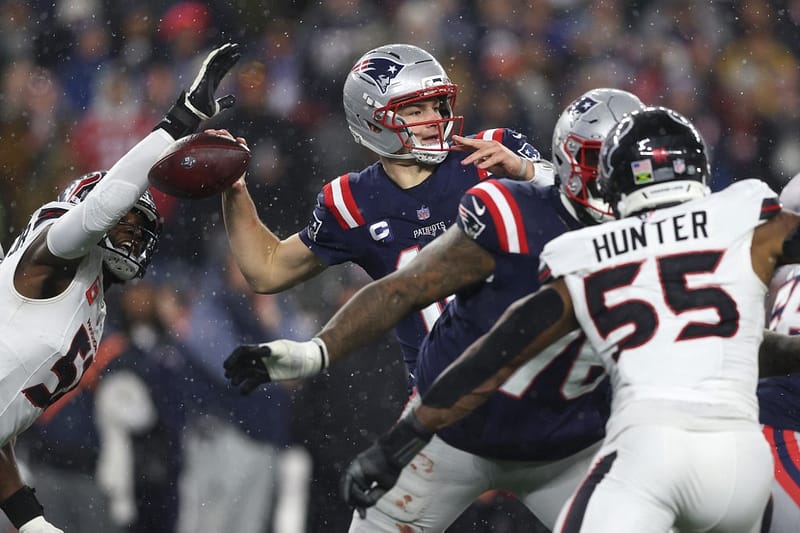

The New England Patriots were not supposed to be here yet.
After a 5–12 season in 2025, the expectation around the league was simple: a long rebuild centered around rookie quarterback Drake Maye and a new coaching direction.
Instead, the 2026 season has delivered something entirely different.
Maye didn’t just improve—he surged into the MVP conversation, finishing just behind Matthew Stafford in Associated Press voting, while leading the Patriots to a 10-win turnaround and a Super Bowl appearance under head coach Mike Vrabel.
This wasn’t a gradual rebuild.
It was an acceleration.
And it’s forcing the league to reevaluate what New England is becoming.
Drake Maye’s Leap Changed The Timeline
Quarterback development is rarely linear.
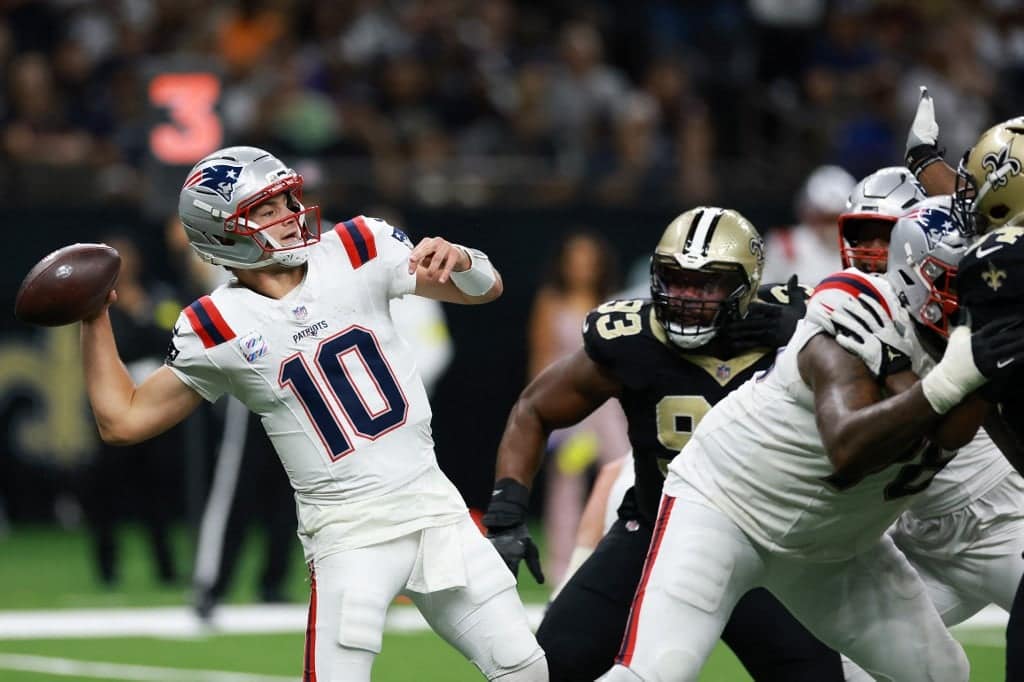
But Maye’s rise in 2026 has been anything but typical.
In his first full season as a starter, he demonstrated:
- Advanced pocket awareness for a second-year player
- Strong downfield accuracy under pressure
- Leadership traits that stabilized the offense
More importantly, he eliminated the inconsistency that often defines young quarterbacks.
Maye didn’t just flash potential—he delivered results.
That shift alone has redefined the Patriots’ timeline from “rebuilding” to “competing” almost overnight.
The Numbers Behind The Breakout
While narrative matters, the production backs it up.
| Category | Drake Maye (2026) | League Context |
|---|---|---|
| Passing Yards | 4,200+ | Top 6 in NFL |
| Touchdowns | 32 | Top 5 |
| Interceptions | 11 | Efficient decision-making |
| Team Record | 10–7 | +5 win improvement |
These numbers don’t just reflect growth—they reflect control.
Maye is no longer reacting to defenses. He’s dictating them.
And that’s the point where quarterbacks transition from promising to franchise-defining.
Mike Vrabel’s Influence Cannot Be Ignored
While Maye’s emergence headlines the story, Mike Vrabel’s arrival as head coach in 2026 is just as important.
Vrabel didn’t overhaul the Patriots’ identity—he clarified it.
The offense became more structured, more balanced, and more adaptable. Instead of forcing Maye into a rigid system, Vrabel built around his strengths:
- Play-action efficiency
- Controlled vertical passing
- Situational awareness in key moments
That alignment between coach and quarterback is what accelerates development.
And it’s a major reason why the Patriots are ahead of schedule.
The Supporting Cast Finally Makes Sense
For years, New England’s offensive identity lacked clarity—particularly at wide receiver.
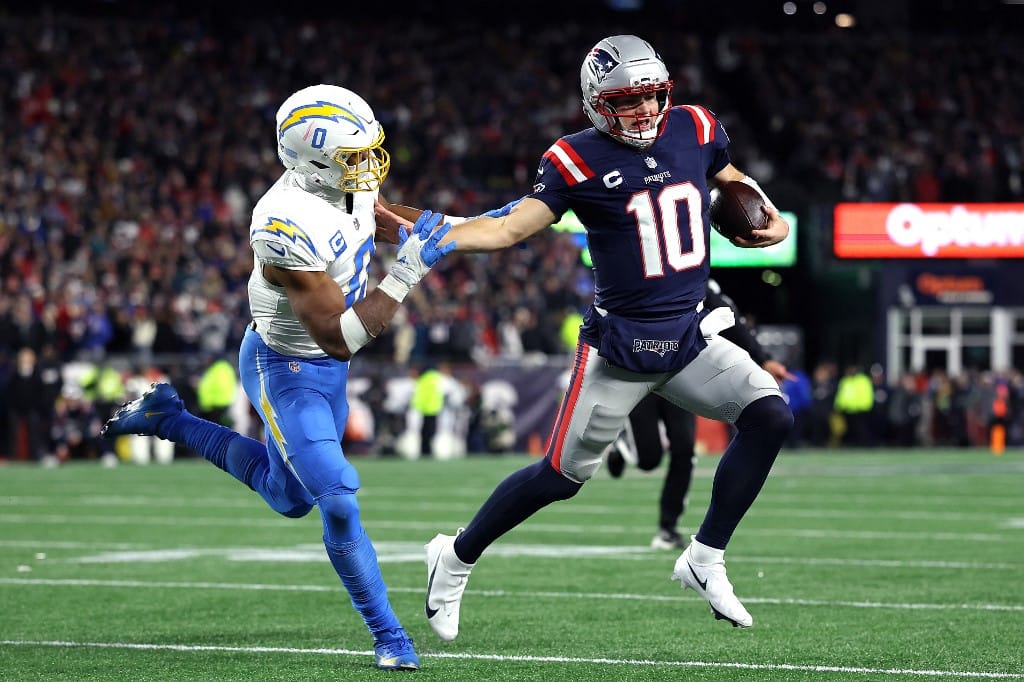
That changed in 2026.
Rather than relying on unproven depth, the Patriots focused on adding complementary pieces that fit Maye’s style, reinforcing timing, spacing, and reliability.
This approach mirrors the broader shift seen in their aggressive pursuit of playmakers, including ongoing discussions around elite receiver acquisition strategies shaping the Patriots offense.
The result?
A system where:
- Receivers create separation
- Routes develop on time
- The quarterback trusts the structure
That’s how offenses become efficient—and dangerous.
Why This Isn’t Just A One-Year Spike
The biggest question now isn’t what happened in 2026.
It’s whether it’s sustainable.
There are strong reasons to believe it is.
First, Maye’s skill set translates:
- He’s not dependent on one scheme
- His decision-making reduces volatility
- His physical tools allow adaptation
Second, the roster is built with flexibility in mind.
The Patriots avoided overcommitting to short-term solutions, preserving cap space and draft capital.
That balance between competitiveness and sustainability is rare.
And it’s what separates short-term success from long-term contention.
Comparing The Patriots To Other Rising Teams
To understand how far ahead New England is, it helps to compare them to other teams in similar stages.
| Team | QB Situation | Timeline | Stability |
|---|---|---|---|
| Patriots | Drake Maye emerging | Accelerated | High |
| Bears | Developing QB | Early rebuild | Medium |
| Falcons | Veteran bridge | Transitional | Uncertain |
| Giants | Reset under new coach | Early rebuild | Low |
The difference is clear.
While other teams are still searching for identity, the Patriots have already found theirs.
The AFC Landscape Is Taking Notice
The AFC has been dominated by elite quarterbacks for years.
Patrick Mahomes, Josh Allen, Joe Burrow—all have defined the conference’s power structure.
Drake Maye is now entering that conversation.
And that changes everything.
Defenses must prepare differently. Opponents must adjust game plans. And most importantly, New England is no longer being overlooked.
This isn’t about potential anymore.
It’s about presence.
The Cultural Shift Inside The Organization
Perhaps the most underrated aspect of this rise is the internal transformation.
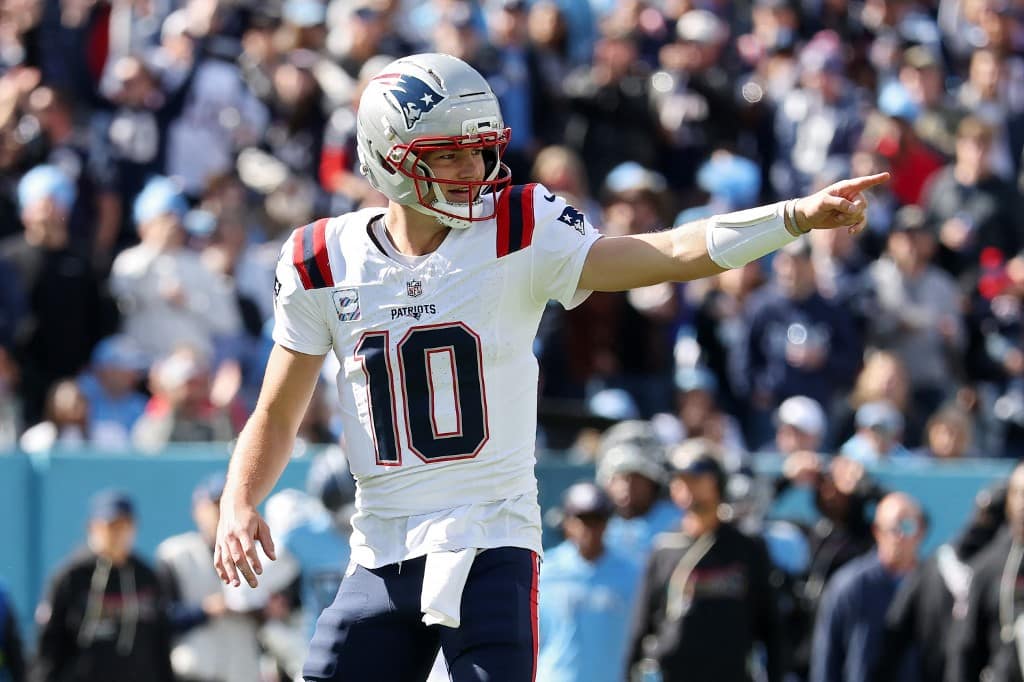
The Patriots are no longer defined by their past dynasty.
They are building something new.
That shift is visible in:
- Play-calling aggression
- Player development consistency
- Front office alignment
For the first time since the post-Brady transition, the organization feels cohesive.
And cohesion is what drives sustained success.
What Comes Next Will Define The Era
The challenge now is not proving that 2026 was real.
It’s proving that it’s repeatable.
That means:
- Continuing to build around Maye without overloading the roster
- Maintaining offensive balance
- Avoiding the temptation to chase unnecessary upgrades
The Patriots are ahead of schedule.
But staying ahead requires discipline.
The Bigger Picture: A New AFC Power Emerging
Drake Maye’s near-MVP season isn’t just a breakout story.
It’s a signal.
The Patriots are no longer rebuilding.
They are arriving.
And in a conference defined by quarterback dominance, that arrival carries weight far beyond one season.
Because once a team finds its quarterback—and builds the right system around him—the window doesn’t just open.
It stays open.