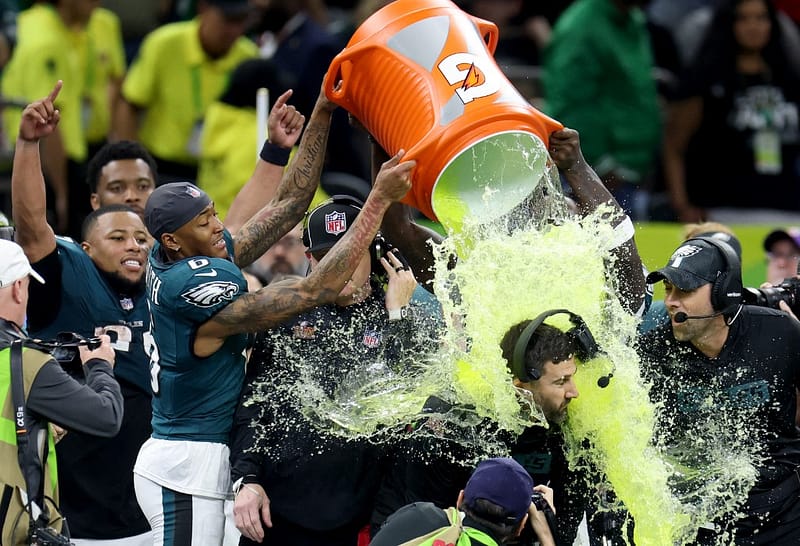

The Philadelphia Eagles do not enter 2026 like a team searching for an identity. They enter like a contender with almost everything already in place. Jalen Hurts still gives the offense championship credibility. A.J. Brown and DeVonta Smith remain one of the league’s most dangerous receiver pairings. The offensive line still carries Philadelphia’s familiar power. Jalen Carter anchors the defensive front. Vic Fangio gives the defense structure. Howie Roseman has again built a roster deep enough to make most teams jealous.
That is what makes the safety reset so important.
On an otherwise elite roster, the Eagles’ most obvious uncertainty sits on the back end of the defense. Reed Blankenship is gone. Andrew Mukuba is returning from injured reserve. Marcus Epps is back in Philadelphia. Sydney Brown is still trying to turn traits into trust. Cooper DeJean could be part of the solution, but moving him changes the secondary elsewhere. Michael Carter II and rookie Caleb Downs add options, but options are not the same as answers.
The Eagles report to the Jefferson Health Training Complex on July 28. By the time they open the season against the San Francisco 49ers in Melbourne, Australia, on Sept. 4, they need the safety room to look less like a puzzle and more like a plan.
Why Safety Became Philadelphia’s Most Obvious Question
The Eagles’ roster is strong enough that weaknesses stand out quickly. Safety became one of those spots because the rest of the team looks so complete. Philadelphia is not rebuilding. It is refining. That makes one unsettled position group more meaningful.
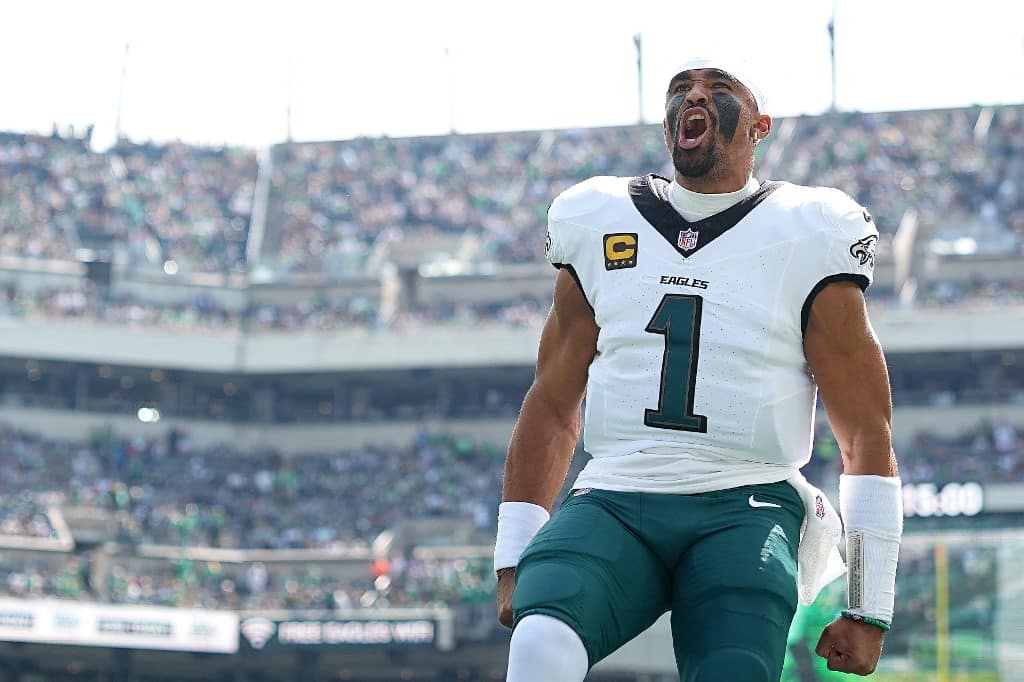
NBC Sports Philadelphia called safety the weakest position on paper for the Eagles after Reed Blankenship left in free agency for a three-year deal with the Houston Texans in its breakdown of the Eagles’ safety battle. That framing matters because it comes from comparison. The Eagles have stars and credible starters across the roster. Safety is the spot where projection still outweighs certainty.
PhiladelphiaEagles.com’s official training camp safety preview points to Andrew Mukuba as the favorite for one starting job after he started 10 games in 2025 before landing on injured reserve. That gives the Eagles one logical anchor, but not a finished room.
The issue is not that Philadelphia lacks talent. The issue is that the role demands trust. Safeties communicate coverage, disguise intentions, fit the run, erase explosive plays, and clean up mistakes. On a contender, uncertainty there can turn into a weekly stress point.
Why Reed Blankenship’s Departure Matters
Blankenship’s exit matters because he gave the Eagles reliability in a defense built on discipline. He was not always the flashiest player in the secondary, but he understood spacing, tackling angles, and communication. Losing that kind of player creates more than a vacancy. It creates a leadership and alignment problem.
Safeties are often judged only when something goes wrong: a deep touchdown, a missed tackle, a blown rotation, a late coverage exchange. But their real value is often preventive. They keep corners confident. They help linebackers fit the run. They make sure disguised coverages do not become busted coverages. They turn Fangio’s call sheet into something functional on the field.
That is why the Blankenship replacement is not a minor summer battle. Philadelphia needs someone who can handle volume mentally, not just athletically. It needs a player who can make the defense feel calm behind Carter and the front seven.
If the safety group is late or uncertain, Fangio has to call games differently. Corners may play with less aggression. Linebackers may hesitate. The pass rush may lose the benefit of tighter coverage. One position can affect the whole defensive ecosystem.
How Andrew Mukuba Became The First Answer
Mukuba is the cleanest internal answer because he has already played meaningful snaps in Philadelphia’s defense. He started 10 games as a rookie in 2025 before his season was interrupted by injury, and the team’s official preview identifies him as the favorite for one of the two starting safety spots.
That experience matters. The Eagles do not need both safety spots to be experimental. Mukuba gives them a player who has already handled the speed of the NFL and the demands of Fangio’s system. He also brings range and coverage ability, which are essential for a defense that wants to disguise looks and prevent explosives.
The question is durability and growth. Returning from injured reserve is not the same as becoming a finished starter. Mukuba has to show he can handle a full camp workload, communicate cleanly, tackle consistently, and stay available. Availability may be the most important part. The Eagles cannot build their safety reset around a player who is constantly managed.
If Mukuba looks sharp early, the rest of the room becomes easier to evaluate. Philadelphia can focus on finding the right partner. If he is limited or uneven, the entire reset becomes more complicated.
Why Marcus Epps Could Be The Stabilizer
Marcus Epps’ return gives the Eagles a veteran option with familiarity. That matters in a room where the biggest need may be steadiness. Epps has played in Philadelphia before. He understands the environment. He knows the pressure of a contender. He can compete for a starting job without needing to learn what the city, staff, and expectations feel like from scratch.
NBC Sports Philadelphia described Epps as the favorite to win the other safety job, while also noting that the Eagles still have several other possibilities if the competition shifts. That makes him the stabilizer candidate.
Epps does not have to become the best athlete in the room. He has to be the player Fangio can trust to line people up, limit explosive mistakes, and make routine plays routine. On a roster this talented, that may be enough.
The risk is ceiling. If Epps is solid but limited, Philadelphia may still wonder whether another option gives the defense more flexibility. The Eagles want stability, but they also want enough range and coverage versatility to survive against elite offenses. Camp will show whether Epps provides both.
Where Cooper DeJean Fits Into The Equation
Cooper DeJean makes this safety reset more fascinating because he represents both a solution and a complication. DeJean’s versatility allows the Eagles to consider him at safety, nickel, or corner, depending on how the rest of the secondary develops. That kind of flexibility is valuable, but it also creates ripple effects.
Moving DeJean to safety could improve the back end quickly. He has the instincts, tackling profile, and coverage ability to help in multiple roles. But if he leaves another position, Philadelphia has to replace what he gives there. That is the constant puzzle with elite defensive backs who can play several spots: their value is not only where they line up, but what the move does to every other matchup.
Sports Illustrated’s Eagles coverage reported earlier this offseason that Philadelphia’s plan to replace Blankenship could include DeJean as part of a layered competition, with the team weighing how his All-Pro-level versatility fits the secondary through the Eagles’ safety plans.
That is why camp matters. Practice reps will reveal whether DeJean is needed most at safety or whether the Eagles are better off leaving him in a role where he already changes the defense. The best answer may depend on how Mukuba, Epps, Brown, Carter, and Downs look once pads come on.
Why Caleb Downs Adds A Long-Term Layer
Caleb Downs brings a different kind of intrigue. As a rookie, he gives Philadelphia upside and future flexibility, but the Eagles have to decide how quickly they can trust him inside a defense with immediate championship expectations.
Rookie safeties face a difficult transition because the position is so mental. They must identify formations, communicate adjustments, disguise rotations, and handle tackling angles against faster athletes. Physical talent helps, but processing decides whether the player can stay on the field.
For Philadelphia, Downs does not need to carry the entire reset from Week 1. But if he looks ready in camp, the Eagles gain flexibility. They can use him in packages. They can push Epps and Brown. They can create competition that raises the whole room.
The key is not rushing him. A rookie mistake at safety can become a 60-yard touchdown. Fangio’s defense can protect young players in certain ways, but the Eagles’ schedule and expectations leave little room for extended learning errors.
The Safety Battle At A Glance
The Eagles’ safety reset is not one competition. It is a set of connected decisions. The staff must decide which player starts, which player communicates best, which player gives the best coverage profile, and whether DeJean’s versatility should be used to solve safety or preserve strength elsewhere.
| Eagles Safety Option | Main Value | Main Camp Question |
|---|---|---|
| Andrew Mukuba | Returning starter with range and system experience | Can he stay healthy and become the clear anchor? |
| Marcus Epps | Veteran familiarity and steadiness | Is he reliable enough to stabilize the room? |
| Sydney Brown | Athletic traits and physicality | Can he become trusted in coverage and communication? |
| Cooper DeJean | Elite versatility across the secondary | Does moving him to safety help or weaken the bigger picture? |
| Caleb Downs | Rookie upside and long-term ceiling | How quickly can he process Fangio’s defense? |
That table shows why this is the one weak spot on an elite roster. Philadelphia has options, but it needs clarity.
Why Vic Fangio’s Defense Demands Safety Trust
Fangio’s defense depends on disguise, spacing, and patience. It asks defensive backs to understand leverage and timing. It invites quarterbacks to take underneath throws while protecting against explosives. It requires safeties who can rotate late without arriving late.
That makes the safety room essential. A Fangio defense can look suffocating when the back end communicates cleanly. It can look vulnerable when safeties hesitate. The scheme depends on players being in the right places at the right time, even if they are not always making the highlight play.
That is why Philadelphia cannot treat safety as a small weakness. The position directly affects how aggressive the defense can be. If Fangio trusts the safeties, he can disguise more and let the pass rush work with better coverage behind it. If he does not, he may have to simplify calls, which makes life easier for opposing quarterbacks.
The Eagles have the defensive front to pressure. They have corners and hybrid pieces with talent. They need the back end to connect the whole system.
Why The 49ers Opener Makes The Reset Urgent
The Eagles do not have a soft landing. Their 2026 season opens against the 49ers in Melbourne, Australia, on Sept. 4, a rare international stage and an immediate test against one of the NFL’s most demanding offensive systems. San Francisco’s official 2026 schedule release confirms the Melbourne opener, which gives Philadelphia’s safety reset a clear deadline.
That matchup matters because Kyle Shanahan’s offense stresses safeties constantly. Motion, play-action, layered crossers, run-pass conflict, Christian McCaffrey’s alignment, George Kittle’s blocking and receiving, and Brock Purdy’s timing can expose hesitation quickly.
The Eagles cannot enter that game unsure of who communicates, who rotates, and who fits the run. The first game is not just a season opener. It is a stress test for the exact position group everyone will be watching.
World Football Idol’s recent article on the 49ers’ left guard battle focused on how San Francisco’s offensive ceiling can be shaped by one position battle. Philadelphia’s safety reset is the defensive mirror of that idea. One uncertain spot can shape an elite team’s entire first impression.
Why An Elite Roster Can Still Have One Dangerous Hole
The Eagles’ roster is good enough to contend, but that does not make safety irrelevant. In fact, it makes it more important. Elite teams are often judged by the one matchup opponents can attack.
If an offense cannot block Carter and the defensive front, it may try to isolate safeties with play-action. If receivers struggle against Philadelphia’s corner depth, coordinators may target seams and switch releases. If the Eagles dominate early downs, third-down disguise becomes even more important.
A weak safety room does not have to ruin the team every week. It only has to be exposed in the wrong moment. A playoff third down. A late-game explosive pass. A misfit on a run. A blown coverage after motion. Those plays define seasons.
Philadelphia knows this. That is why the camp battle matters even if the rest of the roster looks excellent.
What A Successful Safety Reset Would Look Like
A successful Eagles safety reset would produce clarity by the middle of August. Mukuba would look healthy and ready to anchor one spot. Epps would either stabilize the other position or clearly be challenged by Brown, Downs, or DeJean. Fangio would know which packages let him maximize coverage disguise without weakening other parts of the secondary.
The signs would be practical: fewer communication errors, clean red-zone coverage, strong tackling angles, confidence against motion, and a secondary that does not need constant simplification. Philadelphia does not need the safety room to become the league’s best by Week 1. It needs the group to stop being the obvious question.
That is achievable. The Eagles have enough talent and coaching to solve the problem. But camp must turn options into answers.
Why The Safety Reset Defines Philadelphia’s Margin
The Eagles’ safety reset became the one weak spot on an otherwise elite roster because the rest of the team has moved closer to certainty. That is what happens to contenders. Their flaws become sharper because their strengths are so obvious.
Philadelphia can win with this roster. It can make another deep run. It can defend, pressure, score, and control games. But if the safety room remains unsettled, opponents will know where to look.
That is why July and August matter. The Eagles do not need a dramatic storyline. They need a clean solution.
If Mukuba, Epps, DeJean, Brown, Downs, and Carter sort into clear roles, Philadelphia’s roster will look as complete as any in the NFC. If the room stays uncertain, the one weak spot may become the question every opponent tests.
On a team built to chase a championship, that is enough to make safety the most important camp battle in Philadelphia.