
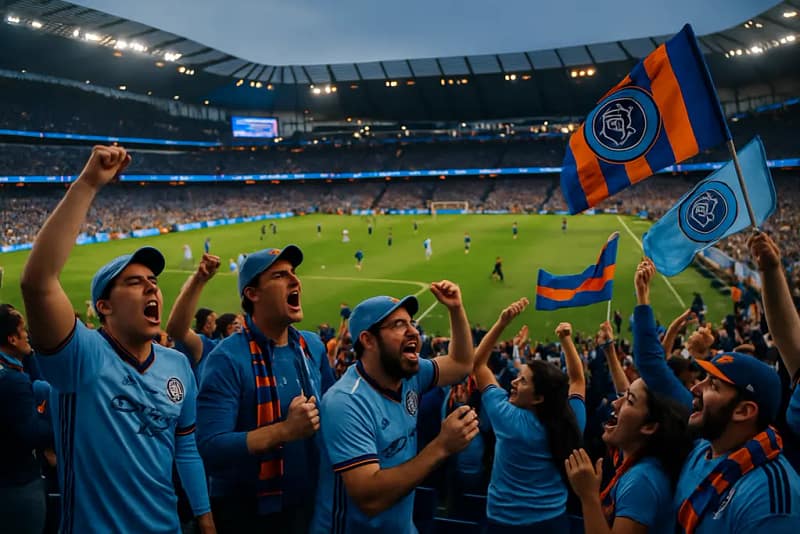

Etihad Park Impact is best understood through two linked questions: what changes for NYCFC as a club, and what changes for soccer access in New York City. As of September 21, 2026, the stadium had not opened, so any evaluation has to separate confirmed plans from outcomes that still need measurement. The confirmed timeline, the youth-soccer infrastructure already built through city partnerships, and the Willets Point development plan give enough evidence to assess why this project matters beyond a matchday address.
For NYCFC, the core shift is structural. The club has spent its MLS life without a permanent soccer-specific home in the five boroughs. A 25,000-seat stadium in Queens gives the organization a defined base for first-team matches, commercial planning, supporters’ routines, and community programming. That does not guarantee competitive gains, but it removes one long-running variable from the club’s operating model.
How Etihad Park Impact Changes NYCFC’s Home Base
A Fixed Soccer-Specific Calendar
Etihad Park is scheduled to open on July 17, 2027, when NYCFC hosts its first match in its own 25,000-seat soccer-specific stadium, according to the reported stadium opening date. The date matters because it gives the club, league, supporters, and commercial partners a concrete transition point rather than an abstract stadium promise.
From a roster-evaluation perspective, the stadium itself should not be treated as a direct performance upgrade. Players still determine match outcomes. Coaching decisions, squad health, tactical fit, and recruitment remain more important than architecture. The practical value is different: a dedicated venue can standardize home routines, presentation, field use, and matchday operations. Those are margins, not guarantees.
Venue Control And Squad Planning
The clearest competitive benefit is operational control. A club with a dedicated home can plan around a venue that is built for soccer rather than fitting soccer into a broader venue schedule. That affects training-week rhythm, supporter atmosphere, hospitality inventory, and the way the club packages itself to players and staff. For a front office, it also helps separate sporting decisions from venue uncertainty.
Premium-ticket demand, according to the research record, has exceeded sales expectations in the stadium’s luxury and premium sections. That fact is relevant to soccer operations only if it strengthens the club’s business base over time. Revenue alone does not build a balanced roster, but predictable demand can support a more stable club environment.
Local Soccer Development In The Five Boroughs
Etihad Park Impact And Youth Access
The Etihad Park Impact on youth soccer depends less on the stadium bowl and more on the programs attached to it. The NY Soccer Initiative, launched in 2016 by NYCFC, Etihad Airways, the Mayor’s Fund, and partners, has built 50 mini-soccer pitches across the five boroughs and aims to reach 50,000 young people by 2026 through free programming and field access, according to the Mayor’s Fund City Soccer Initiative.
That is the strongest development link in the evidence available. Youth access in dense cities is often limited by field availability, safe play spaces, coaching access, and travel time. Mini-pitches do not create professional players by themselves, but they reduce one barrier: consistent places to play. For local development, that is a material starting point.
From Mini-Pitches To Player Pathways
The harder question is whether broader participation becomes a stronger player pathway. The research supports field construction and participation goals, not a direct pipeline of named academy graduates from those pitches into NYCFC’s first team. A cautious reading is necessary. The public benefit can be real even if the professional pathway remains indirect.
For scouts and academy staff, more neighborhood play spaces can widen the first layer of discovery. The next layers still require coaching quality, family support, transportation, school balance, and competitive match environments. That is where Etihad Park’s planned community presence may matter: NYCFC’s nonprofit arm, City in the Community, is set to have headquarters in the stadium, including an innovation lab focused on sports technology, workforce development, and entrepreneurship for local youth.
- Field access addresses the first participation barrier.
- Free programming can reduce entry costs for families.
- Stadium-based community operations can connect sport with education and workforce programs.
- Professional player development still requires long-term tracking, coaching, and competitive evaluation.
Willets Point As A Sports-Culture Project
Jobs, Housing, And Matchday Demand
The Willets Point redevelopment gives the stadium a wider civic context. The research notes include 2,500 units of fully affordable housing, a 650-seat public school, a 250-key hotel, more than 40,000 square feet of public open space, retail and amenity space, over 14,200 construction jobs, and approximately 1,550 permanent jobs once operations begin. Those figures place the stadium inside a neighborhood-development plan rather than as a stand-alone venue.
For sports culture, that distinction matters. A stadium surrounded only by parking and event traffic has a different public profile than one tied to housing, education, and open space. The soccer benefit is still dependent on execution: safe access, transit flow, local hiring, affordable programming, and the degree to which nearby residents feel included in the matchday identity.
The same tension between venue ambition and public benefit appears in our analysis of the RFK Stadium plan, where stadium design and community access sit in the same policy debate. Readers seeking broader perspectives on community football can explore related discussions at Banat Zayed.
Gotham FC And Women’s Soccer Visibility
Gotham FC is set to move from New Jersey to share Etihad Park with NYCFC beginning in 2028, according to the research record. That would place the NWSL club in the five boroughs for the first time. For local soccer development, this is not a minor scheduling note. Girls and young women in New York City would have a top-flight women’s professional club based in the same venue ecosystem as the men’s MLS club.
The sporting effect should be measured carefully. Shared venue use can increase visibility, but visibility is not the same as development. The more meaningful indicators will be attendance, community programming, academy and clinic access, local partnerships, and how often women’s soccer is treated as a central part of the venue’s calendar rather than a secondary tenant.
Olympic Use And International Soccer Signal

Nine Matches In 2028
Etihad Park has been designated in the research record as one of the venues hosting nine soccer matches during the 2028 Summer Olympics. That gives the Queens venue a confirmed international function soon after its scheduled opening. For NYCFC, the benefit is brand exposure. For local players and families, the value is proximity to elite international soccer without leaving the city.
That Olympic use should not be overstated as a development engine on its own. Major events can inspire participation, but the durable effects come from access before and after the event. The more useful question is whether the stadium and the mini-pitch network work together: one high-profile venue at the top of the local soccer pyramid, and accessible neighborhood spaces at the base.
Private Financing And Stadium Identity
The project is described in the research notes as fully privately financed by NYCFC for stadium construction costs and designed as New York City’s and MLS’s first fully electric professional sports stadium. Those details affect how the project is judged. Private financing changes the funding debate, while the fully electric design places the venue inside a modern sustainability standard for sports infrastructure.
For supporters, the identity question is simpler: will the building feel like NYCFC’s home? The answer cannot be fully assessed before the first match on July 17, 2027. Still, the ingredients are concrete: a soccer-specific footprint, a Queens location, a community-programming base, and a women’s professional club scheduled to join the venue in 2028.
Etihad Park Impact On NYCFC And Local Soccer Development
The strongest reading of Etihad Park Impact is that it gives New York City soccer a clearer structure. NYCFC gains a permanent home, Gotham FC gains a planned base in the five boroughs from 2028, youth players already have a growing network of mini-pitches, and Willets Point gains a sports anchor inside a larger redevelopment plan.
The cautious reading is just as necessary. Stadiums do not automatically create academy players, winning squads, or equitable access. Those outcomes require coaching, operations, affordability, scheduling discipline, and measurable participation after the doors open. On the evidence available as of September 21, 2026, Etihad Park is a significant soccer infrastructure project with credible development links. Its long-term value will be judged by how well NYCFC and its partners connect the professional venue to neighborhood participation across the five boroughs.