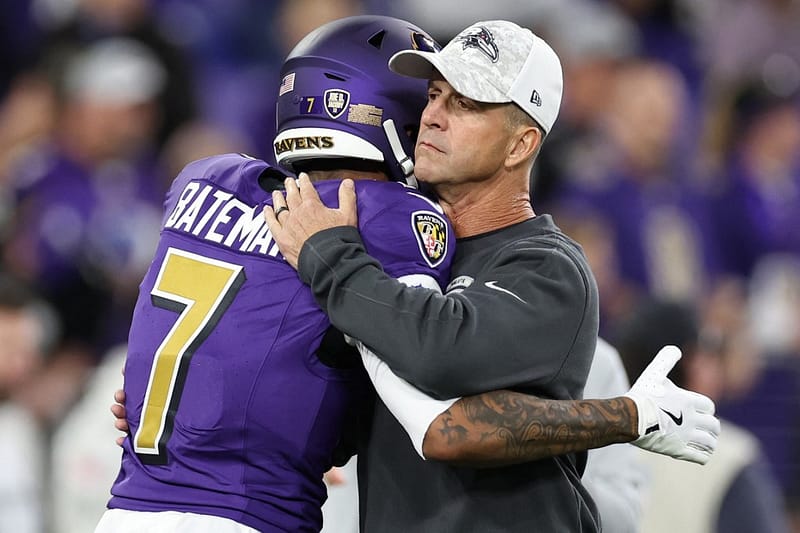

The Baltimore Ravens do not need Rashod Bateman to become the whole passing game. Lamar Jackson is still the center of everything. Zay Flowers is the most reliable receiver in the room. Mark Andrews remains a defining middle-field target. Derrick Henry still forces defenses to respect Baltimore’s run game before they can worry about everything else.
But Bateman’s health and role may decide how ambitious the Ravens’ passing game can become in 2026.
That is why his injury watch matters before camp fully settles into rhythm. The Ravens opened their summer calendar with rookies, quarterbacks, and injured veterans reporting July 24, veterans reporting July 28, and the first full public practice July 29 at the Under Armour Performance Center in Owings Mills, Maryland. By the time Baltimore reaches its joint practices with the Minnesota Vikings and Washington Commanders in August, the team needs more than optimism around Bateman. It needs proof.
The Ravens have moved into a new offensive chapter under coordinator Declan Doyle. They have young receivers pushing for larger roles. They have a franchise quarterback who believes his best football is still ahead. They also have a veteran wideout whose 2025 season became a warning about how quickly injuries can shrink a passing-game plan.
Why Bateman’s 2025 Still Hangs Over Baltimore
Bateman’s 2025 season was not just disappointing statistically. It changed the way Baltimore has to think about his place in the offense. NBC Sports reported that Ravens general manager Eric DeCosta called last year a “lost season” for Bateman after he struggled through an ankle injury and finished with a career-low 224 receiving yards in the article on Bateman’s fresh start.
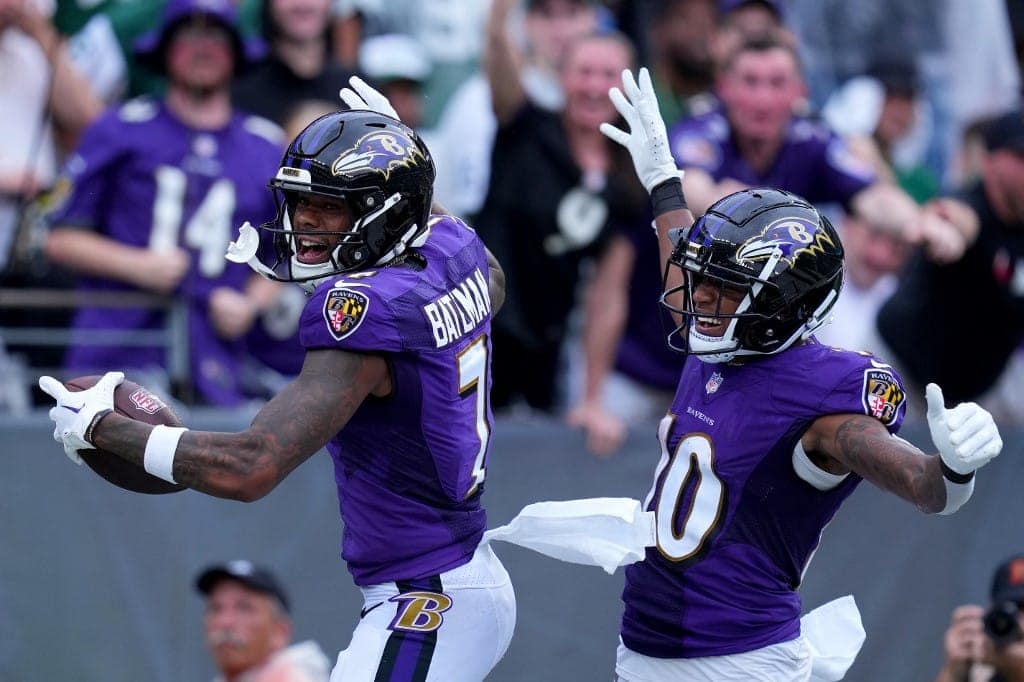
That framing matters because it came from the front office, not outside speculation. Baltimore invested in Bateman with a three-year, $36.75 million extension before the 2025 season, then did not get the expected return. DeCosta still expressed confidence, calling Bateman a playmaker and pointing to Doyle’s offense as a new opportunity.
That is the tension. The Ravens clearly still believe in the player. They also cannot ignore the production dip.
Bateman’s 2024 season showed what he can bring when healthy and integrated: 756 receiving yards and nine touchdowns. His 2025 season showed what happens when injuries and inconsistency remove that explosive element. The gap between those two versions of Bateman is the difference between Baltimore having a complete receiver room and Baltimore needing several young players to grow up quickly.
How The Injury Watch Changes The Passing Game
An injury watch is not only about whether a player is available. It is about what kind of player he is when available. A receiver returning from an ankle issue can be technically active and still not fully explosive. Route tempo changes. Breaks flatten. Separation shrinks. Deep speed becomes less threatening. A quarterback notices.
For Bateman, that matters because his value has always been tied to route detail, timing, vertical threat, and the ability to punish defenses that overplay Baltimore’s run game. If he is moving freely, he gives Jackson an outside answer who can win beyond the first read. If he is limited, the Ravens’ passing game can become more condensed.
That is especially important in Doyle’s first camp as offensive coordinator. A new play caller needs clarity. He needs to know which receivers can handle motion, option routes, vertical concepts, red-zone packages, and third-down spacing. If Bateman is full-speed early, Doyle can build with him. If the staff has to manage him, the offense may tilt more heavily toward Flowers, Andrews, and the younger receivers.
The Ravens do not need Bateman to carry the passing game. They need him to stretch it.
Why Declan Doyle’s Offense Makes This A Fresh Start
The change to Doyle gives Bateman a real reset, not just a slogan. A new coordinator can redistribute roles, change route emphasis, adjust personnel groupings, and decide which receivers fit which concepts. That can help a player whose previous season became clouded by injury and reduced production.
DeCosta’s public confidence matters because it suggests Baltimore still sees Bateman as more than a depth piece. The phrase “fresh start” is often overused in football, but here it fits. Bateman’s 2026 role is not locked into what happened last season. It will be built through camp.
That makes every practice important. Can Bateman win intermediate routes with rhythm? Can he threaten vertically enough to open space for Flowers underneath? Can he handle timing throws from Jackson in the red zone? Can he become a reliable second or third option in high-leverage passing situations?
Doyle’s offense will be judged partly by whether it can make Baltimore’s passing game feel less predictable. A healthy Bateman helps because he gives the Ravens another receiver defenses must respect outside the numbers.
How Zay Flowers Changes Bateman’s Job
Zay Flowers’ presence is both a benefit and a challenge for Bateman. Flowers gives Baltimore a proven receiver who can separate, move around formations, and create after the catch. That takes pressure off Bateman because he does not have to be WR1. It also raises the standard because the Ravens need Bateman to complement Flowers, not simply exist behind him.
The best version of the Ravens’ passing game has Flowers stressing defenders horizontally and after the catch, Bateman stretching and working intermediate windows, Andrews controlling the seams, and Jackson punishing defenses that overcommit to Henry and the run game. That structure forces opponents to defend the full field.
The weaker version is more cramped. Flowers draws the coverage attention. Andrews becomes the obvious middle-field target. Younger receivers rotate without clear roles. Bateman becomes a question rather than a solution. Jackson has to create more out of structure.
That is why Bateman’s health changes the whole shape. His availability does not just affect his own stat line. It affects how defenses allocate attention across the Ravens’ offense.
Why Baltimore Did Not Add A Veteran Receiver Matters
The Ravens’ official wide receiver training camp preview says Baltimore has not signed a veteran target this offseason, creating a major opportunity for young receivers to emerge in Doyle’s offense. That detail makes Bateman’s injury watch more important, not less.
If the Ravens had added a proven veteran, they could treat Bateman’s status as one piece of a crowded room. Instead, the receiver group is built around internal answers. Devontez Walker, LaJohntay Wester, Ja’Kobi Lane, Elijah Sarratt, Octavian Smith Jr., Dayton Wade, and others are competing for regular playing time behind the established names.
That competition is healthy, but it also carries risk. Young receivers can look exciting in camp and still be inconsistent in the regular season. They can win isolated reps but struggle with weekly game plans. They can flash without earning Jackson’s full trust.
Bateman is supposed to be the stabilizer between Flowers and the youth movement. If he is healthy, the younger receivers can grow into roles. If he is not, Baltimore may need them to become reliable before they are ready.
The Receiver Room At A Glance
The Ravens’ passing-game structure depends on how the receiver room sorts itself before Week 1. Bateman’s status is the swing point because he sits between proven and unproven.
| Ravens Passing-Game Piece | Main Value | Camp Question |
|---|---|---|
| Rashod Bateman | Outside route-running, vertical threat, veteran experience | Can he stay healthy and regain 2024 explosiveness? |
| Zay Flowers | Separation, motion value, run-after-catch ability | Can he remain the clear receiver engine? |
| Mark Andrews | Middle-field control and red-zone trust | How does Doyle balance tight end targets with receiver growth? |
| Devontez Walker | Size and developmental upside | Can he become a consistent Sunday target? |
| Ja’Kobi Lane / Elijah Sarratt | Rookie playmaking and long-term upside | How fast can they earn real snaps? |
That table shows why Bateman’s injury watch is not isolated. If he is right, Baltimore’s passing game becomes layered. If he is not, the Ravens’ depth chart becomes more fragile.
Why Lamar Jackson Needs More Than One Receiver Answer
Jackson can elevate an offense in ways most quarterbacks cannot. His running threat changes defensive rules. His arm strength forces safeties to stay honest. His ability to extend plays makes coverage harder. But even Jackson needs dependable passing-game structure if Baltimore wants to be more than dangerous.
The Ravens’ official summer dates page noted that recent team content has highlighted Jackson feeling confident, his work with Zay Flowers, and the offense starting camp hot. Those are good signs, but the larger question remains: can Baltimore sustain a passing game through multiple receiver answers?
World Football Idol’s earlier look at the Ravens and Chiefs slipping in AFC grades captured how quickly AFC contenders can lose separation when weaknesses appear. For Baltimore, the passing game cannot become another hidden weakness. It has to be a way to punish defenses that sell out against Henry and Jackson’s legs.
Bateman is part of that solution because he gives Jackson a receiver who can win with timing rather than only improvisation. That matters in January. Playoff defenses often reduce easy rushing lanes and force quarterbacks to win from the pocket in tight windows. Baltimore needs receivers who can win those windows.
How Derrick Henry’s Presence Raises The Opportunity
Henry’s presence should help the passing game. Defenses cannot casually ignore Baltimore’s run threat. They must commit bodies, fit gaps, and respect play-action. That should create space behind linebackers and outside against single coverage.
Bateman is exactly the kind of player who should benefit from that if healthy. Play-action can give him cleaner releases. Run-heavy personnel can create favorable matchups. Safeties stepping toward Henry can open intermediate and deep windows.
But the receiver has to be able to threaten those windows. If Bateman is missing burst or confidence in his ankle, defenders will not fear him the same way. If he is healthy, the Ravens can make defenses pay for overloading against the run.
That is why his injury watch affects the whole offensive identity. Baltimore’s run game creates opportunity. Bateman’s health determines whether one important part of the passing game can take advantage.
Why The Young Receivers Make Camp More Urgent
The Ravens’ young receivers are not just depth names. They are part of the future of the offense. Ja’Kobi Lane and Elijah Sarratt arrive with draft investment. Walker and Wester have a chance to push for playing time. Wade and Smith need strong camps to stay in the conversation.
The official team preview called the No. 3 receiver spot a “golden opportunity.” That wording matters. It suggests the Ravens are not pretending the depth chart is fully settled. They want someone to take the job.
Bateman’s health affects how urgently that competition develops. If he is healthy, the young receivers can compete for complementary snaps and packages. If he is limited, one of them may need to become a primary option quickly.
That can be exciting, but it can also be risky. Young passing games often look better in camp clips than in regular-season protection adjustments, third-down reads, and hot-route situations. Jackson’s trust must be earned, and trust comes from being where the quarterback expects at the exact time he expects it.
Why Joint Practices Will Tell The Truth
Baltimore’s summer schedule includes joint practices with the Minnesota Vikings on Aug. 19-20 and with the Washington Commanders on Aug. 26. Those sessions may reveal more about the receiver room than normal camp practices.
Joint practices test receivers against unfamiliar defensive backs, different coverage rules, and real competitive energy. They also test the quarterback’s confidence in his targets. A receiver can win repeatedly against teammates and still struggle when another team presses him differently or disguises coverage in a new way.
For Bateman, those practices should be treated as checkpoints. Does he separate against starting-caliber corners? Does he finish routes through contact? Does Jackson look for him in competitive periods? Does Doyle build scripted looks that involve him early?
If the answers are positive, Baltimore can feel much better about its passing-game structure. If not, the Ravens may have to accelerate the youth movement or rethink target distribution before the regular season opener against the Indianapolis Colts on Sept. 13 at Lucas Oil Stadium.
What A Healthy Bateman Would Change
A healthy Bateman gives Baltimore balance. He does not need 120 targets. He does not need to lead the team in receiving. He needs to make defenses believe the Ravens can win outside without forcing every answer through Flowers and Andrews.
That creates downstream benefits. Flowers gets more space. Andrews sees less predictable coverage. Henry’s play-action threat becomes more dangerous. Jackson has more defined answers. Doyle can call a wider game. The young receivers can develop at a realistic pace.
The Ravens’ passing game does not need to become pass-first. It needs to become pass-dangerous.
Bateman is one of the players who can make that happen because his best version gives Baltimore a route runner who can create structure. When he is right, he is not just a deep threat or a name on a depth chart. He is a spacing tool, a timing option, and a way to stop defenses from compressing the field.
What Would Make The Injury Watch Concerning
The concerning signs would be clear. Missed practice time. Limited route variety. Reduced deep work. Hesitation in breaks. Fewer reps with Jackson. Young receivers taking his first-team opportunities because the staff is managing him. Public comments that sound more cautious than confident.
None of those signs would automatically ruin Baltimore’s season. But they would change the passing-game math before Week 1.
The Ravens can survive a lot because Jackson is extraordinary. But surviving is not the goal. Baltimore wants to return to the AFC’s top tier. To do that, it needs more than quarterback magic and power football. It needs a passing game that can solve playoff defenses.
Bateman’s injury watch is important because it tells the Ravens whether one of their most important veteran answers is available for that job.
Why Bateman’s Camp Could Reshape The Ravens’ Season
Rashod Bateman’s Ravens injury watch could reshape Baltimore’s passing game before camp because he is the bridge between what the offense has been and what Doyle wants it to become. He represents veteran trust in a room filled with young opportunity. He represents outside structure in an offense built around a unique quarterback and a dominant run threat. He represents a chance to recover the explosive element he showed in 2024 before the 2025 ankle injury interrupted everything.
If Bateman is healthy and productive, the Ravens can enter the season with a more complete passing game than they had a year ago. If he is not, Baltimore’s young receivers will face pressure faster, Flowers will carry more defensive attention, and Doyle may have to build around a narrower set of proven answers.
That is why this is not just a player-health story. It is an offensive-identity story.
The Ravens already know what Lamar Jackson can do. They already know what Henry forces defenses to respect. They already know Flowers can be a primary receiver. The question is whether Bateman can help turn those pieces into a passing game that feels deeper, cleaner, and more dangerous before the season ever begins.
If he does, Baltimore’s offense changes. If he does not, the Ravens may spend another year asking Jackson to make the passing game look more complete than it really is.