


The USA U-20 roster for the 2026 FIFA U-20 Women’s World Cup in Poland is not only a tournament squad. It is a clear marker of how the American player pathway is changing at the top end of the youth game. The group entered the Sept. 5-27, 2026 tournament with eight professional players across six NWSL clubs, matching a record high for U.S. U-20 teams, according to U.S. Soccer tournament notes.
That detail matters because youth national team rosters used to be read mainly through college commitments, academy backgrounds and age-group continuity. This squad asks a sharper question: how should fans evaluate teenagers who already have professional contracts, but still have limited U-20 international sample sizes? As of Sept. 7, 2026, that answer should stay grounded in roster facts, prior age-group experience and the development aims publicly described by head coach Vicky Jepson.
Why The USA U-20 Roster Looks Younger And More Professional
USA U-20 Roster And The Pro Pathway
The first major read on the squad is structural. Eight professional players is not a small wrinkle; it is one of the defining features of the group. The research notes identify those pros as spread across six NWSL clubs, with three rookies among them: Evan O’Steen, Linda Ullmark, and Audrey McKeen. Six of the professional players, excluding Ullmark and Katie Scott, skipped college soccer and signed pro contracts as high school-aged players through the NWSL’s Under-18 Entry Mechanism.
For fan engagement, that shifts how the team is discussed. A pro teenager carries a different public profile from a player entering through college soccer. She may have trained in a senior club environment, faced a faster daily tempo, and learned professional habits earlier. That does not automatically make her more prepared for a youth World Cup, and it should not be treated as proof of senior-team readiness. It does, though, give analysts a firmer reason to watch how she handles repeated match demands, role clarity, and the physical tempo of international youth play.
The USA U-20 roster also includes a meaningful age spread. The research notes list nine players born in 2006, seven born in 2007, and five born in 2008. That means the staff did not select only the oldest available age-band. Five players born in 2008 — O’Steen, Pearl Cecil, Nyanya Touray, Micayla Johnson, and McKeen — are age-eligible for both the 2026 and 2028 U-20 Women’s World Cups. In practical terms, Poland 2026 is both a competition and a development reference point for that younger group.
What The Age Mix Changes For Match Roles
Age in youth soccer is never just a number on a roster sheet. It often affects decision-making speed, duel management, recovery between matches, and comfort with tournament pressure. The oldest player in the group is Alex Buck, born in 2006, while McKeen, born in 2008, is the youngest. That kind of range can create a squad with different development clocks inside the same dressing room.
The coaching challenge is to make those timelines serve the team rather than divide it. A player born in 2008 may be carrying less U-20 experience but may also be selected because her traits fit a role the staff values. A player born in 2006 may bring greater maturity inside the age group, but still has to earn minutes within the game model. The supported point is not that one age band is better. It is that Jepson’s selection reflects a mix of current readiness and longer-term pathway value.
How Prior Youth World Cup Experience Stabilizes The Group
Returners Give The Squad Reference Points
The youth profile of this team is balanced by players who have already been through major age-group events. FIFA’s interview with Vicky Jepson notes that Caroline Birkel and Emeri Adames returned from the 2024 U-20 Women’s World Cup in Colombia, where Birkel was a backup goalkeeper and Adames started all seven matches and led the team in assists, via FIFA’s Jepson interview.
That matters for a squad with only modest U-20 cap volume. The research notes list 128 total U-20 caps across the team, averaging just over six per player. Only Emeri Adames, Aven Alvarez, and Katie Scott have more than 10 U-20 appearances. In a tournament setting, that makes the few higher-experience players more relevant to the team’s rhythm, even if leadership is not limited to cap totals.
Several players also arrived with U-17 World Cup or U-17 cycle experience. Evan O’Steen, Katie Scott, Kennedy Fuller, Ainsley McCammon and Y-Lan Nguyen featured in the 2024 U-17 Women’s World Cup. Pearl Cecil, Nyanya Touray, and Micayla Johnson played in the 2023 pan-American U-17 cycle. That background is useful because youth international tournaments create pressures that club environments cannot fully copy: short rest, unfamiliar opponents, travel routines, and quick tactical resets.
Why Caps Need Context
Caps are helpful, but they should not be read as a complete measure of readiness. A player with fewer U-20 caps may have more pro training exposure. A player with more youth national team appearances may better understand U.S. tournament routines. A player coming from U-17 competition may already know the emotional rhythm of group-stage football, even if the U-20 level is faster and more physically demanding.
For supporters reading the USA U-20 roster, that is the key distinction: experience is layered. It includes international caps, club setting, previous tournament roles, and positional demands. A goalkeeper’s learning curve is different from a winger’s. A center back’s communication burden is different from a forward’s pressing and finishing tasks. The supported evidence shows a squad with varied backgrounds rather than a single development profile.
Where The Fresh Faces Fit Into Jepson’s Selection Logic
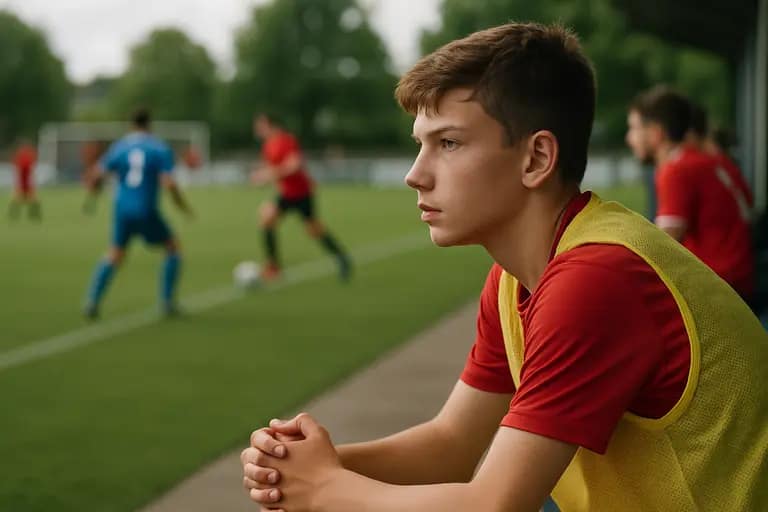
Professional Teenagers Are Not A Shortcut
Jepson’s stated selection themes, as reflected in the research, centered on bridging this U-20 group toward the full USWNT and building tactical versatility. That is a careful framing. It does not say every young professional is close to senior international football. It says the roster is part of a bridge, and bridges are built through repeated competitive tests.
That is why the fresh faces should be assessed by role fit, not by hype. O’Steen and McKeen, both born in 2008 and already professional rookies, sit at the intersection of the new pathway and the next U-20 cycle. Ullmark’s scoring record at U-20 level — six goals in seven caps, with four of those goals in 2026 — gives her production that can be discussed with evidence. Micayla Johnson’s U-17 record, nine goals in 18 caps, points to age-group attacking output, though U-17 numbers should not be treated as direct U-20 predictions.
For readers interested in a sports-related perspective, cultural connections and discussions about the evolution of youth pathways across various sports can be explored in more depth at Booksonbaseball, part of our related content network.
The Preparation Record Gives A Baseline
The team’s 2025-26 preparation record also gives context. The research notes say the U.S. compiled a 6-2-2 record in prep matches before the tournament, with eight of those friendlies coming against nations also competing in Poland 2026. Across those friendlies, the U.S. scored 26 goals and conceded six. Those numbers support the idea that the group had meaningful tests before arriving in Poland, but they do not settle which young players would influence matches once the tournament began.
That distinction is important for fan conversation. A strong friendly record can build confidence around process, but World Cup matches bring different incentives. Opponents manage risk differently. Coaches shorten rotations. Set pieces and transition moments carry greater weight. The USA U-20 roster has enough attacking indicators to draw attention, yet the responsible reading is that tournament performance must be judged match by match, with opponent quality and player roles in view.
What Fresh Faces Mean For The USA U-20 Roster
The central story of the USA U-20 roster is not simply that it has new names. It is that those names come from different points in a shifting American development model. Some are already professionals. Some have U-17 tournament experience. Some are young enough to return for the 2028 U-20 cycle. A few carry stronger U-20 cap totals, while many are still building their international record.
That mix gives Jepson a squad with present competitive demands and longer pathway value. For supporters, it also creates a more informed way to watch the team. The most useful questions are not only who scores or starts. They are which players handle tempo, which ones adapt across roles, which younger players look comfortable against older opponents, and which experienced returners help stabilize the group during difficult stretches.
As of Sept. 7, 2026, the safest analysis is evidence-led: the squad is younger in places, more professionalized than many past U.S. U-20 groups, and built with a stated eye toward versatility and future senior-team bridging. That makes the fresh faces more than a novelty. They are a measure of where the U.S. women’s player pipeline stands during Poland 2026.