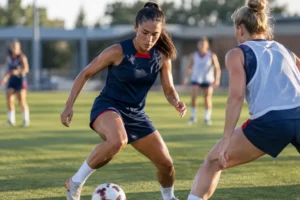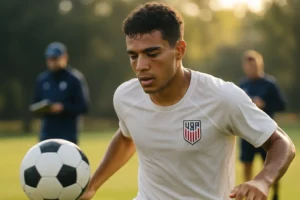
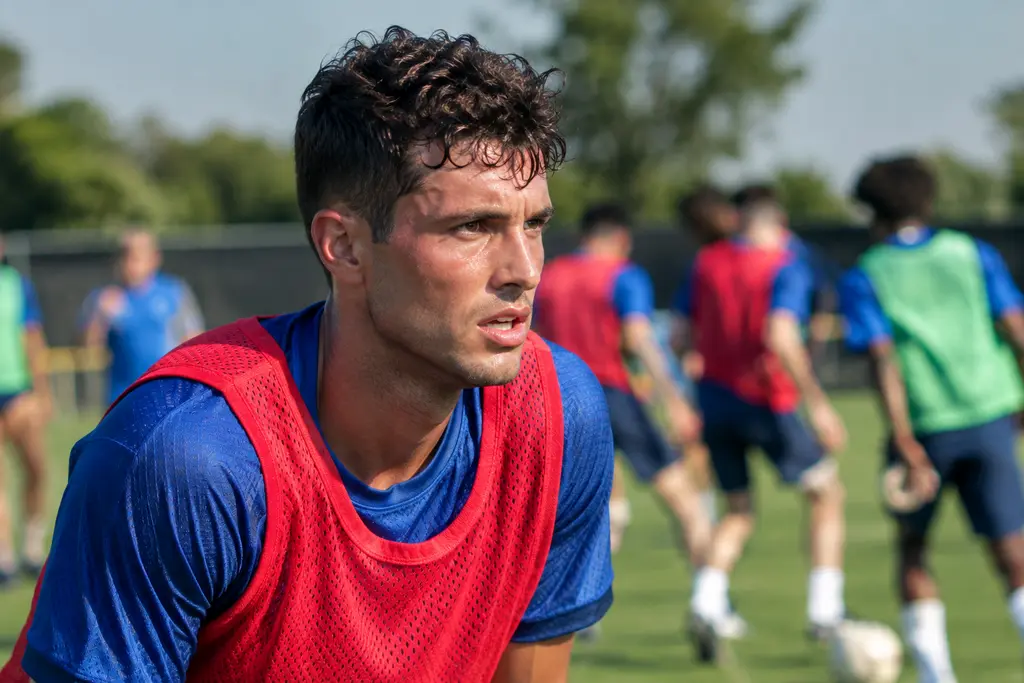

USMNT roster adjustments carry real competitive weight before the Concacaf Nations League quarterfinal against Haiti because Mauricio Pochettino’s September–October window changed the selection picture. The United States went 4-0-0 in friendlies against Peru, Chile, Mexico and Canada, a run that gave the staff useful data without settling every roster question before the Nov. 14 and Nov. 17 tie.
The value of that window was not only in the results. It tested younger players, removed several senior regulars from the immediate frame, and exposed how thin the forward pool becomes when injuries hit at the same time. The Haiti matchup now asks a sharper question: which parts of the fall experiment should be carried into knockout matches, and which areas need senior stability?
Why USMNT Roster Adjustments Matter Now
The September–October results gave Pochettino a stronger platform than a mixed friendly window would have done. NBC Sports listed the four wins as 4-1 over Peru, 4-2 over Chile, 3-0 over Mexico and 1-0 over Canada, then framed the November quarterfinals as the next selection test for the group in its roster review.
What The Four Wins Actually Changed
A perfect friendly run does not automatically define a Nations League roster. The level of pressure changes in a two-leg quarterfinal, and the staff must judge whether player performances came from sustainable role fit or from short-window momentum. Still, the sequence created evidence. Players who handled Mexico and Canada, even in friendly settings, gave the coaching staff more reason to trust them in competitive minutes.
The main effect is competition inside the pool. Pochettino can now compare returning senior players against younger call-ups who already worked inside his camp structure. That makes USMNT roster adjustments less about reputation alone and more about availability, role clarity and how quickly each player can execute match plans.
Why The Calendar Tightens Decisions
The quarterfinals against Haiti are scheduled for Nov. 14 and Nov. 17, with Sports Illustrated also reporting that Ricardo Pepi is on track to recover in time for the November camp after a muscular injury suffered on Sept. 20 with PSV against FC Twente in its injury update.
That timing matters. Pochettino does not have a long club-style training block to rebuild chemistry. The November camp is more likely to reward players who are fit, familiar with the staff’s demands, and able to handle specific tactical assignments quickly. That favors a balanced roster rather than a pure youth test or a full reset toward established names.
Forward Availability Is The Central Selection Issue
The forward group is the clearest reason for caution. Pepi’s possible return is meaningful because Patrick Agyemang has been out since spring with an Achilles injury and Haji Wright has been unavailable with a quad injury, according to the research provided. Folarin Balogun, who was not part of the September–October window, has also been returning to club action with Monaco, including substitute appearances in three recent Ligue 1 matches.
USMNT Roster Adjustments In Attack
USMNT roster adjustments in attack should be read through availability first. Pepi gives the group a more natural central option if he is ready for camp work. Balogun’s situation is different because a return to club minutes is encouraging, but national-team selection still depends on match fitness and how the staff reads his workload. With Agyemang and Wright unavailable, there is less margin for carrying forwards who are not ready for meaningful minutes.
This is also where the fall youth push becomes relevant. Julian Hall and Justin Ellis were among the young attacking names involved during the broader September–October integration, while 16-year-old Cavan Sullivan was one of the headline youth inclusions in the fall roster cycle. Their presence did not mean the senior forward hierarchy had been permanently rewritten. It did show that Pochettino is willing to expose younger players to senior-team demands earlier than many previous cycles might have done.
The risk is asking too much too soon in a knockout tie. Younger forwards can bring pressing energy and directness, but they also need service patterns, defensive timing and calm finishing decisions. Against Haiti, the better use of youth may be role-specific rather than symbolic: short bursts, pressing assignments, late-game running, or matchups where speed and freshness matter.
The Senior Core Is Still Part Of The Equation
Christian Pulisic, Weston McKennie and Timothy Weah were left off the September–October roster, according to the research notes. Their absence allowed Pochettino to test younger and MLS-based players, including Adri Mehmeti, Neil Pierre and Peyton Miller. That choice widened the pool, but it did not remove the value of established players who have handled major tournament settings.
Balancing Youth With Proven Roles
The key question is not whether the United States should be young or experienced. It is whether each role has the right profile. Wide attacking roles, midfield pressing assignments and fullback cover all require different answers. A senior player may offer better timing and decision-making; a younger player may offer sharper legs and fewer fixed assumptions. Pochettino’s task is to separate form from fit.
For readers tracking the broader roster thread, our earlier fall roster strategy review examined why the friendlies mattered as an evaluation block rather than as a final depth chart. That same framing applies here. The Haiti tie should test which fall takeaways survive when the format becomes competitive.
There is also a leadership layer. Pulisic, McKennie and Weah have played through larger international moments than several of the September–October call-ups. If any return for the November camp, the staff will have to reintegrate them without erasing the momentum built by the younger group. That is a selection challenge, not a contradiction.
Goalkeeper And Defensive Choices Need Clarity
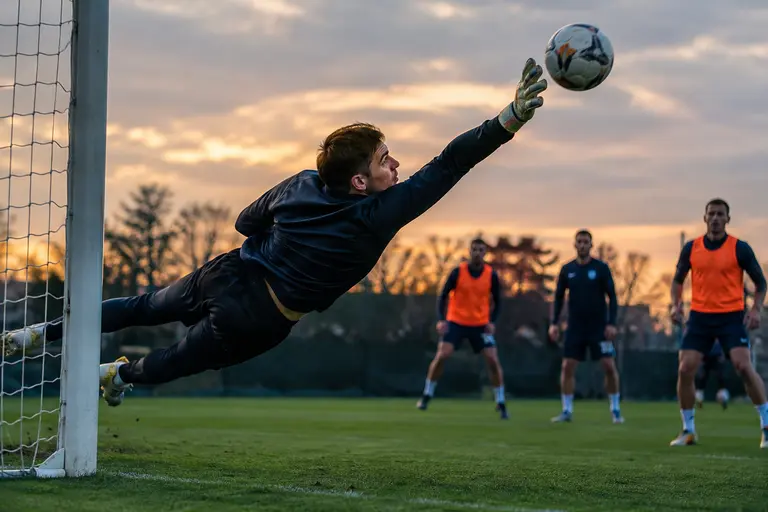
The goalkeeper pool remains unsettled. Diego Kochen, Brian Schwake and Chris Brady are among the names identified in the research as likely candidates, with Kochen viewed as a leading contender because he is in Europe and has no MLS playoff concerns affecting his schedule. That does not make the decision automatic. Goalkeeper selection in a two-leg tie is about distribution, shot-stopping, command of the penalty area and communication with the back line.
Why The Back Line May Be More Stable
The defensive group appears closer to definition than the goalkeeper spot. Chris Richards, Antonee Robinson, Alex Freeman, Sergino Dest, Auston Trusty, George Campbell, Max Arfsten and Mark McKenzie were listed in the research as projected or likely defensive options. That group gives Pochettino different profiles: recovery pace, fullback width, left-sided balance and center-back depth.
Still, defensive selection should not be treated as settled. Haiti’s approach across two legs will influence whether the United States prioritizes buildup security, transition defending or attacking width from fullback. Dest and Robinson, if selected and fit, can change the spacing of the attack. Richards and McKenzie can help with recovery coverage. Trusty and Campbell add further center-back options if the staff wants physical presence.
The goalkeeper decision connects directly to those choices. A younger keeper behind an experimental back line increases communication risk. A more familiar defensive unit can make a goalkeeper change easier to absorb. For a team still being shaped under Pochettino, the safest answer may be coherence rather than the most aggressive talent bet.
How The Haiti Tie Should Frame Selection
The Haiti quarterfinal should be judged as a competitive checkpoint, not just another evaluation camp. The United States can use youth, but the selection must still protect structure. That means enough attacking depth to cover injuries, enough midfield experience to manage momentum, and enough defensive continuity to avoid turning a two-leg matchup into a transition-heavy contest.
For broader sports coverage across the same network, Back2Tap offers another perspective on similar types of analysis, highlighting USMNT’s roster strategies among other athletic narratives.
USMNT roster adjustments before Haiti should therefore be read in tiers. Pepi’s availability could change the center-forward plan. Balogun’s club minutes keep him in the conversation if his fitness holds. The younger attackers remain valuable, but their roles should be measured. The goalkeeper competition needs a firm answer. The defense has enough options, yet the pairings and fullback choices will reveal how Pochettino wants to control risk.
The most useful read is a cautious one. The 4-0-0 friendly run gave the staff evidence, not certainty. The Haiti quarterfinals on Nov. 14 and Nov. 17 will require selection discipline, and the best roster may be the one that blends the fall’s new energy with enough senior reliability to make the two-leg format manageable.