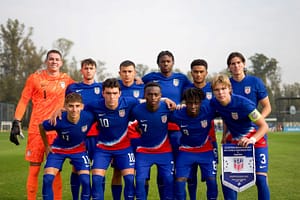


The expansion of the 2026 FIFA World Cup to a 48-team framework across three host nations has fundamentally transformed the realm of tournament forecasting. With more matches, extensive transit schedules across North America, and a brand-new Round of 32 knockout tier, traditional subjective analysis is no longer sufficient to project a world champion. Instead, advanced predictive models and complex performance indicators have taken center stage, altering how enthusiasts interact with data.
As teams establish camp in early June 2026, data matrices from leading statistical engines have updated their simulations. Interestingly, the latest supercomputer iterations do not mirror historic tournament reputations. While powerhouse nations like France, Brazil, and defending champions Argentina command massive media attention, the underlying analytical indicators position Spain and England at the absolute summit of the favorite matrix.
This modern shift demonstrates that the international market reflects more than just raw star power. Sophisticated algorithms are heavily prioritizing squad depth, age profiles, and, above all, tactical stability. Consequently, data analysis is no longer a passive background element; it has integrated directly into the modern fan experience, changing how we view tournament value.
The Analytical Supremacy of Spain and England
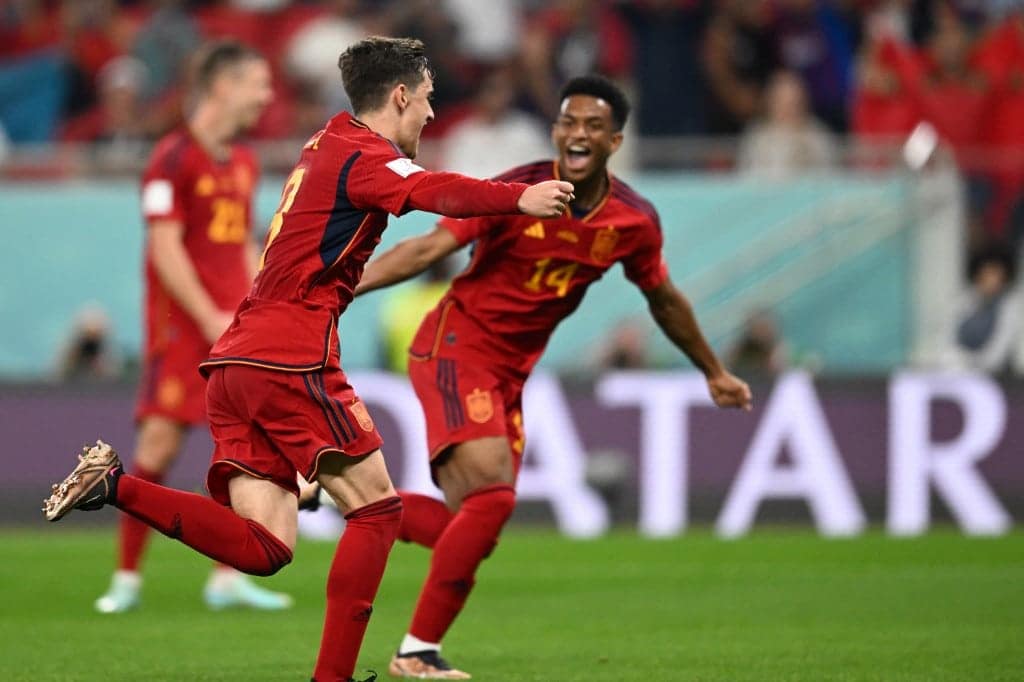
According to the comprehensive tournament simulations finalized by Opta Analyst, Spain leads all global nations with a dominant 16.1% probability of lifting the trophy. Luis de la Fuente’s squad has captured the supercomputer’s favor due to an elite blend of youth metrics and possession efficiency. By pairing the metronomic control of central anchor Rodri with the vertical, line-breaking pace of wingers Lamine Yamal and Nico Williams, La Roja minimizes variance in high-stakes knockout projections.
| National Team | Opta Win Probability | Primary Tactical Indicator | Sportsbook Opening Line |
| Spain | 16.1% | High-Volume Line Breaking | +475 |
| France | 13.0% | Peak Individual Star Power | +500 |
| England | 11.2% | Squad Rotation Depth | +650 |
| Argentina | 9.8% | Low-Variance Central Spine | +900 |
| Brazil | 6.6% | High Defensive Volatility | +850 |
Directly contesting Spain’s analytical metrics is Thomas Tuchel’s England, sitting at an 11.2% win probability. The Three Lions landed in West Palm Beach, Florida, to begin their intensive preparation camp, boasting one of the deepest rosters in international football. Models favor England because their structural depth prevents drop-offs when rotating talent. Tuchel’s ability to supplement a core featuring Jude Bellingham and Declan Rice with high-intensity young profiles means England is structurally insulated against the physical wear of a 48-team bracket.
The Powerhouse Chase: Evaluating France, Argentina, and Brazil
While Spain and England lead the mathematical models, traditional giants remain within striking distance, though each carries distinct statistical flaws. France ranks second in the simulation models at 13.0%. While Didier Deschamps features the world’s most devastating big-game player in Kylian Mbappé, the models penalize the French squad slightly due to a higher reliance on transitional attacking sequences rather than sustained midfield strangulation.
Defending champions Argentina sit just below the double-digit threshold. While Lionel Messi’s squad retains unparalleled psychological resilience and a low-variance central spine, predictive algorithms factor in the natural athletic regression of an aging roster playing in a high-temperature summer tournament.
The most dramatic analytical shift involves Brazil, whose win probability has plummeted to a muted 6.6%. The supercomputer heavily penalizes the Seleção due to defensive volatility and structural inconsistencies during the qualifying cycle. Facing a brutal Group C opening match against Morocco in New Jersey, Brazil’s path presents immediate, high-variance obstacles that lower their statistical baseline.
Finding Strategic Value in the Mid-Table Grid

For analytical consumers, the true utility of advanced predictive models lies in identifying market inefficiencies among mid-table contenders. Teams like Portugal and Germany currently offer immense strategic value based on their underlying data profiles rather than public betting volume.
Portugal enters the tournament cycle holding a robust statistical floor, driven by the elite creative metrics of Bruno Fernandes and Vitinha. Concurrently, Julian Nagelsmann’s Germany features a highly projectable attacking matrix built around the dual playmaking profiles of Florian Wirtz and Jamal Musiala. These mid-table nations possess the exact tactical infrastructure required to execute deep knockout runs, making them incredibly attractive targets for data-driven projections.
This calculated hunting for value mirrors the smart roster building strategies utilized by elite front offices across professional sports. By focusing strictly on projectable efficiency metrics rather than historic public hype, analysts can pinpoint exactly which teams are equipped to outperform their baseline expectations.
Volatility Factors: Injuries, Squad Choices, and Sports Science
Predictive models are not static calculations; they fluctuate dynamically based on real-time inputs such as soft-tissue injuries, sports science data, and final squad selections. The integration of player tracking technology allows modern algorithms to adjust instantly when a key piece is compromised.
A single structural injury to a central playmaking hub can drop a nation’s win probability by multiple percentage points in an afternoon. To explore the deeper relationship between sports science, performance metrics, and soccer data collection, researchers can reference the comprehensive academic studies provided by World Cup odds experts, which outlines the physiological demands and statistical modeling used to evaluate elite players under intense tournament formats.
This continuous stream of data fundamentally changes the fan experience. Instead of treating the tournament as a static bracket, supporters interact with live-updating models that recalculate group stage advancement probabilities after every single goal. Data analysis has transformed into an active, immersive lens that brings fans closer to the tactical reality of the pitch.