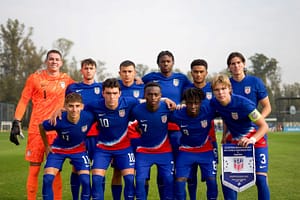

USA vs. Belgium in Seattle is easy to frame as a 2014 World Cup rematch, but that label is too small for what this Round of 16 game represents. The United States is no longer arriving as a brave outsider hoping to survive wave after wave of Belgian pressure. Mauricio Pochettino’s team enters July 6, 2026, at Seattle Stadium with a home-country platform, a knockout win already secured, a striker suspension to solve, and a chance to prove that the USMNT’s tournament identity has grown beyond nostalgia, Tim Howard memories, and respectable exits.
Why The 2014 Memory Still Shapes This Match
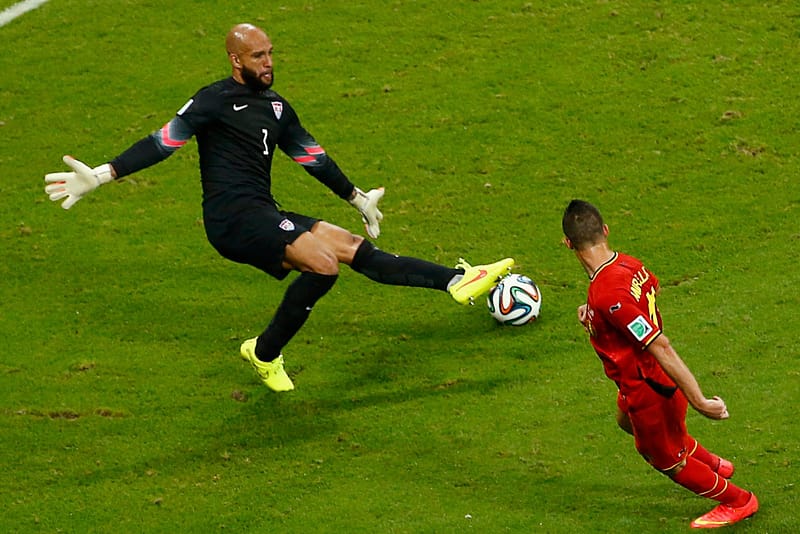
The connection between USA and Belgium still starts in Salvador, Brazil. In the 2014 World Cup Round of 16, Belgium beat the United States 2-1 after extra time in a match remembered across American soccer culture for Tim Howard’s 16 saves. FIFA’s Belgium-USA 2014 recap still treats that night as one of the great goalkeeper performances in tournament history, with Kevin De Bruyne and Romelu Lukaku eventually breaking through before Julian Green gave the U.S. late hope.
That match became a cultural marker for the USMNT. Howard turned into a national symbol, the team showed fight, and American fans had a night they could remember proudly despite the elimination. The problem is that “heroic defeat” can become a ceiling if a program lives inside it for too long.
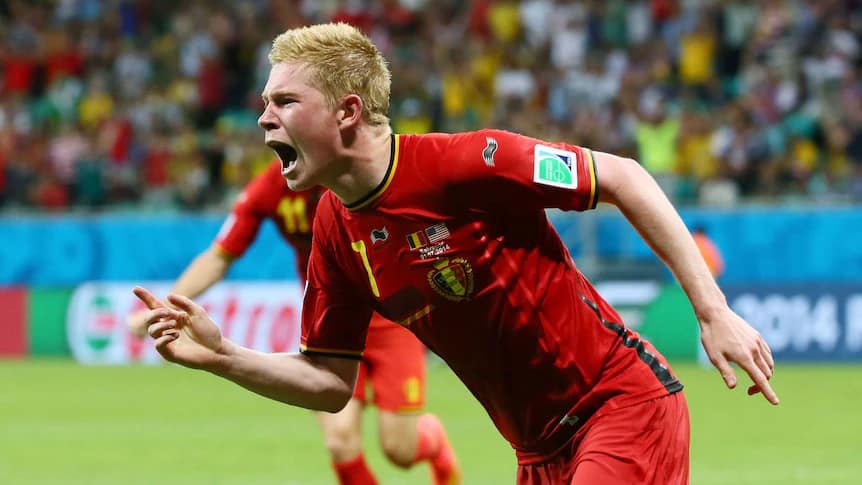
Twelve years later, the comparison is useful only if it shows how much has changed. The 2026 U.S. team is playing at home, has already won a knockout match, and is operating under a coach with elite club experience. Belgium still brings technical quality, tournament experience, and match-winning individual talent. Yet this is not the same type of matchup. The U.S. does not need to prove it belongs. It needs to prove it can advance.
That distinction changes the pressure. In 2014, survival became the story. In 2026, progression is the standard.
How Seattle Turns The Rematch Into A Home-Field Test
Seattle gives this matchup a different emotional weight. Lumen Field, branded as Seattle Stadium for the World Cup, is one of the strongest soccer environments in the United States because of its Sounders culture, downtown location, and established history of big-match crowds. Seattle’s local World Cup organizers list six matches in the city during the tournament, and the USA-Belgium Round of 16 gives the host city its defining international moment through the Seattle World Cup match schedule.
The city’s role matters because this game is not being played in a neutral emotional vacuum. The U.S. will have a crowd that understands soccer rhythm, pressure, and noise. Seattle is not a market learning how to become a soccer city during the World Cup. It is a soccer city being handed one of the tournament’s biggest American tests.
That does not guarantee a U.S. advantage. Belgium already played in Seattle during the knockout phase, beating Senegal 3-2 after extra time on July 1. That means the Red Devils know the venue, the travel setup, the surface, and the local rhythm. They will not walk into the match as strangers to the building.
Still, a home Round of 16 match in Seattle creates a sharper expectation for the United States. The crowd can lift the tempo, pressure the referee, energize the press, and turn long defensive stretches into survivable moments. For Pochettino, the challenge is making sure emotion supports structure rather than replacing it.
Why Balogun’s Suspension Changes The Tactical Story
The U.S. reached the Round of 16 by beating Bosnia and Herzegovina 2-0 on July 1, but the win came with a major tactical cost. Folarin Balogun scored, then received a second-half red card after a VAR review. That means he is suspended for Belgium, removing the USMNT’s most direct central striker from the biggest match of the tournament so far.
That absence turns the rematch into a selection test. Balogun’s movement, pressing, and finishing had helped give Pochettino’s front line a sharper identity. Without him, the U.S. has to decide whether to keep the attacking structure similar with Ricardo Pepi, use Haji Wright as a more physical reference point, or alter the shape around Christian Pulisic, Malik Tillman, Gio Reyna, Tim Weah, or another midfield-forward hybrid.
That is where this match connects with World Football Idol’s recent look at Ricardo Pepi’s World Cup revival. Pepi’s value is no longer theoretical. A suspension to Balogun means the U.S. may need Pepi’s penalty-area timing, pressing work, and ability to play as a true striker in a knockout match with little margin for error.
The tactical question is not only who replaces Balogun. It is whether the replacement lets the U.S. keep the same aggressive identity. Belgium can punish hesitation. If the U.S. drops too deep and turns the night into a clearance-and-counter exercise, the match could start looking too much like 2014. If Pochettino’s side presses intelligently, uses Seattle’s crowd energy, and keeps Belgium defending backward, the rematch becomes something more modern.
| USMNT Issue | Why It Matters Against Belgium | Possible Tactical Answer |
|---|---|---|
| Balogun Suspended | Removes the team’s leading central forward threat | Pepi or Wright must give the front line a clear reference point |
| Belgium’s Late Comeback Form | Shows they can survive bad match states | The U.S. must manage pressure for 90-plus minutes |
| Seattle Crowd Energy | Can lift tempo and defensive intensity | Pochettino must keep emotion connected to structure |
| 2014 Historical Weight | Creates a strong narrative hook | The team must avoid playing like an underdog from the past |
How Belgium’s Senegal Comeback Changes The Warning Signs
Belgium’s path to Seattle’s Round of 16 meeting with the U.S. was chaotic. Against Senegal on July 1, Belgium fell behind 2-0, then recovered late through Romelu Lukaku and Youri Tielemans before Tielemans converted a deep extra-time penalty to complete a 3-2 win. FIFA’s Belgium-Senegal match centre shows the timing clearly: Habib Diarra scored in the 24th minute, Ismaila Sarr scored in the 51st, Lukaku answered in the 86th, Tielemans equalized in the 89th, then won it from the spot at 120+5.
That comeback matters because it reveals Belgium’s tournament personality. They are not flawless, but they are difficult to kill off. A team that can score twice late and then survive extra time has emotional resilience, veteran presence, and enough attacking quality to turn a match that looks lost into a win.
For the U.S., that means game management may be as important as the starting XI. A one-goal lead against Belgium will not feel safe. A strong first half will not be enough. Pochettino’s substitutions, midfield legs, set-piece discipline, and defensive spacing after the 75th minute could decide whether the U.S. controls the ending or invites another Belgian rescue act.
The 2014 match offers a warning here too. Belgium’s pressure eventually broke through after the U.S. spent much of the night absorbing danger. In 2026, the Americans need more possession relief, more controlled counters, and better ways to slow Belgium’s attacking rhythm before it becomes a siege.
Why This Is A Player-Identity Match For The USMNT
Every World Cup run creates individual identity moments. Malik Tillman’s free kick against Bosnia and Herzegovina was one. Balogun’s goal before his red card was another. Now USA-Belgium creates a new stage for Pulisic, Pepi, Tyler Adams, Weston McKennie, Sergiño Dest, Antonee Robinson, Chris Richards, Tim Ream, Matt Freese, and the rest of Pochettino’s group.
Pulisic’s role is especially important because this match cannot become a one-player rescue mission. The best U.S. version under Pochettino has looked more balanced than that, with pressing triggers, midfield rotation, and multiple attacking options. Belgium will still know where the danger starts, but the U.S. needs enough variety to make Pulisic one piece of the match plan rather than the entire plan.
Pepi, if selected, would carry a different kind of pressure. Replacing Balogun in a knockout match against Belgium is not just about finishing chances. It is about setting the first line of pressure, giving midfielders a target, occupying center backs, and showing that U.S. striker depth is strong enough to survive a tournament disruption.
The defenders face a different identity test. Against Bosnia and Herzegovina, the U.S. had to protect a lead with 10 men. Against Belgium, the challenge will be less about survival after one red-card moment and more about managing elite attacking surges across the full match. That requires patience, communication, and the courage to play forward when the crowd is anxious.
What A Win Would Mean Beyond Revenge
A U.S. win over Belgium would be satisfying because of the 2014 history, but revenge is not the real prize. The bigger achievement would be the program stepping beyond a familiar emotional script. For years, American soccer has celebrated signs of progress: brave performances, promising generations, memorable goalkeeping, better club careers, and closer matches against elite nations. Those signs matter, but knockout wins matter more.
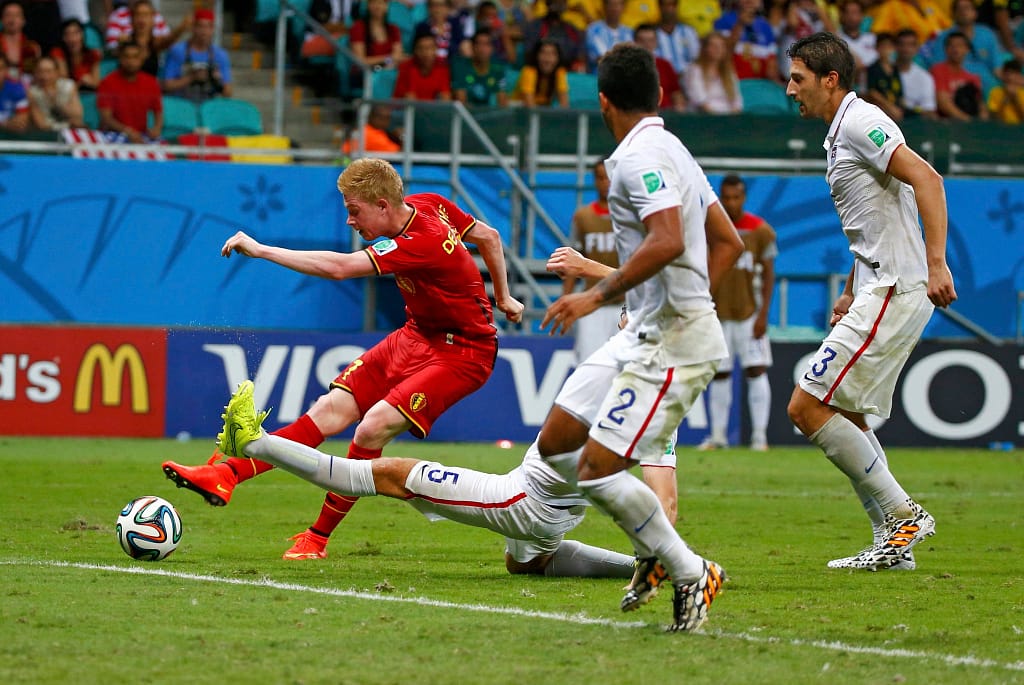
Beating Belgium in Seattle would give the U.S. a World Cup statement that goes beyond attendance, host-nation energy, or cultural growth. It would show that the team can turn a home tournament into competitive progress against a European opponent with pedigree.
That would also change how the rest of the bracket views the USMNT. A team that beats Paraguay and Australia in the group, survives Bosnia and Herzegovina with 10 men, then eliminates Belgium is no longer a good host story. It becomes a serious tournament problem.
That is why July 6 is more than a rematch. The 2014 game gave American fans a memory. The 2026 game gives the USMNT a chance to change the memory’s meaning.
Why Seattle Could Mark A New USMNT Threshold
USA vs. Belgium in Seattle is built from history, but it will be decided by the present. Howard’s 16 saves will be replayed. De Bruyne and Lukaku’s old impact will be remembered. The word “revenge” will appear across previews. Yet the most important question is whether the U.S. can play this match as a team ready for the next stage of its own development.
Pochettino has to solve Balogun’s absence. Belgium has to recover from the emotional and physical load of extra time against Senegal. Seattle has to turn home pressure into competitive energy. The U.S. players have to carry the weight of expectation without slipping into the conservative instincts of past knockout exits.
If the USMNT wins, the story will not be that 2014 was avenged. The story will be that 2026 finally became its own chapter. Seattle would become the place where the United States stopped measuring progress by how well it lost to elite opponents and started measuring it by who it could send home.