
The 2026 World Cup in America has produced the usual tournament images: packed stadiums, national flags, late goals, watch parties, and fans in shirts from every corner of the planet. Yet one of the most revealing parts of the tournament has happened far from the pitch. International supporters have turned Walmart aisles, Buc-ee’s road-trip stops, Waffle House tables, ranch dressing bottles, and Texas barbecue lines into part of the World Cup experience.
That may sound like a funny cultural side story, but it says something larger about football in the United States. The 2026 World Cup has not only brought global soccer to American stadiums. It has turned everyday American places into part of the tournament’s memory. For visiting fans, the match has often been only one stop in a longer American football pilgrimage.
Why Everyday America Became Part Of The World Cup
World Cups always create cultural souvenirs. In Brazil, fans remember beaches, street parties, and late-night music. In Germany, beer gardens and train stations became part of the 2006 tournament’s identity. In Qatar, stadium architecture and compact travel shaped the experience. In the United States, the surprise has been how quickly ordinary American consumer culture became part of the football story.

Business Insider reported that international fans have embraced distinctly American stops during the 2026 tournament, including Walmart, Buc-ee’s, Waffle House, and ranch dressing. The article described Australian fans gathering at a Walmart near Dallas Stadium before Australia’s July 3 match against Egypt, Swedish fans wearing cowboy hats, and visiting supporters turning everyday retail into a tourist event through the World Cup’s American brand boom.
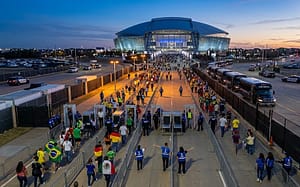
That is more than novelty. It shows how a World Cup expands when fans travel across a country built around highways, big stores, regional food, and large-scale convenience. American venues are often far apart. Host cities are massive. Stadium districts can sit outside downtown cores. Supporters need food, supplies, cheap souvenirs, air-conditioning, bathrooms, parking, and places to gather before matches.
Walmart, Buc-ee’s, and ranch dressing became symbols because they were practical before they became viral. They helped fans experience the tournament between kickoff and the next destination.
How Walmart Turned Into A Pre-Match Fan Stop
Walmart becoming a World Cup story makes sense in a very American way. It is not a football institution. It is not a historic supporters’ pub. It does not carry the romance of a club neighborhood or an old stadium street. Yet for visiting fans, that is exactly why it feels memorable.
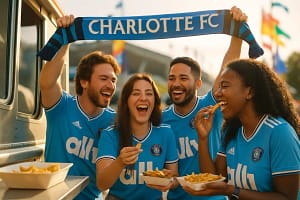
A giant Walmart near a host-city stadium can become a place to buy sunscreen, snacks, coolers, flags, drinks, cowboy hats, portable chargers, and last-minute matchday supplies. For supporters from countries where retail spaces are smaller, denser, or more urban, the scale itself becomes part of the experience. The store is not just a store. It is an American scene.
That explains why Walmart has leaned into the moment. The Sun reported that Walmart planned World Cup-themed “VIP tour” events connected to LaLiga watch parties in Miramar, Florida, and East Brunswick, New Jersey, using curated store experiences, fan contests, food, and branded giveaways for international visitors through a World Cup fan tour promotion.
The key is that Walmart did not become relevant by pretending to be a stadium. It became relevant by being extremely American. For fans crossing the country, the World Cup is not only a ticketed event. It is a chain of small discoveries. The parking lot, the oversized snack aisle, the discount shirts, the air-conditioned walk before a hot matchday, and the feeling of seeing fans from other countries in the same checkout line all become part of the story.
That is why World Cup culture in America looks different. It spreads into spaces that were not designed for football but can absorb football when millions of visitors arrive.
Why Buc-ee’s Became A Road-Trip Monument
Buc-ee’s may be the most American symbol of the tournament because it captures the scale of World Cup travel in the United States. The Texas-based chain is famous for enormous stores, spotless bathrooms, brisket sandwiches, beaver-branded merchandise, walls of snacks, and road-trip energy. For international fans, it can feel less like a gas station and more like a cultural landmark.
That matters because the 2026 World Cup is not a compact tournament. The United States portion alone stretches across huge distances, from the West Coast to the East Coast, from Texas to the Midwest, from Atlanta to Seattle. Even fans who fly between cities often experience long drives around stadium regions, airports, suburbs, and hotel corridors.

Buc-ee’s fits that geography. It is not part of football tradition, but it is part of American movement. Supporters traveling through Texas or the South can turn a highway stop into a fan ritual: buying barbecue, taking photos, grabbing snacks, comparing the scale to home, and posting the experience online.
Salon described this wider trend as visitors discovering everyday American staples while touring the U.S., with Buc-ee’s, barbecue, ranch dressing, Waffle House, and “bigger is better” culture becoming part of the fan journey through World Cup visitor reactions. That phrase matters because the tournament has made American scale visible to football fans who usually experience the sport through older urban stadiums, metro lines, and compact city centers.
Buc-ee’s became a symbol because it gave visiting supporters a story to tell that had nothing to do with tactics or scorelines. It gave them America between matches.
How Ranch Dressing Became A Souvenir
Ranch dressing may be the funniest symbol of the 2026 World Cup, but it might also be the most revealing. It is familiar to Americans, almost invisible because of how normal it is. For many visitors, it has been a discovery.
The trend became visible enough that airports adjusted. The Houston Chronicle reported that George Bush Intercontinental Airport began selling full-size bottles of Hidden Valley Ranch after security in Terminal A, responding to World Cup fans’ interest and the Transportation Security Administration’s liquid rules. The report said airport retail operator Paradies Lagardère expanded the offering to other major airports, including Dallas Fort Worth, Atlanta, JFK, LAX, and Philadelphia, because fans wanted to take ranch home as a World Cup food souvenir.
That detail is important. A condiment crossed from social-media joke into airport retail strategy. That is how cultural moments become real. When fans cannot take full-size liquids through security, airports adapt. When enough international visitors want ranch dressing, it becomes a World Cup product.
Ranch also shows how football tourism works emotionally. Fans do not only remember match results. They remember small sensory discoveries: the taste of sauce on fries, the smell of barbecue, the size of a convenience store, the shock of bottomless coffee, the brightness of a giant supermarket at night. These details help define a host nation.
| Unexpected World Cup Symbol | Why Fans Noticed It | What It Says About America As Host |
|---|---|---|
| Walmart | Scale, affordability, matchday supplies, viral fan gatherings | Everyday retail can become fan infrastructure |
| Buc-ee’s | Road-trip culture, food, bathrooms, merchandise, spectacle | U.S. travel is part of the tournament experience |
| Ranch Dressing | Novel taste, social media appeal, airport souvenir demand | Small food discoveries can become cultural memories |
| Waffle House | Late-night food, regional identity, casual fan gathering | American dining habits became part of the fan route |
| Texas Barbecue | Local flavor, long lines, social sharing | Host cities are selling regional culture, not just matches |
The table shows why this story is not just about brands. It is about how a World Cup turns normal places into international memories.
Why Food Became A Soft-Power Story
Food has always been part of football travel. Fans plan around stadiums, but they remember meals. In 2026, American food culture has become a form of soft power because it gives visiting supporters something vivid, shareable, and local.
The Associated Press reported that fans across North America have embraced regional food during the World Cup, from Texas barbecue and American fast-food chains to poutine in Canada, taco trucks in Mexico, Cuban food in Miami, and classic New York stops such as Katz’s Delicatessen. The report framed local cuisine as a major part of the tournament’s cross-cultural experience through World Cup food tourism.
That matters because the United States is sometimes criticized as a difficult soccer host: too spread out, too car-dependent, too expensive, too tied to NFL stadiums, too different from traditional football countries. Food has helped soften that perception. It gives visitors something informal and human. It turns a trip into a story beyond security lines, stadium prices, and long travel distances.
A fan may complain about parking or ticket costs and still go home talking about brisket, ranch, a Walmart run, or a midnight diner stop. That contrast is part of America’s World Cup identity. The tournament can be logistically demanding and culturally memorable at the same time.
For World Football Idol readers, that is the point. Football culture is not only what happens in the stands. It is what happens around the match, on the way to the match, after the match, and in the stories fans tell when they return home.
How This Connects To The Stadium Without Walls
The viral appeal of Walmart, Buc-ee’s, and ranch dressing fits into a bigger 2026 pattern. The World Cup has become a tournament without walls. It lives in stadiums, but also in parks, airports, restaurants, hotels, transit hubs, public screens, road stops, and social media feeds.
World Football Idol’s analysis of FIFA Fan Festival growth described how public viewing and citywide fan activity helped turn the tournament into a “stadium without walls.” These American food and retail moments are another version of that idea. The match may be the anchor, but the experience spreads outward.
That is especially true because many fans never attend every match they care about. Some travel for one game and stay for a week. Some arrive without tickets and watch at Fan Festivals. Others follow national teams across multiple cities. For them, the tournament is built from fragments: a watch party, a highway drive, a diner, a hotel lobby, a fan shop, a food truck, a public park, and a store run before kickoff.
The United States is unusually good at absorbing those fragments because its consumer and travel culture is built for movement. Big stores can handle sudden crowds. Airports can add tourist merchandise. Restaurants can become viral stops. Regional brands can become international discoveries overnight.
That is why the 2026 World Cup in America feels different from a traditional football tournament. It is not concentrated around a few old city neighborhoods. It is scattered, oversized, commercial, social, and sometimes strange. That strangeness is becoming part of its charm.
Why These Symbols Matter After The USMNT Exit
The USMNT’s 4-1 loss to Belgium ended the home team’s tournament earlier than American fans hoped. Yet the cultural energy around the World Cup has continued because the event was never only about the U.S. team. That is one of the strongest signs that America has become a serious global soccer destination.

If a tournament’s atmosphere depends only on the host nation advancing, it is fragile. The 2026 World Cup has shown a broader base. Fans from Australia, Sweden, Mexico, Colombia, Morocco, Argentina, England, Brazil, Ghana, Japan, and many other countries have brought their own stories into American spaces. The host country’s role is not just to cheer for itself. It is to receive the world.
That is where Walmart, Buc-ee’s, and ranch dressing become meaningful. They show international supporters engaging with America on their own terms. Some of the engagement is humorous. Some of it is commercial. Some of it is sincere. All of it adds texture to the tournament.
The United States did not need to invent a fake football tradition to impress visitors. It let visitors encounter the country as it is: large, convenient, regional, excessive, welcoming, chaotic, branded, flavorful, and constantly moving.
What The 2026 World Cup Will Leave Behind
The lasting cultural image of the 2026 World Cup will not be one thing. It will be stadium lights and Fan Festivals, but also gas-station brisket, airport ranch bottles, Walmart chants, Waffle House visits, cowboy hats, road-trip photos, and supporters discovering that football travel in America feels unlike football travel anywhere else.
That is valuable for FIFA, host cities, brands, and American soccer. It means the tournament’s legacy is not trapped inside the USMNT’s result. It lives in the stories visitors take home. A fan who remembers a match in Dallas may also remember a Buc-ee’s stop. A supporter who watched a game in Houston may remember buying ranch dressing after security. A traveler who came for a knockout game may remember standing in a Walmart aisle beside fans from three other countries.
That is how host nations become part of football memory. Not only through goals, but through details.
Walmart, Buc-ee’s, and ranch dressing became unexpected symbols of the 2026 World Cup because they gave international fans something America could offer better than almost anywhere else: scale, convenience, flavor, absurdity, and a road-trip story worth retelling. The tournament’s football will decide the champion. Its strange American side quests may decide how millions remember the journey.