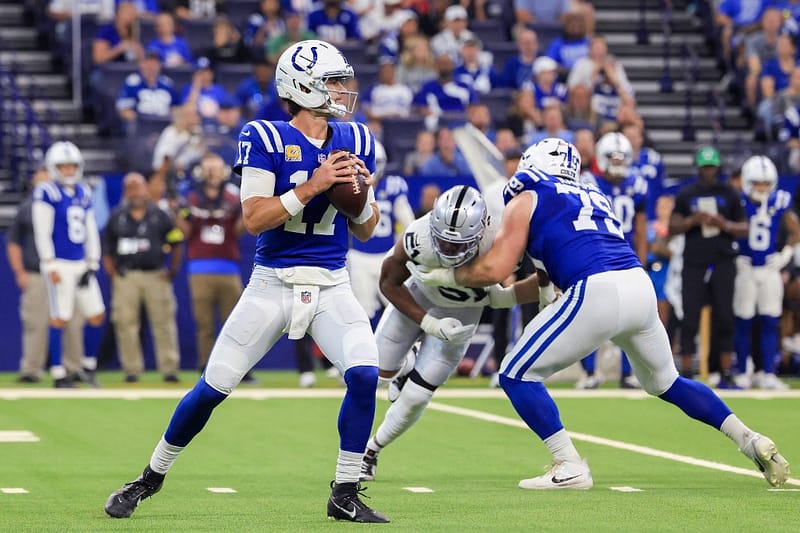

The Indianapolis Colts enter 2026 with a quarterback question that is not really a quarterback battle. Daniel Jones is expected to be QB1. The larger issue is whether his right Achilles recovery gives Indianapolis the full version of the quarterback who briefly changed the team’s outlook in 2025, or whether the Colts spend another season building around uncertainty at the sport’s most important position.
That is why Jones’ training camp matters so much.
The Colts will open their 2026 camp schedule July 29 at Grand Park Sports Campus in Westfield, Indiana. It is the franchise’s eighth and final summer at Grand Park before camp moves back to the Indiana Farm Bureau Football Center in Indianapolis in 2027. That setting already gives camp a transition-year feeling. But the real transition is on the field, where Jones has to move from rehab progress to full-speed quarterback operation.
Indianapolis does not need a dramatic camp headline. It needs normalcy. Full participation. Clean movement. Timing with receivers. Comfort in the pocket. Enough mobility to make Shane Steichen’s offense function as designed. If Jones clears those checkpoints, the Colts can build a real AFC South case. If he does not, the entire season gets heavier before Week 1.
Why Jones’ Recovery Is The Colts’ First Storyline
Achilles injuries change the way quarterbacks are evaluated because the position depends on subtle movement as much as obvious athleticism. Jones does not need to run like a dual-threat rookie to help Indianapolis. He does need enough lower-body trust to plant, reset, slide in the pocket, carry out play-action, and throw with balance when pressure compresses the space around him.

Colts.com reported that Jones’ Achilles recovery remains on track, noting that he participated in 7-on-7 work during the final two weeks of the offseason program and should be ready for both training camp and Week 1. The report also said Jones’ January expectation was to be ready for camp and that nothing over the next six months indicated he would miss that goal.
That is encouraging, but training camp is a different test. Seven-on-seven work removes the pass rush. It gives quarterbacks rhythm without the full violence of the pocket. Full-team periods add bodies, pressure, congestion, and the need to react to rush lanes.
The Colts do not just need Jones to be cleared. They need him to be functional when football becomes crowded again.
Why Indianapolis Built Around Jones Anyway
Indianapolis’ commitment to Jones is what makes the recovery so important. The Colts did not treat him as a temporary patch after 2025. They made a financial and organizational bet.
The Associated Press reported in March that Jones agreed to a two-year deal with the Colts worth up to $100 million, including $88 million in base salary and $50 million guaranteed. The report also noted that Jones completed 68% of his passes for 3,101 yards, 19 touchdowns, and eight interceptions during a 10-game stint in 2025, his best production since 2019, before the Achilles injury changed the season through the Colts’ Daniel Jones contract.
That contract tells the whole story. Indianapolis believes Jones was not a fluke. It believes the version of Jones that emerged in Steichen’s offense can be a real answer. It also believes the roster is close enough that waiting on another quarterback reset would waste time.
That is why training camp becomes a referendum on the bet. If Jones moves well, the contract looks like an aggressive but understandable commitment to a quarterback who found the right system. If he looks limited, the deal becomes a source of pressure around the entire organization.
How Grand Park Becomes A Recovery Lab
The Colts’ final camp at Grand Park is more than a fan event. It is the first public football environment where Jones’ recovery can be judged beyond reports and controlled offseason work. The team’s official 2026 training camp schedule says camp begins Wednesday, July 29, at Grand Park Sports Campus, about 15 miles north of Indianapolis.
That location has been part of the Colts’ summer rhythm for years. In 2026, it becomes the place where the franchise learns whether its quarterback plan is stable.
Every practice detail will matter. Does Jones take full-team reps? Does he move freely under pressure? Does he drive throws off his repaired leg? Does he climb the pocket naturally? Does he look confident on rollouts? Does the staff limit him early, or does he look like a normal starter from the first week?
The best outcome for Indianapolis is a boring one. If Jones becomes less of a recovery story by early August, the Colts can shift attention toward offensive timing, receiver roles, defensive improvement, and AFC South preparation. If every practice report remains about workload management, the uncertainty will linger.
Why Shane Steichen’s Offense Needs Full Movement
Steichen’s offense depends on quarterback rhythm, spacing, and stress. The system can adapt, but it works best when the quarterback can threaten more than one answer. Jones’ mobility has always been part of his value. He does not need to be reckless, but his ability to move changes how defenses rush him.
A quarterback returning from an Achilles injury can be affected in small ways. A half-step late on a pocket reset can turn a throw into a sack. A weaker plant can reduce velocity on intermediate routes. A lack of trust in movement can make a quarterback throw early or avoid extending plays. Defenses sense that. Pass rushers attack differently when they believe the quarterback cannot escape.
That is why the Colts’ camp cannot be judged only by whether Jones completes passes in scripted periods. Indianapolis needs to see him operate the full menu: quick game, play-action, movement throws, third-down pocket work, and red-zone decisions where space disappears fast.
World Football Idol’s earlier look at late-July NFL training camp readiness pointed to Jones’ recovery as one of the league’s most important quarterback checkpoints. That remains true because Indianapolis’ entire offensive identity depends on whether Jones is fully available, not just technically active.
What The Colts Need From The Quarterback Room Behind Him
Jones is the starter, but the rest of the quarterback room still matters because of the injury history. Colts.com’s quarterback training camp preview says Indianapolis will arrive at Grand Park knowing who QB1 is, but with questions still to answer behind Jones. The room includes Riley Leonard and Anthony Richardson Sr., with the backup structure expected to be sorted through camp.
That matters because Jones’ recovery changes the value of the QB2 job. Backup quarterback competition is always important, but it becomes more urgent when the starter is returning from a major injury. The Colts need a plan if Jones has a setback, needs a reduced workload, or misses time during the season.
Richardson brings physical talent and first-round pedigree, but his Colts career has been defined by interruptions, inconsistency, and injury setbacks. Leonard gives Indianapolis a younger developmental option with a different timeline. The staff’s job is to build a room that supports Jones without creating constant instability.
The worst outcome would be a camp where Jones is limited and the backup picture remains unclear. That would make every quarterback rep feel like a warning sign.
Why The Receiving Corps Must Help The Recovery
Jones’ recovery will also be shaped by the pass-catching group around him. A quarterback returning from an Achilles injury benefits from defined reads, trustworthy timing, and receivers who separate on schedule. Indianapolis cannot ask him to play every week as if he is repairing broken structure.
Alec Pierce’s role becomes especially important after his connection with Jones helped reshape the offense in 2025. The AP’s contract report noted that Pierce also signed a major deal and that the Colts moved Michael Pittman Jr. to the Pittsburgh Steelers, underscoring how much Indianapolis has invested in its new passing-game identity.
That puts pressure on Pierce to be more than a downfield flash. He has to be a reliable target in the areas where Jones needs rhythm: intermediate routes, third downs, boundary timing, and explosives that come from structure rather than desperation.
Jonathan Taylor also matters. If the run game forces defenses to respect early downs, Jones will face fewer obvious passing situations. That is how Indianapolis can protect him without shrinking the offense. The best injury recovery plan is not only medical. It is tactical.
The Camp Tests That Will Define Jones’ Return
The Colts can use camp to answer several questions before the regular season starts. None of them require overreacting to one practice. All of them matter over time.
| Colts Camp Test | Why It Matters | What Indianapolis Needs To See |
|---|---|---|
| Full-Team Pocket Movement | Seven-on-seven work does not simulate pressure | Jones sliding, climbing, and resetting naturally |
| Throwing Base | Achilles recovery affects lower-body confidence | Balanced throws on intermediate and deep routes |
| Play-Action Comfort | Steichen’s offense needs movement and timing | Smooth fakes, boot action, and rollout mechanics |
| Backup QB Clarity | Injury history raises the stakes behind Jones | A reliable QB2 emerging from Leonard and Richardson |
| Receiver Timing | Jones needs rhythm after missed late-season reps | Cleaner chemistry with Pierce and the full route tree |
That table explains why this is not a narrow medical story. Jones’ Achilles recovery touches every part of the Colts’ offensive plan.
Why The AFC South Makes The Timeline Unforgiving
Indianapolis does not have the luxury of treating 2026 as a soft reset. The AFC South has enough pressure to make early instability costly. Houston is trying to build on a 12-5 season and solve its offensive-line issues around C.J. Stroud. Jacksonville and Tennessee have their own questions, but both can make the division uncomfortable if the Colts start slowly.

That is why Jones’ camp matters so much. Indianapolis cannot spend September figuring out whether its quarterback is truly back. It needs August to deliver those answers.
If Jones looks like the quarterback who gave the Colts real life in 2025, the AFC South becomes more interesting. Indianapolis can pair him with Taylor, Pierce, Steichen’s play design, and enough defensive structure to challenge for the division. If Jones looks compromised, the Texans’ margin grows and the Colts’ entire plan becomes fragile.
Quarterback health does not guarantee contention. But quarterback uncertainty almost always limits it.
Why This Season Could Define The Steichen-Ballard Era
The Colts’ 2026 season also carries organizational weight. Steichen and general manager Chris Ballard are not operating in a low-pressure environment. Indianapolis has been searching for long-term quarterback stability since Andrew Luck’s retirement, and Jones represents another attempt to end that cycle.
This is different from a rookie quarterback timeline. Jones is a veteran. The Colts paid him like a starter. The roster has been shaped around the belief that his 2025 surge can be sustained. That means the franchise cannot hide behind development language forever.
Training camp will not decide anyone’s future by itself. But it will set the tone. A healthy, sharp Jones would validate the offseason and give the organization a clear football direction. A limited Jones would raise uncomfortable questions about the contract, roster construction, and whether Indianapolis tied its 2026 hopes to too much medical uncertainty.
That is why the Achilles recovery is not only a player story. It is a franchise story.
What A Successful Jones Camp Would Look Like
A successful camp for Jones would look steady rather than spectacular. Full participation without recurring setbacks. Normal movement in full-team drills. Comfortable timing with Pierce and the rest of the receivers. Efficient red-zone work. No visible hesitation when the rush closes. Enough quarterback movement to keep Steichen’s offense honest.
The Colts should not need Jones to prove toughness. He has already played through enough injuries and career turbulence. They need him to prove repeatability. Can he practice, recover, practice again, and build rhythm over multiple weeks?
That is how a quarterback returning from a major injury turns uncertainty into confidence. Not through one viral throw, but through normal days stacked together.
How Jones’ Recovery Could Shape The Entire Season
Daniel Jones’ Achilles recovery could shape the Colts’ entire 2026 season because Indianapolis has connected so many decisions to his availability. The contract. The receiver structure. The backup competition. The offensive identity. The AFC South push. The organizational timeline.
If Jones is fully back, the Colts can be one of the division’s most dangerous teams. They have a veteran quarterback who fit Steichen’s offense in 2025, a strong running back in Taylor, a clear receiving piece in Pierce, and a coaching staff that knows exactly what it wants the offense to be.
If he is not fully back, everything changes. The playbook narrows. The backup conversation grows louder. The division gets harder. The contract becomes heavier. The season becomes more about survival than ascension.
That is why the most important Colts storyline at Grand Park will not be a depth-chart surprise or a preseason highlight. It will be the simple question Indianapolis has been waiting to answer since Jones went down: does the quarterback look like himself?
If the answer is yes, the Colts have a season. If the answer is no, they have a problem that could define everything.