
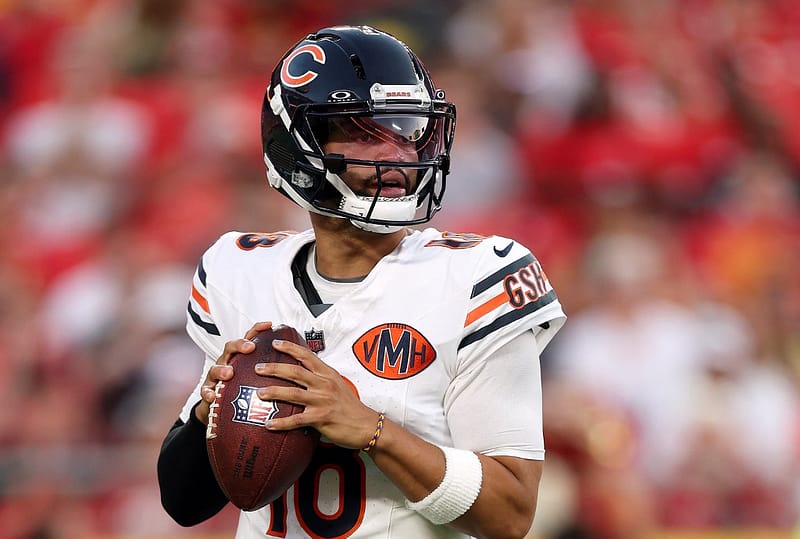

The Chicago Bears no longer need Caleb Williams to prove he can create magic. He already did that in 2025. He led late comebacks, beat the Green Bay Packers in the playoffs, reset franchise passing expectations, and turned Ben Johnson’s first season in Chicago into something much bigger than a coaching transition.
Now the Bears need something harder from him.
They need consistency.
That is why Williams’ 2026 training camp at Halas Hall in Lake Forest, Illinois, will be one of the most important quarterback stories in the NFL. Chicago rookies report July 25, veterans report July 28, and the Bears enter camp after an 11-6 season that changed the franchise’s standard. The breakthrough was real enough to matter. The question is whether Williams can make it repeatable.
NFL.com’s NFC North training camp preview framed the Bears’ top storyline simply: can Caleb find consistency? That is the right question because Chicago’s ceiling is no longer about whether Williams can make impossible plays. It is about whether he can make the easy ones often enough that the impossible plays become a luxury instead of a weekly requirement.
Why The Bears’ 2025 Breakthrough Raised The Standard
Chicago’s 2025 season changed everything around Williams. The Bears won the NFC North, beat the Packers in a playoff game, and reentered the league’s serious conversation after years of instability. That success created belief, but it also created a different kind of pressure.
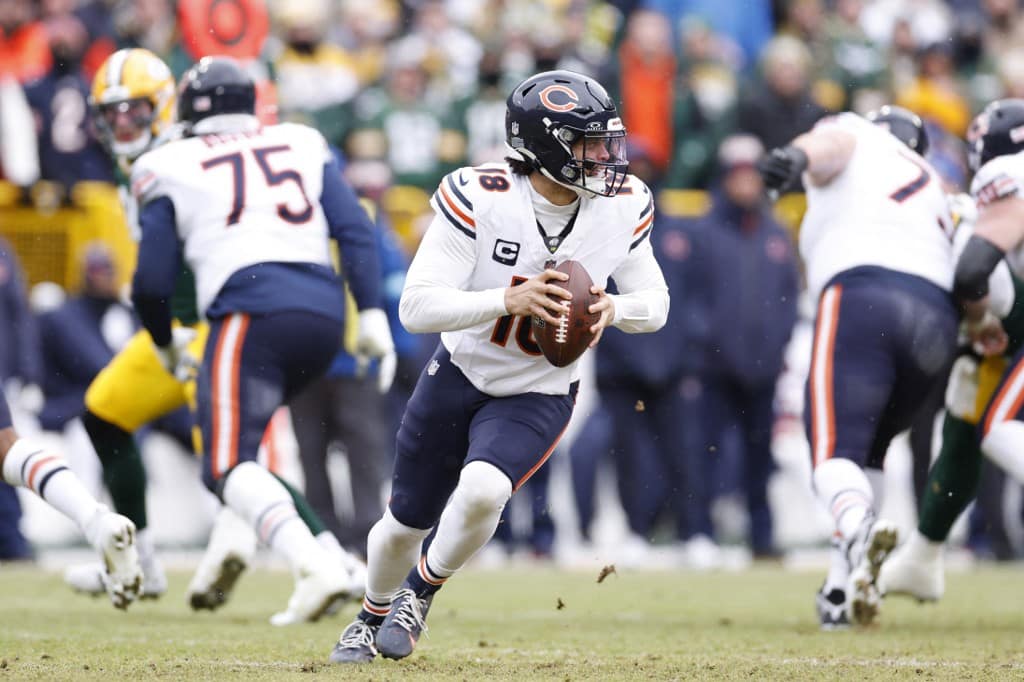
A young quarterback on a struggling team can be judged by flashes. A young quarterback on a division winner is judged by control.
The Bears’ official quarterback training camp preview described Williams’ 2025 season as a major step forward in Johnson’s offense. He threw for 3,942 yards, setting a franchise single-season passing record. He finished with a 27-to-7 touchdown-to-interception ratio. He also played 23 career games without an interception, the most by any quarterback in his first two seasons in NFL history.
Those numbers explain why Chicago is excited. They also explain why the next step must be more precise. Williams has already shown that he can protect the ball and create late-game stress for opponents. The next question is whether he can make the Bears less dependent on late-game survival.
That is what consistency means in this context. It does not mean removing his creativity. It means building enough early-game rhythm that the offense does not always need a fourth-quarter rescue mission.
Why J.T. Barrett Wants Williams To “Do Less”
The most revealing offseason message came from Bears quarterbacks coach J.T. Barrett, who said Williams’ next step is sometimes taking off the cape. NFL.com’s report on Barrett’s comments explained the tension clearly: Williams produced spectacular late-game moments in 2025, but some of those heroic plays were necessary because the offense was not efficient enough earlier in games.
That is the heart of the Bears’ 2026 training camp.
Williams is at his most dangerous when he can extend plays, escape pressure, and turn broken structure into explosive offense. But if he leans too heavily on that style, Chicago’s offense can become volatile. Drives stall. Easy completions disappear. The ball stays in the quarterback’s hand too long. Offensive linemen have to block longer. Receivers are forced into scramble-drill football instead of rhythm routes.
Barrett’s message was not that Williams should become conservative. It was that he should become cleaner. Work through progressions. Take underneath completions. Keep the offense on the field. Make defenses defend patience before they have to defend chaos.
That shift may sound small, but it can change the entire Bears offense. A quarterback who can make extraordinary plays and consistently take ordinary wins becomes extremely hard to defend.
How Completion Percentage Becomes A Real Camp Test
Williams’ own offseason focus points to the same issue. He said he wants to raise his completion percentage, keep the offense on the field, make the Bears one of the highest-scoring offenses, and keep turnovers low. That is exactly the kind of goal that will be tested during camp.
ChicagoBears.com noted that Williams’ top priority this summer is improving ball placement. That matters because ball placement is not only about completion percentage. It affects yards after the catch, receiver confidence, play-caller trust, and how often the offense stays ahead of the chains.
A completion thrown slightly behind a receiver may still count statistically, but it can kill a chance for extra yards. A swing pass placed correctly can become a first down. A slant thrown on time can become a run-after-catch play. A third-down throw placed away from leverage can extend a drive.
That is why camp reports should be read carefully. The question is not whether Williams produces viral throws. He will. The question is whether he stacks the routine completions that keep Johnson’s offense on schedule.
| Caleb Williams Camp Test | Why It Matters | What Chicago Needs To See |
|---|---|---|
| Completion Efficiency | The Bears need fewer empty early drives | More rhythm throws and better short-area accuracy |
| Ball Placement | Yards after catch depend on precision | Receivers catching in stride more often |
| Time To Throw | Long-developing plays can create pressure | Faster decisions when the first read is open |
| Early-Game Rhythm | Late heroics are not a weekly plan | More first-half scoring consistency |
| Situational Control | Contenders win with details | Cleaner red-zone and third-down execution |
That table explains why Williams’ camp is about maturity more than talent. The talent is obvious. The details decide whether Chicago becomes sustainable.
Why Ben Johnson’s Second Bears Offense Should Be Faster
The Bears are not starting over offensively. That gives Williams a major advantage. His second year with Johnson should allow Chicago to skip some of the basic installation strain and move deeper into the system earlier in camp.
Johnson said at the NFL Scouting Combine in Indianapolis that Williams became more comfortable over the course of 2025, even in simple 7-on-7 work. He pointed to Williams’ ability to absorb coaching points and apply them in game situations as one of the reasons he expects another jump in 2026.
That is important because consistency often comes from recognition. The quarterback sees a coverage faster. He understands where the outlet is. He knows which route will break open against pressure. He does not need to turn every snap into a new problem to solve.
The second year in Johnson’s offense should help Williams accelerate his vision. It should also help Johnson design with more ambition. If the quarterback is processing faster, the play caller can build more answers into the offense: quicker counters against blitzes, better red-zone sequencing, more motion-based leverage, and more efficient underneath throws to complement the explosive plays.
The Bears’ biggest camp question is not whether Johnson has ideas. It is whether Williams can operate those ideas with enough week-to-week steadiness to keep Chicago ahead of defensive adjustments.
Why Rome Odunze, Luther Burden III And Colston Loveland Matter
Williams’ consistency will depend heavily on the players around him. NFL.com’s preview mentioned Rome Odunze, Luther Burden III, and Colston Loveland as part of Chicago’s offensive ceiling. That is the right group to watch because quarterback efficiency often comes from receiver trust.
Odunze gives Williams a primary target with size, route strength, and contested-catch potential. Burden adds a different type of playmaking profile, one that can turn quick touches into explosive gains. Loveland gives Johnson a flexible tight end piece who can work in space, move around formations, and stress linebackers.
The more reliable those players are, the easier it becomes for Williams to avoid overworking. He should not have to hold the ball waiting for a perfect deep shot if Burden can win quickly underneath. He should not need a scramble-drill miracle if Odunze wins timing routes. He should not need to force throws into tight windows if Loveland creates matchup advantages.
That is why camp chemistry matters. Williams’ consistency is not an individual trait floating above the rest of the roster. It is built through repeated timing with real targets in real practice periods.
Why The Offensive Line Still Shapes The Conversation
A quarterback cannot become more consistent if the pocket is constantly unstable. Chicago’s offensive line therefore becomes part of the Williams story, even if the headline belongs to the quarterback.
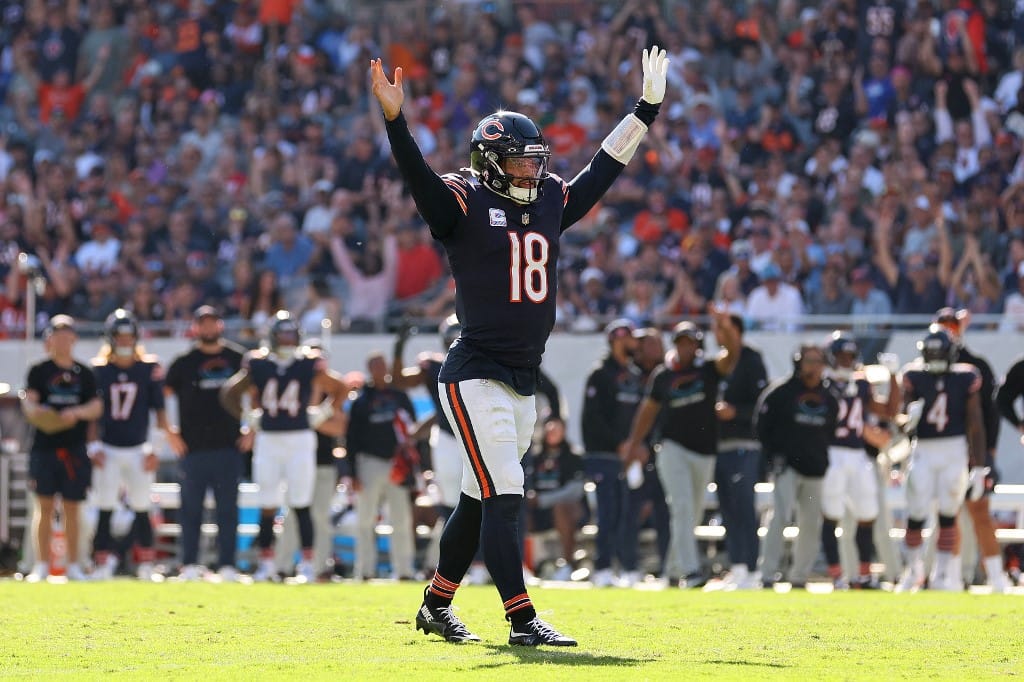
Protection affects decision-making. If Williams trusts the line, he can play faster and more calmly. If he does not, he may drift, hold the ball, or leave clean pockets too soon. That is where a quarterback’s style can become a trap. Williams’ ability to escape is a weapon, but if he starts expecting to escape before the play demands it, the offense loses rhythm.
The Bears need camp to produce a cleaner relationship between quarterback and protection. Williams has to know when to climb, when to slide, when to throw hot, and when to extend. The line has to give him enough structure that he does not feel responsible for inventing offense on every third down.
This is where Barrett’s “do less” idea becomes practical. The quarterback can only do less if the offense around him lets him. That means protection rules, route timing, play-calling, and receiver spacing all need to work together.
Why The NFC North Will Test Every Improvement
Chicago’s consistency question is magnified by the division. The NFC North is no longer a rebuilding playground for the Bears. It is a division full of teams with enough coaching, defensive structure, and rivalry pressure to make small flaws matter.
Green Bay will study the playoff loss. Detroit will spend the offseason adjusting to Chicago’s rise. Minnesota will look for ways to disrupt Williams’ rhythm. Nobody in the division will treat the Bears like a surprise team anymore.
That is the cost of winning. Defenses now have more film on Johnson and Williams together. They know where Williams wants to create. They know how Chicago built its late-game success. They know which concepts hurt them in 2025. The Bears must now prove they have counters.
That is why Williams’ camp is so important. It is not enough for him to repeat last season’s best moments. He needs to become harder to game-plan against. More patient. More precise. More willing to let a five-yard throw become a 15-yard gain because it arrives on time.
How Halas Hall Will Reveal The Next Step
Training camp at Halas Hall will not decide the NFC North, but it will begin answering the central question. Does Williams look like a quarterback who understands how defenses want to attack him now? Does the ball come out faster? Are checkdowns part of the rhythm rather than a last resort? Are red-zone periods cleaner? Are early-down throws more efficient?
The Bears’ official training camp page confirms that 2026 camp will take place at Halas Hall, with open practices giving fans a close look at the team’s work in Lake Forest. That visibility matters because Williams will be the center of every report. Every sharp day will be framed as evidence of growth. Every uneven day will raise the question of whether the old volatility remains.
World Football Idol’s recent article on Caleb Williams’ second Bears camp focused on whether Chicago’s 2025 breakthrough was real. This narrower question goes one layer deeper. The breakthrough becomes real only if Williams turns late-game brilliance into full-game control.
Why Chicago Needs Fewer Miracles
The Bears’ 2025 season was memorable partly because Williams delivered in moments that felt almost impossible. ChicagoBears.com noted that he helped the team win seven games it trailed in the final two minutes, the most by any NFL team since at least 1970. That is remarkable. It is also hard to build a sustainable model around.
Great teams can win late. They do not want to need to.
That is the difference between a dramatic team and a dominant one. Williams has already proved he can keep Chicago alive when a game goes sideways. Now he has to help prevent games from going sideways so often. That means better first quarters, cleaner second downs, fewer stalled drives, and more points before desperation enters the picture.
The Bears can still embrace his creativity. They should. It is part of what makes him special. But the goal in 2026 should be reducing the number of times he has to become a superhero.
What Would Make Williams’ Camp A Success
A successful Williams camp would not be defined by one spectacular practice. It would be defined by the boring signs of quarterback growth.
More completions on time. Fewer unnecessary escapes. Better underneath throws. Stronger red-zone command. Cleaner protection communication. Trust with Odunze, Burden, and Loveland. More moments where the right play is simply the easy play.
The Bears should still expect occasional volatility. Williams is a creative quarterback, and camp is designed to test boundaries. Mistakes will happen. The key is whether those mistakes become learning moments or patterns.
If Williams stacks clean days, Chicago’s 2026 outlook changes. The Bears already know he can win chaos. If he can also win structure, the offense becomes much harder to defend.
Why Consistency Defines The Bears’ New Era
Caleb Williams’ consistency is the Bears’ biggest 2026 training camp question because it sits at the center of everything Chicago wants to become. It affects Johnson’s play-calling. It affects receiver development. It affects offensive-line confidence. It affects the defense by controlling game flow. It affects whether the Bears are defending a breakthrough or building a new standard.
Chicago finally has the kind of quarterback story it spent decades chasing. But the next step is not about proving Williams is special. That part is already visible.
The next step is proving that special can be steady.
If Williams uses camp to become more efficient without losing his creativity, the Bears’ 2025 breakthrough will look less like a one-year rise and more like the beginning of a real NFC North era. If the same lulls remain, Chicago will still be dangerous, but it may also remain too dependent on fourth-quarter magic.
The Bears already know Caleb Williams can save them. This camp is about whether he can make them need saving less often.