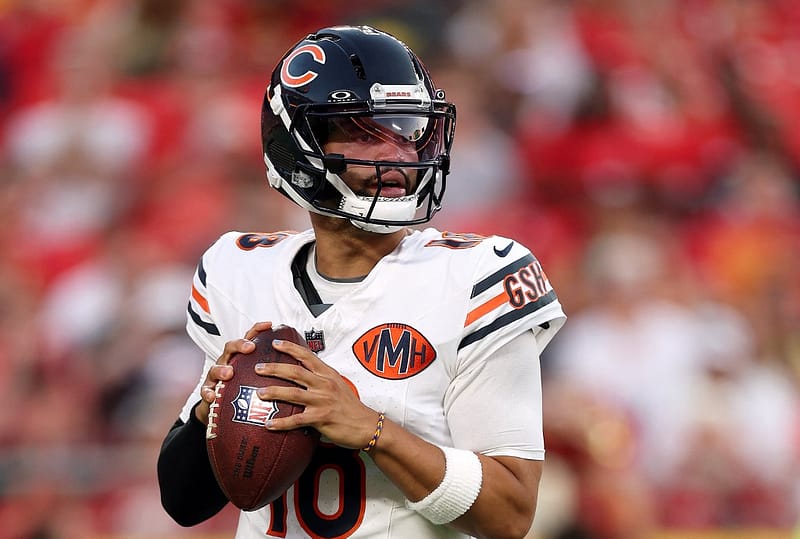

The Chicago Bears spent years trying to turn hope into structure. In 2025, they finally gave their fans something more serious than offseason optimism. Caleb Williams took a major step forward in his first season with Ben Johnson, the Bears climbed to 11-6, and Chicago reentered the NFC North conversation as something more than a rebuilding brand with a famous quarterback.
Now comes the harder part. The Bears do not need to prove they can surprise the league anymore. They need to prove they can sustain the breakthrough.
That is why Williams’ second Bears training camp under Johnson may become one of the most important NFL storylines of late July. Rookies and quarterbacks are scheduled to report to Halas Hall in Lake Forest, Illinois, on July 25, with veterans following July 28. By then, the offseason language about continuity, growth, and a higher ceiling will have to become practice-field evidence.
Why Chicago’s 2025 Breakthrough Changed The Standard
The Bears’ 2025 season changed the way their 2026 camp will be judged. A year ago, progress was enough. Williams needed to look more comfortable. Johnson needed to prove his system could translate from Detroit to Chicago. The roster needed to show it could compete in a brutal NFC North. The fan base needed a reason to believe the organization had finally found a real quarterback-coach pairing.
That bar has moved.
NFL.com’s NFC North training camp preview listed Chicago at 11-6 in 2025 and made Williams’ continued rise the central Bears storyline heading into camp. That matters because the Bears are no longer being graded like a team climbing out of chaos. They are being graded like a team expected to back up last season.
The difference is psychological as much as tactical. Surprise teams can play loose. Expected teams get studied. Defensive coordinators spend the offseason building counters. Opponents stop treating good stretches like temporary noise. Every mistake becomes proof that the breakthrough was fragile.
For Chicago, camp is where that pressure begins. Williams must show that 2025 was not just a jump. It was a foundation.
Why Caleb Williams’ Second Johnson Camp Matters
Williams is not learning a new offense from scratch. That is the point. His second camp with Johnson should allow the Bears to work deeper into the playbook, faster into the details, and more aggressively into the kind of situational football that separates good quarterbacks from division-defining ones.
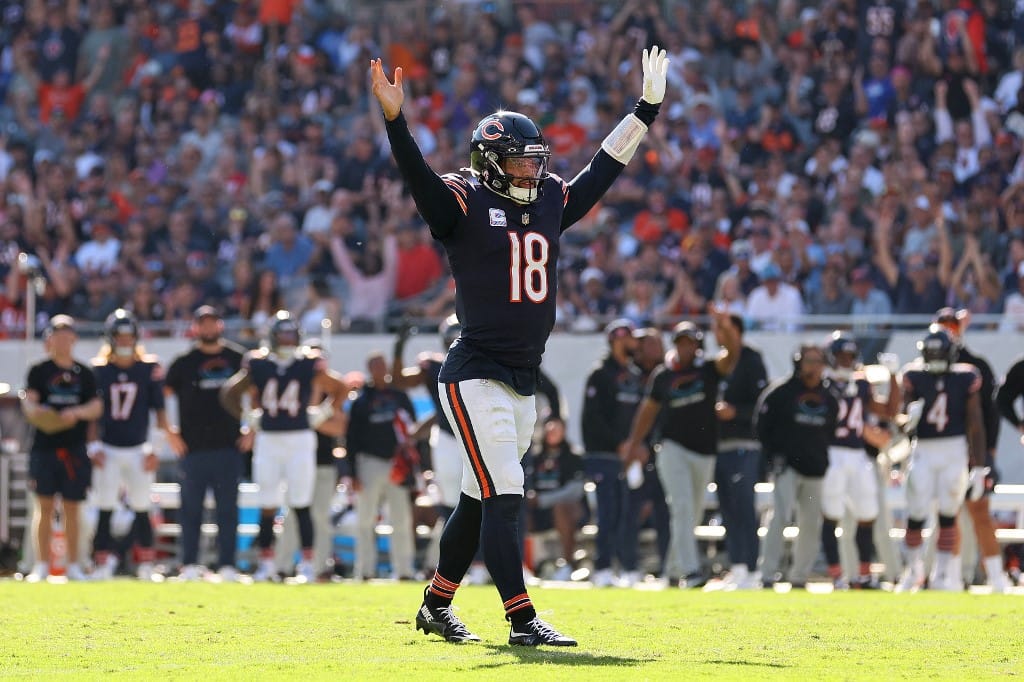
The Bears’ official training camp quarterback preview said Williams excelled in his first season with Johnson and is determined to perform at an even higher level in 2026. Williams’ own offseason message was clear: there is still more to unlock.
That phrase is important because Chicago’s next step is not only about highlight throws. Williams already has the creative talent. The second-camp test is about command. Can he control protections faster? Can he punish blitzes without drifting into chaos? Can he turn second-and-long into manageable third downs? Can he keep the Bears on schedule when the explosive play is not there?
Johnson’s offense asks the quarterback to think with rhythm. It uses motion, spacing, timing, and layered route concepts to create leverage. Williams’ job is to make the offense feel less like a series of exciting plays and more like a reliable weekly machine.
That is why July matters. The Bears do not need Williams to win practice every day. They need him to look like a quarterback who knows exactly where the offense is going.
How Halas Hall Becomes The First Test Of Staying Power
Training camp at Halas Hall is not just a preseason routine. It is where Chicago begins proving whether the 2025 version of the team can survive expectations. Rookies and quarterbacks arrive July 25. Veterans arrive July 28. That staggered schedule gives Williams an early window to set the tone before the full roster builds into contact, competition, and preseason preparation.
Bleacher Nation reported that the 2026 camp is the second training camp of the Johnson era, with rookies and quarterbacks getting the first arrival window before the full roster joins at Halas Hall. That may sound procedural, but for a quarterback-driven team, it matters. Williams gets to begin the rhythm of camp as the central figure.
The Bears need that. They need their best player to look like the standard-setter, not just the most talented player in the building. That means command during installation. That means visible chemistry with receivers. That means calm responses after bad periods. That means leading a team that now expects to be judged differently.
World Football Idol’s recent look at late-July NFL training camps argued that camp reveals which teams are truly ready before the standings ever start. Chicago fits that idea perfectly. The Bears’ readiness is not theoretical anymore. It has to show up in the details.
Why The NFC North Makes Chicago’s Leap Harder To Defend
The Bears’ 2025 rise happened inside one of the league’s most demanding divisions. The NFC North is not forgiving. Detroit, Green Bay, and Minnesota all have enough structure, talent, or quarterback pressure to make every divisional week feel heavier than a normal regular-season game.
DetroitLions.com’s NFC North camp overview described the division as one of the NFL’s most competitive and noted that all four teams finished above .500 last season. That context matters because Chicago is not trying to sustain success in a weak race. The Bears are trying to prove they belong in a division where every team believes it has a case.
That makes Williams’ development even more important. Chicago cannot depend on opponents collapsing. It cannot expect the same script from 2025 to repeat. Defensive coordinators around the division will have spent the offseason studying what Johnson and Williams did well. The Packers, Lions, and Vikings will test whether the Bears can adjust when their best concepts are taken away.
A real contender evolves. A one-year breakthrough repeats itself and gets caught.
Training camp is where the Bears begin showing which category they belong in.
What Chicago Needs From Williams Beyond Bigger Numbers
The easiest way to measure Williams’ next step is through statistics: passing yards, touchdowns, interceptions, completion rate, sacks, third-down production, red-zone efficiency. Those numbers will matter once the season begins. But camp readiness is subtler.
Chicago needs Williams to become more boring in the best possible way. That does not mean removing his creativity. It means adding enough structure that his creativity becomes a weapon, not a rescue plan.
| Caleb Williams Camp Test | Why It Matters | What Chicago Needs To See |
|---|---|---|
| Protection Command | Defenses will pressure him differently after 2025 | Faster calls and fewer avoidable free rushers |
| Timing Throws | Johnson’s offense depends on rhythm | More anticipation before receivers fully uncover |
| Red-Zone Efficiency | Good teams finish drives | Cleaner decisions in tight-window situations |
| Scramble Discipline | Williams’ mobility is a weapon | More selective movement, fewer unnecessary risks |
| Leadership Consistency | The Bears are now an expectation team | A quarterback who sets the daily tone |
That table shows why camp can reveal growth before the box scores arrive. Williams does not need to become a different player. He needs to become a more complete version of the same player.
How Ben Johnson’s System Faces Its Second-Year Challenge
Johnson’s first season in Chicago proved he could help Williams level up. His second season may be more revealing because the NFL now has a full year of Bears film under this pairing.
That is one of the hardest parts of offensive success. Year 1 can be built on fresh presentation, new tendencies, and opponents still learning what a coach wants to stress. Year 2 requires counters. The best play callers do not simply repeat what worked. They anticipate how defenses will adjust.
Chicago’s camp should show whether Johnson is building the next layer. Does the offense have more answers against simulated pressure? Are the Bears expanding their motion menu? Are they giving Williams more freedom at the line? Are they refining the quick game to protect against aggressive fronts? Are they creating more easy completions when the deep shot is not available?
This is where Williams and Johnson are linked. A play caller can design solutions, but the quarterback has to operate them. A quarterback can see the field, but the system has to give him answers that arrive on time.
The Bears’ 2026 ceiling depends on that partnership becoming less promising and more automatic.
Why Chicago’s Skill Talent Must Match The Quarterback’s Growth
Williams’ camp will dominate the headlines, but quarterback development does not happen alone. The Bears need the rest of the offensive structure to keep pace. Receivers must win with timing. Tight ends must create reliable middle-field answers. Running backs must protect and punish light boxes. The offensive line must communicate well enough to keep Williams from playing every snap like a survival drill.
This is especially important because the NFC North will not let Chicago rely on one formula. Some games will require explosive passing. Others will require efficient ball control. Some will require Williams to carry the offense late. Others will require the Bears to protect a lead and avoid chaos.
A successful camp would show diversity. Not just deep shots. Not just scripted completions. Not just red-zone highlights. The Bears need evidence that their offense can win in several ways.
That is how a breakthrough becomes durable. The best teams do not depend on perfect game scripts. They build enough answers to survive imperfect ones.
Why The Bears’ Defense Still Shapes Williams’ Story
Williams’ second camp will also be shaped by the defense he practices against every day. A good camp defense can make a quarterback better by forcing clearer processing, tighter windows, and faster adjustments. A weak practice defense can create false comfort.
Chicago’s defense does not need to become the article’s main character for it to matter. It only needs to provide the kind of resistance that makes Williams’ improvement believable. If the Bears’ pass rush creates real pocket stress, Williams’ response matters. If the secondary disguises coverage well, his post-snap processing matters. If camp practices include situational periods with legitimate defensive wins, the offense gets sharper.
That is why training camp reports can be tricky. A quarterback completing everything against soft coverage may look impressive, but it may not mean much. A quarterback struggling early against disguised looks and then correcting over several practices may be showing more important growth.
The Bears should not want an easy camp for Williams. They should want a useful one.
What Would Prove The Breakthrough Was Real
Chicago’s 2025 breakthrough will look real if camp produces signs of maturity. That does not mean perfection. It means the Bears look like a team that knows what winning football requires.
The signs would be clear: Williams operating faster in Johnson’s system, fewer protection busts, cleaner two-minute periods, stronger red-zone execution, receiver timing that looks less forced, and defensive resistance that sharpens the offense instead of overwhelming it.
The opposite would be concerning. If the offense looks dependent on improvisation, if the offensive line is unsettled, if Williams is repeatedly holding the ball, if Johnson has to simplify too much, or if the Bears spend late July explaining away sloppy details, the league will notice.
That is the danger of becoming relevant. The benefit is attention. The cost is scrutiny.
The Bears spent 2025 earning the benefit. Camp will bring the cost.
Why This Camp Could Define Chicago’s New Identity
The Bears have had exciting moments before. They have had defensive identities. They have had short bursts of hope. What they have rarely had is a modern quarterback-coach pairing that feels capable of shaping several seasons at once.
Williams and Johnson can become that. But 2026 is the test that separates momentum from transformation.
If Williams’ second Bears camp shows command, calm, and deeper control of the offense, Chicago’s 2025 season will look less like a sudden spike and more like the start of a new era. If camp reveals hesitation, loose details, or an offense still too dependent on Williams creating out of structure, the breakthrough will feel less secure.
That is why late July matters so much. The Bears do not have to win the NFC North at Halas Hall. They do have to look like a team prepared to defend what it became.
Chicago’s 2025 breakthrough gave the franchise belief. Caleb Williams’ second Bears camp will start answering the bigger question: whether that belief has become a real foundation.