

The Baltimore Ravens entered 2026 training camp knowing exactly who sits at the center of their offense. Lamar Jackson remains the franchise quarterback. Zay Flowers has established himself as the No. 1 receiver. Derrick Henry forces defenses to structure entire game plans around the run. Rashod Bateman still carries meaningful veteran expectations. Mark Andrews remains one of Baltimore’s defining passing-game pieces.
Ja’Kobi Lane is making that established hierarchy more interesting.
The 6-foot-4 rookie receiver from USC has gone from an intriguing third-round pick to one of Baltimore’s most persistent training-camp stories. Acrobatic catches became daily talking points at the Under Armour Performance Center in Owings Mills. Lamar Jackson repeatedly tested Lane’s catch radius. New offensive coordinator Declan Doyle compared his hands and body control to former New Orleans Saints star Michael Thomas. Then Lane carried the momentum into Baltimore’s August 15 preseason opener, catching three passes for 38 yards and fighting through two defenders for a 16-yard touchdown in a 24-7 victory over the Philadelphia Eagles.
That does not make Lane Baltimore’s new No. 1 receiver.
It creates a much more interesting question: if the rookie keeps earning Lamar Jackson’s trust, how does a Ravens passing game already built around Flowers, Bateman, Andrews and Henry make room for a target with a skill set it has not consistently possessed?
Why Lane’s Rise Is More Than Normal Rookie Camp Hype
Every NFL training camp produces young players who briefly become August stars. A difficult catch circulates online. A rookie beats a veteran corner in a one-on-one period. Coaches praise his work ethic. Fans begin projecting a breakout season before the first meaningful snap.
Lane’s case is becoming harder to dismiss because the highlights have been followed by repetition.
Baltimore selected Lane with the 80th overall pick in the 2026 NFL Draft after he caught 49 passes for 745 yards and four touchdowns at USC in 2025. Across three seasons with the Trojans, he finished with 99 receptions, 1,363 yards and 18 touchdowns. Twelve of those scores came during the 2024 season.
The Ravens were especially interested in traits that are difficult to manufacture. Their official Ja’Kobi Lane draft announcement emphasized his 6-foot-4 frame, 10½-inch hands, leaping ability and unusually wide catch radius.
General manager Eric DeCosta called Lane a different type of receiver from those Baltimore already had.
That difference is why his camp matters.
Zay Flowers wins through quickness, separation, movement and creativity after the catch. Bateman has traditionally offered more vertical and intermediate ability. Lane can potentially give Jackson something different: a large target who does not always need to be fully open to be available.
How Lamar Jackson Started Testing Lane Early
The relationship between quarterback and rookie began showing itself almost immediately.
On July 30, during the second day of Ravens training camp, Jackson lofted a high pass deep down the middle during seven-on-seven work. Lane elevated over defenders and made the catch, displaying exactly the trait Baltimore hoped would translate from USC.
The Ravens’ Day 2 practice report described the throw almost like an experiment: Jackson appeared to be testing whether the rookie could actually go get a ball placed above coverage.
Lane did.
That type of play matters for quarterback trust. NFL receivers are rarely open in the clean, obvious way college highlights sometimes suggest. Windows shrink. Defensive backs recover. Pressure changes the throw. A quarterback often has to decide whether a receiver will protect an imperfect ball.
For Jackson, Lane could eventually expand the definition of an acceptable target.
A receiver with elite catch radius allows the quarterback to throw to space where only his teammate has a realistic chance. That can be particularly valuable on third down, in the red zone and against man coverage when separation becomes more difficult.
Why Declan Doyle’s Michael Thomas Comparison Matters
Doyle gave Lane’s rise national attention when he compared the rookie’s receiving traits to Michael Thomas.
The comparison was specific rather than statistical. Doyle had worked in New Orleans and remembered how Thomas’ strong hands and catch radius made him a quarterback-friendly target. He saw something similar in Lane.
NFL.com’s report on Lane’s early Ravens emergence quoted Doyle emphasizing Lane’s huge catch radius, sticky hands and ability to pull in throws placed anywhere near him.
That does not mean Baltimore expects Lane to recreate Thomas’ record-setting Saints career. Comparisons like that become misleading if treated as projections.
The useful part is stylistic.
Baltimore has been searching for different answers around Jackson for years. Lane offers a body type and catch-point profile that changes how certain routes can be designed. Back-shoulder throws become more viable. Slants against physical corners become attractive. Red-zone fades can be used selectively. Intermediate throws over smaller defensive backs become reasonable risks.
The question for Doyle is whether Lane can become technically dependable enough to earn those opportunities.
Why Zay Flowers’ New Contract Changes The Question
Lane is not competing to replace Flowers.
Baltimore made that clear on August 4 when it signed Flowers to a multi-year extension reportedly worth four years and $140 million, with $108 million guaranteed. The deal followed a 2025 season in which Flowers caught 86 passes for 1,211 yards and five touchdowns while earning his second consecutive Pro Bowl selection.
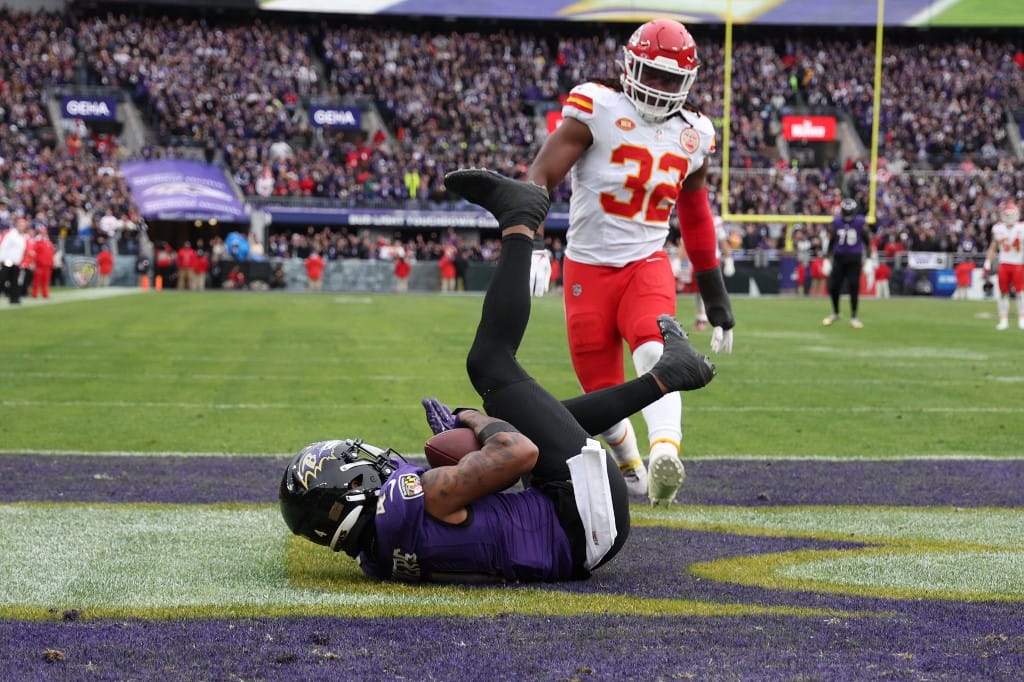
The Ravens’ official Zay Flowers contract announcement described him as Jackson’s established No. 1 receiver and a foundational offensive player.
That actually makes Lane’s rise more interesting.
Baltimore does not need the rookie to carry the passing game. It needs him to make the offense harder to distribute coverage against.
If Flowers draws the defense’s quickest corner or extra underneath attention, Lane’s size can create favorable matchups elsewhere. If safeties shade toward Flowers’ motion and speed, Baltimore can isolate Lane outside. If a defense responds by using a bigger corner against Lane, Doyle has another piece available for matchup manipulation.
The Ravens’ receiver room becomes more dangerous when its weapons force different types of answers.
How Rashod Bateman Complicates The Depth Chart
Bateman remains central to the discussion because his 2025 season was disrupted by an ankle injury and ended with a career-low 224 receiving yards.
World Football Idol previously examined how Rashod Bateman’s injury watch could reshape Baltimore’s passing game. His healthier 2026 camp has provided encouraging signs, including a 40-yard connection with Jackson during one of the quarterback’s sharpest practices on August 13.
That creates a good problem.
If Bateman rebounds while Lane continues ascending, Baltimore suddenly has more credible receiver combinations than it appeared to have earlier in the offseason.
Flowers can move across the formation. Bateman can work intermediate and vertical concepts. Lane can become the big-body catch-point option. Devontez Walker still provides developmental speed and size. The tight ends add another layer.
Lane does not have to push Bateman out of the offense to matter.
He only needs to become good enough that Doyle has to ask how often Baltimore can afford to leave him off the field.
What Lane Adds That Baltimore Has Been Missing
The easiest way to understand Lane’s appeal is through role diversity.
| Ravens Target | Primary Trait | What It Gives Lamar Jackson |
|---|---|---|
| Zay Flowers | Separation, movement, yards after catch | A dynamic primary receiver who can win across the formation |
| Rashod Bateman | Intermediate and vertical receiving | A veteran route-running option outside |
| Ja’Kobi Lane | Size, catch radius, contested catches | A large target who can win even without clean separation |
| Mark Andrews | Middle-field awareness and red-zone experience | A trusted matchup option against linebackers and safeties |
| Derrick Henry | Run-game gravity | Space for play-action and lighter coverage structures |
Lane stands out because his best trait is different from everyone else’s.
That matters in the red zone, where space disappears and separation becomes harder. It matters on third down, where defenses often play tighter coverage. It matters against aggressive corners who challenge receivers physically.
Jackson has spent years creating throws through athleticism, arm talent and improvisation. A receiver who can turn a slightly high or contested throw into a completion could reduce how perfect some of those plays need to be.
Why The Preseason Touchdown Changed The Conversation
Training-camp production is useful. Game production, even in preseason, provides another level of evidence.
Baltimore rested nearly all of its projected starters for its August 15 preseason opener against Philadelphia at M&T Bank Stadium. Lane started alongside LaJohntay Wester and Devontez Walker and received his first chance to translate camp buzz into game conditions.
He did exactly that.
Lane caught all three of his targets for 38 yards. His first reception went for 19 yards as he reached back to make the catch. His second-quarter touchdown came on a 16-yard pass from Joe Fagnano. Lane caught the ball over the middle, absorbed contact from two defenders and extended across the goal line.
Baltimore’s official preseason stock report said the performance turned up the volume on a hype train that had already been building for weeks.
The touchdown mattered because it looked like the exact style Baltimore imagined when drafting him.
Size became functional football.
Why Blocking Could Help Lane Get On The Field Faster
A rookie receiver does not earn NFL playing time only by catching passes.
Lane’s blocking has also drawn attention. Baltimore’s August 13 practice report noted that although Lane did not have a major receiving highlight that day, he made a strong front-side block on a Derrick Henry run.
That may become important.
The Ravens want to maintain a physical offensive identity. Henry demands it. Jackson’s running ability makes perimeter blocking valuable. Doyle can create more disguise if receivers stay on the field for both run and pass situations.
If Lane blocks effectively at 6-foot-4 and 208 pounds, defenses cannot automatically interpret his presence as a passing-game signal.
That is how rookies earn snaps.
A receiver who can only be used on obvious passing downs may remain a package player. A receiver who blocks, runs the full route tree and catches contested passes can become part of normal personnel.
Lane’s ability to become the second type of player will decide whether his camp rise produces real September opportunities.
How Lane Could Change Baltimore’s Red-Zone Geometry
The red zone may be where Lane’s presence matters fastest.
Baltimore already forces defenses into uncomfortable decisions near the goal line. Henry creates a massive interior run threat. Jackson can keep the ball. Andrews understands how to find openings. Flowers can win quickly.
Adding a 6-foot-4 receiver with strong hands creates another conflict.
A defense that packs the box to stop Henry leaves fewer resources outside. A corner isolated against Lane must defend fades, slants and back-shoulder routes. Giving that corner safety help creates more space elsewhere.
That does not require Lane to receive 100 targets.
Sometimes the value of a receiver is what his presence prevents a defense from doing.
This is where Doyle can use the rookie creatively. Lane could align wide, reduce his split, move into bunch formations or become a backside isolation target. The defense has to decide whether it treats him like a normal rookie or a legitimate red-zone problem.
Every contested catch he makes during camp pushes opponents closer to the second option.
Why Jackson’s New Passing-Game Question Is About Distribution
Jackson’s challenge may eventually become deciding where the ball should go rather than finding someone capable of catching it.
That would represent progress for Baltimore.
Flowers is entering his prime. Bateman appears healthier. Lane is emerging. Andrews remains established. The young receiver group includes Walker, Elijah Sarratt and others pushing for roles. Henry creates opportunities without needing to catch eight passes.
Doyle has said the new offense will be multiple. Baltimore has also worked extensively on Jackson’s pocket depth, footwork and progression timing.
The Ravens’ August 13 Jackson practice report described one of his sharpest camp sessions, with the quarterback opening 11-of-12 while coaches continued adjusting his footwork and launch point.
That development pairs naturally with Lane.
A quarterback being asked to become more precise within structure now has a receiver whose physical profile can expand the margin for error.
Why Lane Still Has To Prove More
None of this guarantees a major rookie season.
Lane still has to handle press coverage from starting NFL corners. He must learn the complete offense. He has to read coverage adjustments correctly. He has to remain reliable when Jackson changes a play. He must prove his route running can consistently create leverage rather than depending entirely on contested catches.
NFL defensive backs are too good for size alone to be a complete strategy.
The Ravens also have established targets. Flowers will command volume. Andrews will remain important. Bateman’s healthier camp deserves real weight. Henry ensures Baltimore will never become a pass-only offense.
Lane’s path is therefore competitive.
That is healthy. Baltimore does not need to manufacture targets for the rookie merely because he has generated camp headlines. Lane has to force Doyle to use him.
So far, that is exactly what he is doing.
Why Minnesota Will Be The Next Checkpoint
Baltimore’s next preseason phase takes the Ravens to Minnesota.
The team is scheduled for joint practices with the Vikings before the August 22 preseason game. Those sessions provide a useful next test because Lane will work against unfamiliar defensive backs rather than teammates who have already seen his tendencies for weeks.
Joint practices often expose camp hype quickly.
Can Lane still win at the catch point against corners who have not practiced against him every day? Can he release against different press techniques? Can he recognize altered coverages? Can he maintain the physical blocking that has impressed coaches?
Those practices may tell Baltimore more than another collection of highlight catches in Owings Mills.
Lane has already passed the first preseason checkpoint.
The next phase is proving the skill set travels.
Why This Is A Better Problem For Lamar Jackson To Have
For much of Jackson’s career, conversations about Baltimore’s passing game have focused on what the quarterback lacks around him.
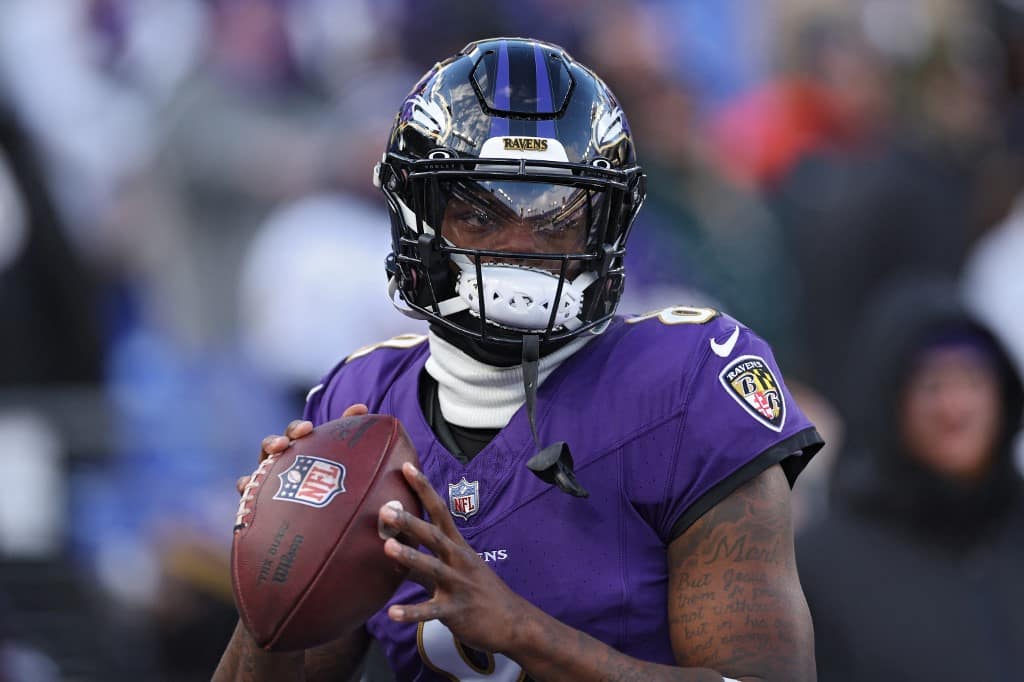
The 2026 Lane story is different.
The question is becoming how Baltimore distributes opportunities if the rookie is genuinely ready.
That is the type of problem contenders want.
Flowers has been paid like a cornerstone. Bateman is trying to rebound. Andrews remains trusted. Doyle is installing a new system. Lane is forcing himself into the conversation through repeated catches, blocking effort and a strong preseason debut.
The rookie does not need to become Michael Thomas for the Ravens to benefit.
He only needs to become Ja’Kobi Lane: a large, trustworthy, physical target who gives Jackson throws that were not previously available in quite the same way.
If that happens, the most important question in Baltimore’s receiver room will no longer be whether Lamar Jackson has enough options.
It will be how the Ravens find enough footballs for all of them.