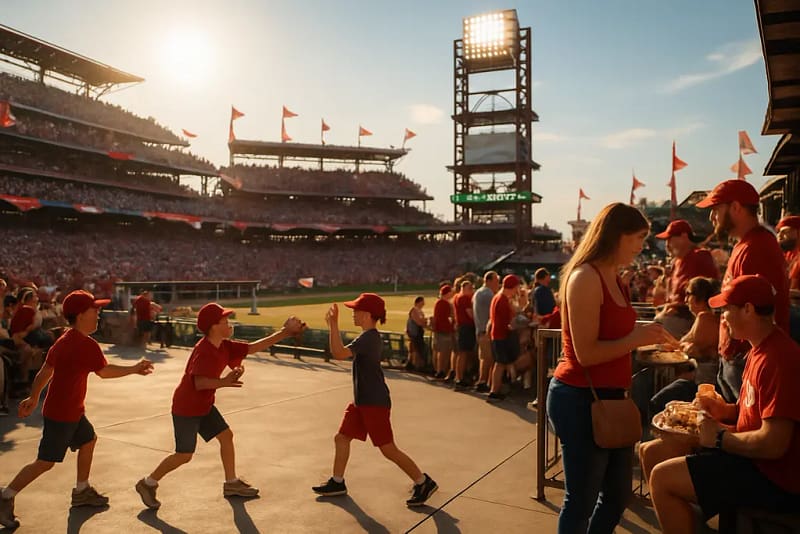

As of August 21, 2026, Citizens Bank Park has joined Philadelphia’s All-Star record rather than waiting for its turn. The 2026 MLB All-Star Game was staged there on Tuesday, July 14, 2026, marking the first time the Phillies’ ballpark, open since 2004, served as the host site. Visit Philadelphia listed the 2026 event at the venue and placed it within All-Star Week programming on its Philadelphia event page.
The historical angle is clear: the ballpark did not create Philadelphia’s All-Star identity from scratch. It extended a city record that already included Shibe Park and Veterans Stadium. The 2026 game was Philadelphia’s fifth time hosting the MLB All-Star Game, following 1943, 1952, 1976, and 1996. MLB’s own account of the city’s prior games documents those earlier Philadelphia stops through its All-Star history.
Why Citizens Bank Park Changed The Setting
Citizens Bank Park As A First-Time Host
The key venue fact from the 2026 game is simple but significant: Citizens Bank Park had not hosted the All-Star Game before. The Phillies moved into the ballpark in 2004, yet Philadelphia’s previous four All-Star Games belonged to earlier eras and earlier buildings. That gap matters because All-Star Games are not only league exhibitions; they are also snapshots of how a baseball city presents itself at a specific time.
Shibe Park represented the city in 1943 and 1952. Veterans Stadium carried the event in 1976 and 1996. The 2026 edition moved the city’s All-Star story into the Phillies’ current home. That made the game a venue milestone as much as a civic one. The research provided here does not include the 2026 score, MVP, or attendance, so the supported analysis is centered on hosting history, venue sequence, and date-specific context.
Why The Venue Sequence Matters
Philadelphia’s All-Star sequence shows how the same market can mean different things in different stadiums. Shibe Park’s two games sat in a period when the city still had two MLB clubs. Veterans Stadium’s two games reflected the multipurpose stadium era, when large concrete venues were common across major professional sports. The 2026 game took place in a ballpark built for baseball, with the Phillies as the city’s lone MLB franchise.
For Citizens Bank Park, the hosting role linked the building to a national MLB event for the first time. That connection is useful when reading the city’s baseball timeline because it prevents the 2026 event from being treated as an isolated date. It was the next chapter in a record that began more than eight decades earlier.
Philadelphia’s Prior All-Star Games In Context
Shibe Park Set Two Unusual Markers
The 1943 All-Star Game at Shibe Park was hosted by the Philadelphia Athletics, and the American League won 5-3. It also stood out as the first night game in All-Star history. That detail gives the 1943 game a place beyond Philadelphia hosting trivia. It marked a format shift for MLB’s showcase event.
The 1952 game, also at Shibe Park and hosted by the Phillies, carried a different kind of distinction. The research notes identify it as the only All-Star Game in history not completed to nine innings, ending after five innings because of rain. The National League won 3-2. In historical terms, Philadelphia’s first two All-Star Games were not routine entries: one changed the time-of-day profile of the event, and the other remains tied to an abbreviated result.
Veterans Stadium Linked Baseball To National Anniversaries
Philadelphia’s 1976 All-Star Game at Veterans Stadium arrived during the United States bicentennial year. The city’s place in that anniversary gave the game a wider civic frame. The 1996 game, also at Veterans Stadium, ended with the National League defeating the American League 6-0, with Mike Piazza earning MVP honors. The research notes identify Piazza as having a Norristown, Pennsylvania connection, which strengthened the local layer around that result.
| Year | Philadelphia Venue | Supported Historical Marker |
|---|---|---|
| 1943 | Shibe Park | First night game in All-Star history; AL won 5-3 |
| 1952 | Shibe Park | Rain-shortened after five innings; NL won 3-2 |
| 1976 | Veterans Stadium | Played during the U.S. bicentennial year |
| 1996 | Veterans Stadium | NL won 6-0; Mike Piazza won MVP honors |
| 2026 | Citizens Bank Park | First All-Star Game at the ballpark; fifth for Philadelphia |
The 2026 Game And Philadelphia’s 250th Anniversary Frame
Why The Date Carried Civic Weight
The 2026 selection was announced on April 16, 2019, in coordination with MLB, the Phillies, and the city. The research notes connect that selection to the 250th anniversary of the Signing of the Declaration of Independence in Philadelphia. MLB also used Independence Hall as the backdrop for the announcement, which aligned the baseball event with the city’s national-history profile.
That context makes the 2026 game comparable, in a careful way, to 1976. Both Philadelphia All-Star Games were tied to major U.S. anniversary years. The comparison should not be stretched beyond the facts supplied, but the pattern is visible: MLB has used Philadelphia as a host city when the sport’s summer showcase could sit beside a larger civic anniversary.
What The 96th Edition Added To The Timeline
The 2026 event was identified in the research as the 96th edition of the MLB All-Star Game, a tradition that began in 1933. That number placed Philadelphia’s fifth hosting assignment deep into the event’s timeline. By then, the All-Star Game had long been established as one of MLB’s central annual showcases, and Philadelphia’s return after 1996 gave the city its first hosting role in 30 years.
For sports editors, historians, and fans tracking host cycles, that 30-year gap is one of the cleanest ways to read the event. Philadelphia did not go from frequent host to annual fixture. It returned after a long interval, and it did so with a ballpark that had never carried the event before.
Sports-Business And Venue Meaning Without Overstatement

What Can Be Said From The Record
The supported record shows a city receiving the All-Star Game for the fifth time and a ballpark receiving it for the first time. That alone is meaningful for venue status. MLB All-Star hosting places a stadium in a national broadcast and league-event setting, with the host club, city, and ballpark all sharing the platform.
What the provided research does not establish is a precise financial impact, attendance figure, roster breakdown, or measurable stadium operations outcome from the 2026 game. Those points would require official league, team, venue, or civic reporting. Without those records in the supplied material, the evidence-based read should stay with confirmed history: date, venue, city-host count, prior sites, and anniversary context.
How The Ballpark Fits Philadelphia’s Baseball Identity
Philadelphia’s All-Star record now spans three ballparks. That spread is valuable because it tracks the city through different MLB and stadium eras. Shibe Park connects to the Athletics and Phillies period. Veterans Stadium connects to multipurpose venue planning and two late-20th-century All-Star Games. The current ballpark connects the Phillies’ modern home to the same league showcase.
For those interested in a deeper dive into related content within our network, visiting cadcamnet.com may provide additional perspectives on parallel topics, though this article relies strictly on MLB and Philadelphia event documentation rather than cross-site input.
Citizens Bank Park In Philadelphia’s All-Star Line
The most reliable way to frame Citizens Bank Park after July 14, 2026 is as the third Philadelphia venue to host MLB’s All-Star Game and the site of the city’s fifth edition. It followed Shibe Park in 1943 and 1952, then Veterans Stadium in 1976 and 1996. That sequence gives the 2026 game its best historical reading.
The event was not just a first for the ballpark. It also placed Philadelphia’s baseball showcase history beside another national anniversary year, echoing the 1976 bicentennial setting without copying it. On the supported facts, the 2026 All-Star Game stands as a venue milestone, a city milestone, and a clear continuation of Philadelphia’s role in MLB’s midsummer record.