
Allegiant Stadium Renovations moved from concept to approved public support in early September 2026, and the fan-experience case is clear: the stadium’s North Entry has become the main pressure point for how people arrive, wait, gather, and leave. For a venue that opened in July 2020 and was built for NFL games, concerts, college football, soccer, and championship events, the entry sequence is not a minor detail. It shapes the first and last impression of the event.
The Las Vegas Stadium Authority approved up to $75 million in public funding toward a $158 million North Entry project in early September 2026. The plan centers on crowd movement rather than seating-bowl changes. That matters because fan engagement starts before the ticket scan. If the walk from the Strip feels crowded, if ride-share areas back up, or if heat and rain make plaza time less comfortable, the event experience is already being graded before kickoff or first note.
Why Allegiant Stadium Renovations Start At North Entry
What Allegiant Stadium Renovations Change First
The North Entry project is built around a raised pedestrian deck running from the West Hacienda Avenue overpass toward the stadium’s northern gate. NFL.com described the North Entry as one of the busiest areas of the venue and reported that the larger project was designed to address fan ingress and egress through a $158 million upgrade package North Entry upgrade details. That is the central fan-facing issue: not luxury inventory, not a new scoreboard, but movement.
In stadium operations, a busy entry point can become a behavioral bottleneck. People slow down when walking paths narrow, when queues cross, or when arrival modes overlap. A raised deck separates part of the pedestrian stream from surface-level vehicle activity. That separation does not guarantee a perfect event-day flow, but it gives operators a clearer tool for managing the highest-volume approach from the Las Vegas Strip.
Why The North Gate Matters To Fans
The North Entry is not only a gate. It is a meeting point, a photo stop, a queueing area, and a transition from Las Vegas street movement into stadium security and ticketing. For Raiders games, concerts, and neutral-site events, many attendees are not weekly locals with fixed routines. A large share of the crowd may be visitors, occasional attendees, or fans moving in groups from hotels. That makes wayfinding and space management more valuable than they would be in a smaller, routine commuter venue.
- A raised pedestrian deck is intended to create a more direct elevated route from the West Hacienda Avenue overpass.
- Transportation changes beneath the deck are aimed at improving pick-up and drop-off activity.
- A plaza and canopy are planned to add shade, weather cover, and space for smaller activations.
Those elements are best read as a package. The deck helps organize motion. The transportation area addresses curbside pressure. The canopy and plaza deal with dwell time, which is the period when fans are not yet inside but are already part of the event environment.
Funding And Timing For Allegiant Stadium Renovations
The Public Funding Decision
The approved public contribution was capped at up to $75 million, while the wider North Entry renovation was reported at $158 million. NFL.com reported the Stadium Authority’s approval and noted that Allegiant Stadium opened in July 2020, cost about $2 billion, and has a capacity of about 65,000 Stadium Authority approval. Those figures frame the renovation correctly: this is a young stadium by NFL standards, but one already being adjusted because its event load and location create heavy entry demands.
Public funding for stadium work deserves close scrutiny because fan benefits are often cited more easily than they are measured. In this case, the approved spending is tied to a specific operational problem: the North Entry’s crowd and transportation load. That makes the case easier to evaluate than a vague premium-space project. The public should still judge the finished work by observable outcomes, including queue behavior, pedestrian spacing, post-event dispersal, and whether ride-share and drop-off activity becomes less disruptive around peak windows.
A 2027 To 2028 Construction Window
As of September 7, 2026, construction had not begun. The reported schedule called for work to start in the third quarter of 2027 and finish by late 2028, before Allegiant Stadium hosts the Super Bowl in early 2029. That timeline gives the project a hard sports-business context. The renovation is not only about regular-season Raiders games. It is tied to how Las Vegas presents a high-capacity venue during the kind of event that tests every part of arrival, security, hospitality, media, and exit planning.
The timing also reduces the room for broad claims before the work is complete. A deck can be planned. A canopy can be designed. A drop-off area can be mapped. The test comes when several tens of thousands of people move through the same approach before and after a major event.
How The Entry Project Changes Event-Day Behavior
Walking From The Strip
Allegiant Stadium’s location near the Strip is a competitive advantage and an operational challenge. The walk has become part of the event ritual, especially for visitors. A more direct elevated route from West Hacienda Avenue can make that ritual easier to manage because it gives fans a clearer line between the hotel corridor and the stadium entrance. That matters for families, older attendees, visiting supporters, and large groups that move more slowly through congestion.
Better walking infrastructure can also change when fans choose to arrive. If the approach feels confusing or crowded, some people delay arrival or cluster too close to event time. If the route is clearer, operators may have a better chance of spreading arrival patterns. That is not automatic; it depends on signage, staffing, communication, and event type. Still, the physical design gives the venue more options.
Ride-Share And Post-Event Release
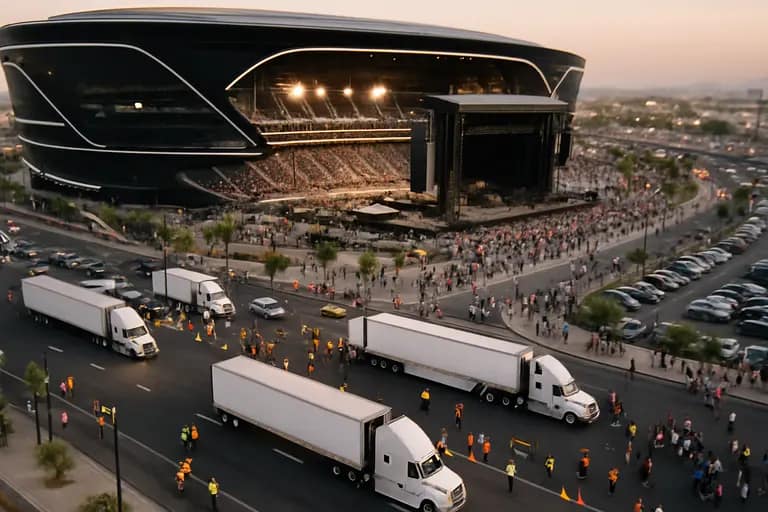
The transportation upgrades beneath the deck are aimed at pick-up and drop-off pressure, a common stadium issue in cities where visitors rely on ride-share rather than private parking. Post-event release is often harder than pre-event arrival because thousands of people leave at once, many open apps at the same time, and curb space becomes contested.
For fan engagement, this is where stadium infrastructure meets mood. A strong fourth quarter or encore can be dulled by a slow, confusing exit. A better organized pick-up and drop-off area will not remove the basic physics of a large crowd leaving together, but it can reduce conflict between pedestrians and vehicles if the design performs as intended.
That same question appears in smaller venue projects, too. The site’s analysis of the Augusta arena impact looked at fan traffic and public funding around a different scale of sports facility, which is a useful reminder that access often defines how communities judge venue spending.
Competitive Value Beyond Raiders Games
Event Bidding And Venue Standards
The renovation also fits the competition among NFL and multipurpose stadiums. Officials cited the need for Allegiant Stadium to remain competitive with new or renovated venues in markets such as Buffalo, Chicago, Denver, Washington D.C., and Nashville. That context matters because major events are awarded partly on the total host package, not just the seating bowl. Arrival routes, plaza space, media operations, transportation, and guest comfort all contribute to whether a building can carry a championship week or a major concert run.
From a sports-culture angle, Las Vegas is not selling only a game. It is selling a full event weekend. The stadium has to absorb local fans, visiting supporters, corporate guests, neutral spectators, and tourists who may be attending their first event in the building. A stronger North Entry gives the venue a better chance to make that mixed crowd feel organized rather than merely large.
Fan Engagement Beyond The Seat
The planned plaza and canopy are especially relevant because modern fan behavior is not limited to the seat. People gather before gates, meet friends, post photos, wait for group members, and move through sponsor or team activations. Shade and cover are practical fan amenities in Las Vegas, where heat can affect comfort before outdoor queuing even begins.
That does not mean the canopy should be treated as decoration. Its value should be judged by how it changes usable space. If it gives fans more comfortable waiting areas, reduces crowding near the gate, and supports smaller events without interfering with entry operations, it will have a measurable fan-experience function.
For those interested in how other sports venues manage fan culture, Books on Baseball offers insights into baseball venues within the same network.
Allegiant Stadium Renovations And Fan Experience
What Can Be Judged Now
The current plan can be judged on whether it targets a real stadium problem. On that point, the evidence is strong. The North Entry has been identified as a high-traffic pressure point, and the approved project addresses the exact parts of the experience that shape crowd comfort: elevated pedestrian access, transportation management, plaza space, and weather protection.
The plan is also notable because it does not depend on a claim that the seating bowl is obsolete. Allegiant Stadium is only six years old as of 2026. The issue is that a young building can still need changes when its location, event demand, and fan movement patterns reveal stress points after opening.
What Remains To Be Measured
The harder judgment must wait until after completion. Useful measures would include gate-entry times, post-event dispersal patterns, pedestrian density near the North Entry, ride-share staging performance, and fan-service complaints tied to access. Without those results, any claim that the project has solved the problem would be premature.
Allegiant Stadium Renovations should be judged as a targeted infrastructure response to fan-flow pressure, not as a cosmetic refresh. If the finished North Entry reduces crowding and makes arrival and exit easier during the biggest event windows, the project will have improved the part of stadium life that fans remember even when the game or concert is over.