
USMNT Fan Engagement around the September-October 2026 camp has been shaped by two forces that rarely sit this close together: a national team reset after the 2026 FIFA World Cup and a federation push to make match days feel more participatory. As of September 28, 2026, the Peru match in Orlando has already taken place on September 26, while the Chile match in St. Louis remains scheduled for September 29. That timing matters because the fan strategy is not only about filling the hours before kickoff. It is also about how U.S. Soccer frames a younger player pool, keeps post-World Cup attention from fading, and gives supporters visible points of contact with the team.
The Orlando match was branded as a Fan Appreciation Match, with pregame activity at Fan HQ outside Inter&Co Stadium on the East Parcel. OurSportsCentral reported that the event included fan activations tied to the USMNT meeting Peru in Orlando on September 26, 2026, through its Fan Appreciation Match notice. U.S. Soccer also described the Peru game as the first USMNT action since the Round of 16 at the 2026 FIFA World Cup, while listing a notably young roster for the match in its Peru match preview.
The most useful way to assess the strategy is to separate atmosphere from access. Atmosphere is the visible part: music, plazas, photo stations, giveaways, and supporter rituals. Access is the deeper sports-business question: how close fans feel to the team, how young players are introduced, and whether casual post-World Cup viewers receive enough context to follow a new cycle.
USMNT Fan Engagement After Orlando
What USMNT Fan Engagement Meant At Fan HQ
The Orlando model leaned on a familiar but effective match-day formula. Fan HQ gave supporters a destination before entering the stadium, which helped turn the event into more than a two-hour match window. These spaces are valuable because they organize attention. A fan arriving early has somewhere to go, something to do, and a social setting that turns individual attendance into a shared experience.
That makes USMNT Fan Engagement more measurable in behavior than in noise alone. Early arrivals, participation in partner stations, use of photo areas, and time spent in the pregame footprint all tell organizers whether supporters treat the match as a full event rather than a single kickoff. The research notes do not provide attendance, dwell-time or activation-use data from Orlando, so any evaluation of effectiveness has to stay cautious. What can be said is that the design used known fan-behavior tools: arrival incentives, visual identity, family-friendly activities, and a central gathering place.
Why Timing Changed The Meaning
The September 26 Peru match carried extra weight because it followed the USMNT’s 2026 World Cup exit in the Round of 16. Post-tournament friendlies can lose urgency if fans perceive them as low-stakes exhibitions. U.S. Soccer’s Fan Appreciation framing gave the match a clearer purpose. It placed supporters at the center of the first public step into the next cycle, rather than asking them to treat the game only as a roster experiment.
For a federation, that distinction matters. A reset year can create uncertainty about stars, roles, and expectations. By attaching fan appreciation to the first post-World Cup match, U.S. Soccer signaled continuity even while the roster moved younger. That is a practical engagement choice: the message to supporters was that the team may change, but the relationship with the fan base should not pause.
Roster Youth As A Fan Access Story
The Young Player Hook
The September 26 roster gave U.S. Soccer a clear narrative asset. The 28-player group for Peru had an average age of about 22 years and 8 months, more than four years younger than the 2026 World Cup roster, according to the research notes. Thirteen players were uncapped, and the average age among those uncapped players was about 19 years and 6 months. MLS accounted for 12 of the 28 players, with nine of those MLS players in line for a first senior national team cap.
For USMNT Fan Engagement, that youth profile changes the content around the match. Supporters are not only watching established names; they are being asked to learn who could define the next cycle. That creates an information challenge. If the federation wants new fans to connect with younger players, it has to explain roles, clubs, age context, and development paths in clear language. A pre-match roster frame like the site’s earlier Peru and Chile preview is useful because casual fans need a bridge between a name on a team sheet and a reason to care.
Veterans As Anchors
The research notes also identify Tyler Adams and Antonee Robinson as veterans in the group, each with 58 caps. That detail matters because fan connection is not built only through novelty. A very young camp benefits from recognizable anchors who can help supporters locate the new group within the broader national-team story. The same dynamic appears across sports: fan bases often accept a youth movement more quickly when familiar players help frame the transition. For readers interested in how team identity and supporter habits interact in another sport, NBA Playbook provides an insightful perspective.
The cautious point is that youth does not automatically produce engagement. A teenager in camp can create attention, but attention is not the same as durable attachment. The stronger approach is to pair youth with explanation: why a player was called, what type of role he fits, and how the staff balances evaluation with match preparation.
Match-Day Programs And The Membership Ladder
Insiders As A Structured Channel
U.S. Soccer’s Insiders program, as described in the research notes, offers a tiered fan-membership structure. The free Standard Insider level includes presale ticket access, match-day benefits, and rewards. Higher tiers include Premium and VIP options with perks such as meet-and-greets, exclusive merchandise drops, the Insiders Lounge, and post-game photo opportunities.
This is not just a benefits list. It is a segmentation strategy. A federation has different supporter groups: families attending one match, club supporters who travel, long-time national-team followers, and newer fans who arrived through the 2026 World Cup. Tiered programs let U.S. Soccer communicate with those groups in different ways without relying only on public social posts.
The risk is that access can feel uneven if fans do not understand what is included, how tickets are allocated, or why certain perks sit behind paid tiers. That is why transparency is part of the engagement question. According to the research notes, the U.S. Soccer Fan Council update on March 26, 2026 pressed for greater ticketing transparency, accessible match-day experiences, inclusion of supporter culture, improved fan communication, and strategies to reach new fans beyond the 2026 World Cup.
Access Demand From Open Training
The June 2026 open training session at USMNT Base Camp in Irvine, California, is the clearest demand signal in the research notes. It drew 33,000 ticket requests for 5,500 available seats. That gap shows that supporters value access even before a match is played. Training sessions allow fans to see body language, coaching rhythms, and player interactions in a lower-pressure setting than a full international fixture.
For organizers, that demand should be read carefully. Open sessions create goodwill, but scarcity can also frustrate supporters if communication is unclear. The best use of that demand is not simply to add more events without guardrails. It is to explain allocation, provide accessible entry information, and use digital content to serve fans who cannot fit into limited-capacity sessions.
Chile In St. Louis And The Community Test
Fan HQ Moves To Lou Fusz Plaza
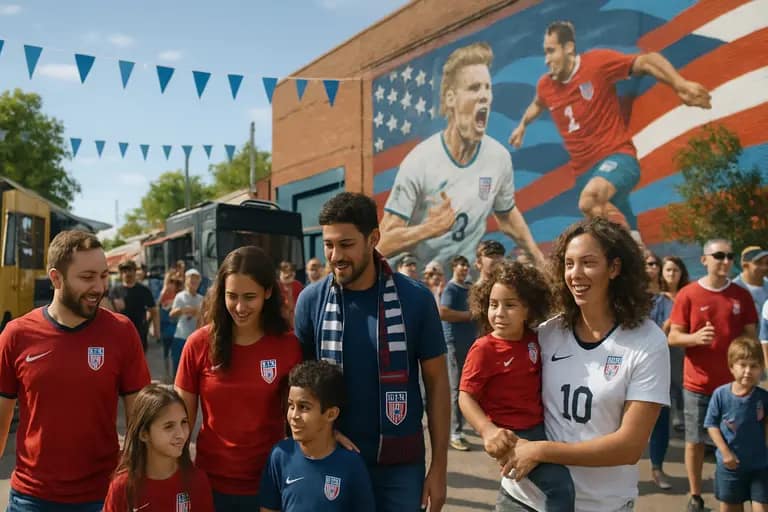
The next scheduled test is the USA-Chile match on Tuesday, September 29, 2026, at 7:00 p.m. CT at Energizer Park in St. Louis. The research notes state that U.S. Soccer planned to honor captain Tim Ream with an on-field recognition ceremony and to host Fan HQ at Lou Fusz Plaza. The listed pre-match schedule had Fan HQ opening at 4:30 p.m. CT, with music, a DJ, a marching-in moment for the team entrance at 5:20 p.m., free face painting, skill-testing inflatables, partner activations, wearable flags, a first-cap photobooth, and roaming photographers.
The St. Louis plan is notable because it blends ceremony with participation. Honoring Ream gives the match a local and national-team memory point. Fan HQ gives supporters a practical gathering area. Those two elements work best when they are connected: a recognition ceremony can deepen the event emotionally, while pregame participation can make fans feel they helped create the setting.
Why The City Context Matters
St. Louis has a strong soccer identity, but the research notes here do not provide ticket totals, local supporter-club plans, or transportation details for September 29. That limits what can be claimed. The supported point is narrower: U.S. Soccer built the match-day program around plaza activity, team-entry ritual, and a player recognition moment.
That is still meaningful. Fan engagement is often strongest when the event gives different groups a role. Families may value face painting and inflatables. Dedicated supporters may respond to the march-in and ceremony. Newer fans may use photo stations and wearable flags as low-barrier entry points into national-team identity. None of those features guarantees a stronger long-term fan relationship, but each reduces the distance between attending a match and feeling part of the event.
USMNT Fan Engagement Strategy Between Matches
USMNT Fan Engagement after Orlando and before St. Louis should be judged by continuity. The federation has used Fan HQ spaces, youth-roster storytelling, membership tiers, open-training access, and recognition ceremonies as separate tools. The stronger strategy is to make those tools feel connected across dates and venues.
That means the supporter who attended Peru on September 26 should understand what changed by Chile on September 29. Which young players gained minutes? Which first-cap stories carried forward? How did veterans anchor the group? How did the fan-facing event structure differ between Orlando and St. Louis? These are not promotional questions; they are sports-culture questions because they shape whether supporters see the fall camp as a sequence rather than isolated friendlies.
The evidence from the research notes supports a cautious reading. Demand for access was strong in Irvine in June, the Peru roster was unusually young, Orlando used a Fan Appreciation frame, and St. Louis was scheduled to combine Fan HQ with Tim Ream recognition. The next measure is whether U.S. Soccer can keep those pieces coherent for fans who are learning a new player pool after the 2026 World Cup. If the answer is yes, the fall camp becomes more than a reset. It becomes a public introduction to the next USMNT cycle.