


The USWNT Training Center matters because it gives U.S. Soccer something it did not have before May 7, 2026: a permanent headquarters and training base serving all 27 national teams, including the senior women’s program. U.S. Soccer announced the opening of the Arthur M. Blank U.S. Soccer National Training Center in Fayetteville, Georgia, as its first permanent home, with administrative, performance, and team spaces in one place through the official opening announcement.
For the USWNT, the significance is not only symbolic. Player development is built from repeated habits: field quality, recovery access, meeting time, staff alignment, and the ability to move from analysis to training without losing hours to logistics. A national-team camp is short by design, so the environment around those days carries weight. The new center does not guarantee better players by itself. It does, however, change the conditions in which elite players, prospects, coaches, sports-science staff, and federation personnel work.
Why The USWNT Training Center Changes Development
USWNT Training Center As A Daily Standard
Development at senior international level is often measured in narrow margins. A player may need cleaner first-touch work under pressure, sharper timing with an overlapping fullback, better recovery after repeated high-intensity sessions, or clearer tactical instruction before a match window. A fixed training base helps because those details can be repeated in a consistent setting.
That makes the USWNT Training Center less of a venue story and more of a process story. Camps can now be planned around known field dimensions, known indoor spaces, known medical rooms, known meeting rooms, and known recovery access. That matters for a staff trying to compare players across camps. If the setting keeps changing, staff members have to separate player performance from travel fatigue, surface variation, and uneven access to support tools. A permanent base reduces some of that noise.
Why Field Inventory Matters
The site scale is central to the development argument. MLSsoccer.com reported that the complex spans 200 acres, with 123 developed acres in use, and includes 17 outdoor playing surfaces: 13 regulation-size natural grass fields, two artificial turf fields, and two sand pitches, along with two indoor playing surfaces in the facility details. Those numbers matter because a national federation is not developing one team at a time. It is managing overlapping programs, age groups, senior teams, and extended national teams.
For the USWNT, that field inventory can support technical repetition without the same scheduling squeeze that comes with rented or shared sites. Full-field tactical work, small-sided games, finishing sessions, goalkeeper training, return-to-play work, and separate youth or extended-team sessions can all be planned with fewer trade-offs. The practical gain is not dramatic in a single drill. It is the accumulation of better training minutes across windows.
What Centralization Means For Coaches And Players
From Meetings To Field Sessions
The clearest development value is the link between classroom instruction and field application. U.S. Soccer’s facility includes a 10,000-square-foot high-performance gym, 20 locker rooms, and 19 meeting rooms, according to the federation’s opening materials. Those spaces give coaches more control over the sequence of a camp day: video, individual feedback, unit meetings, activation, field work, recovery, and review.
That sequence can sound routine, but it is often where player development is won or lost. A young player called into camp may receive information at a high pace. If the video room, gym, field, and recovery areas sit inside the same operating plan, the player has fewer gaps between instruction and execution. For an established player, the benefit is different: more precise workload management and quicker feedback loops. For staff, centralization allows more consistent record-keeping across camps.
A Shared Home For Multiple Teams
The center also changes the relationship between the senior team and the wider federation structure. Because the base serves all 27 national teams, the women’s senior program can sit closer to youth teams and extended programs. That is significant for talent identification, not because it creates new talent on its own, but because it gives coaches and evaluators more chances to compare standards in the same environment.
That shared setting can help make player pathways less dependent on isolated camp impressions. A youth player can be assessed in relation to senior-team demands. A senior player returning from club duty can be monitored with the same performance language used by federation staff in other age groups. The best development systems reduce gaps between levels. A permanent base gives U.S. Soccer a better platform to do that, though results will still depend on coaching quality, selection decisions, club cooperation, and player health.
The same facility questions are not limited to the women’s program. The men’s national-team side faces similar camp rhythm and recovery issues, which is why our related analysis of USMNT training center preparation is useful context for how one site can affect multiple national teams.
The Fan Engagement Angle
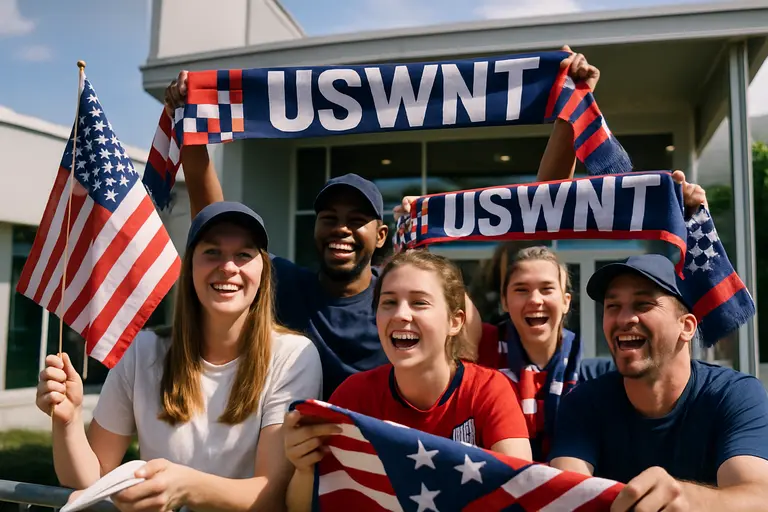
Why Supporters Read Facilities As Ambition
Facilities shape how supporters judge a federation’s seriousness. Fans cannot see every recovery session or tactical meeting, but they can understand whether a national team has a stable base, high-quality fields, and access to modern performance spaces. In women’s soccer, that carries extra meaning because development investment has long been part of the public conversation around competitive standards.
The cautious read is that a building does not win tournaments. The USWNT’s future performance will depend on player pools, club form, coaching choices, tactical clarity, health, and opponent strength. Still, supporters are right to view infrastructure as part of the competitive equation. When a federation improves the day-to-day setting for players, it also gives fans a more concrete way to evaluate commitment beyond slogans.
There is a cross-sport lesson here. Training infrastructure, player workload, and fan expectations are also central themes in basketball coverage at NBA Playbook, where facility and preparation questions often sit behind what supporters see on game night. Soccer has its own rhythms, but fans in every sport increasingly connect performance with the quality of preparation.
What The USWNT Training Center Means Now
The most responsible assessment is direct: the USWNT Training Center is a major structural upgrade, but its competitive effect has to be measured over time through player development outcomes, camp efficiency, staff continuity, and senior-team performance against top opponents. As of October 20, 2026, the confirmed facts already show a meaningful shift. U.S. Soccer opened a permanent home, placed the women’s program inside a federation-wide training base, and gave players access to multiple fields, indoor surfaces, meeting rooms, locker rooms, and a large performance gym.
That matters because elite development is not built only in matches. It is built in the hours before and after training: how players recover, how coaches teach, how data is reviewed, how prospects are compared, and how quickly lessons move from screen to grass. The center improves the environment for those actions. The next step is not to assume success, but to track whether the federation turns better infrastructure into clearer pathways, sharper camps, and more consistent player growth.