
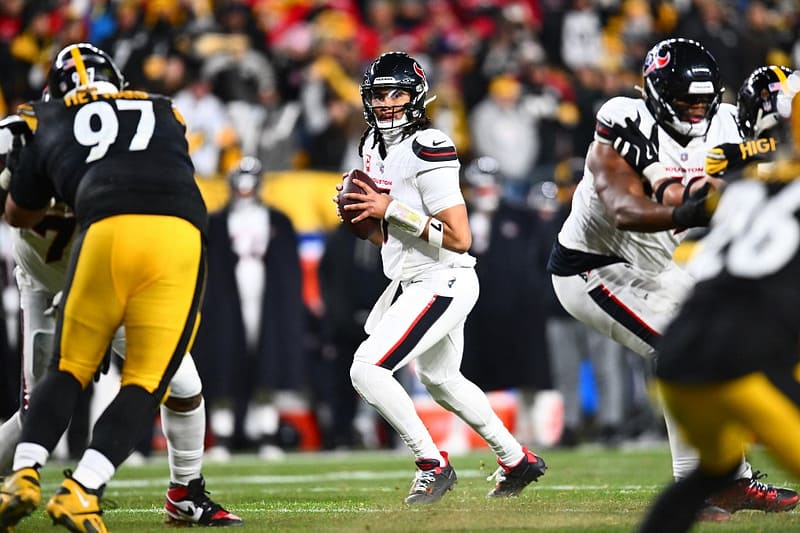

The Houston Texans enter 2026 with the kind of roster that should make the AFC pay attention. They are coming off a 12-5 season, they have C.J. Stroud in the middle of a critical rebound window, and their defense is good enough to keep them in serious playoff conversations. Yet the biggest question in Houston is not about star power. It is about whether the Texans can finally make the line in front of Stroud match the rest of the team’s ambition.
That is why the offensive line overhaul is Houston’s biggest training camp test.
NFL.com’s AFC South training camp preview listed the Texans’ first major storyline as “another O-line overhaul,” calling the line the most glaring weakness of the 2025 team. Rookies report July 21, veterans report July 28, and Houston’s first full camp practices begin at the Houston Methodist Training Center shortly after. By the time the Texans open their public camp schedule on July 29, the franchise’s most important problem will be visible in every protection drill, run period, joint practice, and preseason snap.
Houston does not need the offensive line to become famous. It needs it to become dependable.
Why The Texans’ Camp Starts Up Front
Training camp usually sells quarterback throws, receiver highlights, rookie flashes, and defensive splash plays. Houston’s camp should be judged differently. If the offensive line stabilizes, the Texans can look like a complete AFC contender. If it does not, every other strength becomes harder to trust.
That is the reality of building around Stroud. A quarterback can be talented, accurate, tough, and creative, but protection problems eventually shrink an offense. Routes get shortened. Play callers become more cautious. Deep concepts disappear. Running backs stay in protection instead of releasing into space. Third-and-long becomes a weekly trap.
The Texans’ official 2026 training camp announcement said camp will begin July 29 as the team prepares for its milestone 25th season, with eight practices open to fans at the Houston Methodist Training Center. Those practices will be more than a fan event. They will be the first real public look at whether the team’s offseason line decisions have produced a cleaner offense.
World Football Idol’s earlier breakdown of late-July NFL training camp readiness argued that offensive lines often reveal contenders before quarterbacks and receivers do. Houston is the clearest example. A highlight throw from Stroud will matter less than whether the pocket stays clean for two straight weeks.
How 2025 Made The Line A Franchise Issue
The Texans’ 12-5 record can make the problem look smaller than it was. Winning teams can hide flaws for a while, especially when they have a strong quarterback, defensive talent, and enough playmakers to survive uneven games. But offensive-line instability tends to appear when the competition gets better.
Houston’s issue was not simply that one spot underperformed. It was that the offensive front never fully became a source of weekly confidence. Protection stress affected Stroud’s rhythm. The run game lacked the consistent push needed to punish light boxes. The offense too often depended on Stroud to solve pressure instead of giving him structure.
That is why NFL.com’s camp framing matters. A 12-win team does not usually enter training camp with its offensive line as the first storyline unless the weakness was obvious. The Texans are not rebuilding because they were bad. They are rebuilding up front because they know good is not enough in the AFC.
Kansas City, Baltimore, Cincinnati, Buffalo, Denver, and the rest of the conference’s top tier punish protection problems. A team can beat average opponents with improvisation. It usually cannot win three January games that way.
Why C.J. Stroud’s Rebound Depends On The Pocket
Stroud is the center of Houston’s ceiling, but the offensive line controls how much of that ceiling the Texans can access. The best version of Stroud is not just a quarterback escaping pressure and making heroic throws. It is a quarterback operating on time, attacking intermediate windows, setting protections with confidence, and forcing defenses to defend the full field.
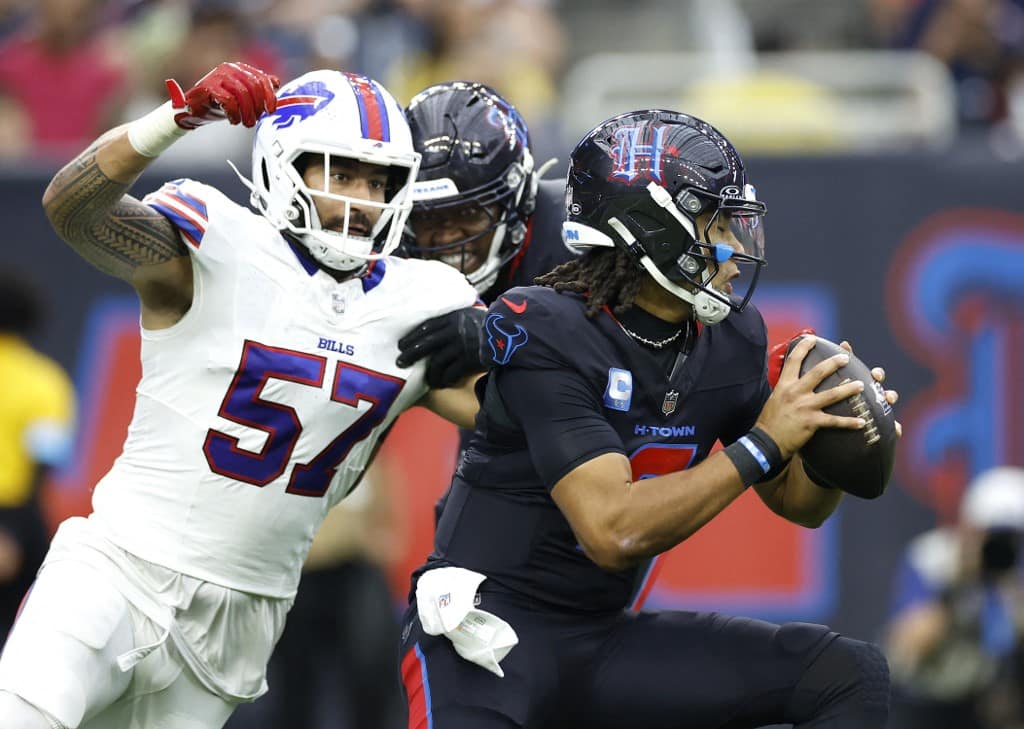
That version requires trust. Trust that the left tackle can hold up long enough for a deeper route. Trust that the interior pocket will not collapse into his lap. Trust that play-action has enough run threat behind it to freeze linebackers. Trust that third-and-6 does not become a free-rush situation.
If the offensive line is shaky in camp, Stroud’s development becomes harder to measure. Is he holding the ball too long, or are receivers not uncovering before pressure arrives? Is the play call too slow developing, or is the protection failing? Is the quarterback creating chaos, or is chaos being forced on him?
A stable line makes those answers clearer. That is why Houston’s camp is about more than five blockers. It is about creating the conditions for Stroud to be evaluated fairly and perform fully.
Which New Pieces Must Become A Unit
The Texans’ overhaul is not only about adding names. It is about turning names into communication. Offensive line play is one of the most chemistry-dependent jobs in football. Five players can each be talented and still function poorly if they do not pass off stunts, recognize pressure, and move together in the run game.
Yahoo Sports’ Texans Wire coverage of the offseason line rebuild highlighted veterans Wyatt Teller, Ed Ingram, and Trent Brown as key pieces in a revamped front built to protect Stroud and power the run game through the Texans’ 2026 offensive line overhaul. That veteran weight matters because Houston is not approaching this like a slow developmental project. The Texans are trying to win now.
Veterans can help stabilize a line quickly, but they also bring age, health, and fit questions. Teller’s physicality, Ingram’s interior experience, Brown’s size, and the existing young pieces all need to become one operating system. Camp will show whether that is possible before September.
| Texans Offensive Line Test | Why It Matters | What Camp Needs To Show |
|---|---|---|
| Interior Communication | Stroud cannot function with pressure in his lap | Clean stunt pickups and fewer free rushers |
| Veteran Fit | Houston added experienced blockers to accelerate the fix | Teller, Ingram, and Brown must look connected quickly |
| Run-Game Timing | The offense needs more than Stroud dropbacks | Better combination blocks and early-down movement |
| Tackle Stability | Deep passing depends on edge protection | More trust on longer-developing concepts |
| Depth Development | Injuries always test offensive lines | Backup linemen must look playable, not just rosterable |
That table shows why the line cannot be judged by one-on-one drills alone. The Texans need evidence of shared rules, not just individual wins.
Why The Run Game Is Part Of The Same Problem
Protection gets most of the attention because Stroud is the franchise player. But the run game may reveal whether the overhaul is truly working. A reliable run game changes how defenses play Houston. It creates more manageable downs. It protects the quarterback by reducing predictable passing situations. It makes play-action more believable. It gives the offense a way to win when the passing game is not explosive.
Houston cannot enter 2026 as a team that asks Stroud to solve every hard down. That is not sustainable, especially in the AFC South where defensive fronts can create ugly games. If the Texans want to control pace and survive playoff-style football, they need more consistent movement up front.
This is where camp should be watched closely. Are backs being hit before the line of scrimmage? Are guards creating displacement? Are double-teams reaching linebackers? Are tight ends and fullback looks adding real flexibility? Is the offensive staff building a run menu that complements Stroud instead of merely giving him occasional relief?
The answer will shape Houston’s identity. A team with a real run game and Stroud’s arm becomes hard to defend. A team without one becomes easier to pressure.
Why Joint Practices Will Be Houston’s Real Exam
Training camp practices against teammates matter, but joint practices often reveal more. Houston will host the Las Vegas Raiders for a joint practice on Aug. 18 before their preseason matchup, according to the Houston Chronicle’s reporting on the Texans’ joint practice schedule. The Texans are also scheduled to work with the Carolina Panthers later in August.
Those sessions should be treated as offensive-line checkpoints. Against unfamiliar pass rushers, line communication becomes harder. Defensive fronts disguise pressure differently. Cadence rules change. The comfort of practicing against the same teammates disappears.
That is useful for Houston. The Texans need to know whether their revamped front holds up against another team’s speed and physicality before the regular season begins. Joint practices allow coaches to test first-team protection without playing starters deep into preseason games. They also expose depth quickly.
If the line performs well against Las Vegas and Carolina, Houston can enter September with real confidence. If communication breaks down, the Texans will have limited time to fix it.
How The AFC South Raises The Urgency
The AFC South gives Houston both opportunity and pressure. The Texans are good enough to set the standard in the division, but the gap cannot be protected by Stroud alone. Indianapolis, Jacksonville, and Tennessee each have enough defensive talent or quarterback intrigue to make the division uncomfortable if Houston’s offense becomes predictable.
NFL.com’s AFC South preview framed the Texans as a 12-5 team with clear contender expectations. That matters because Houston is not trying to sneak into the playoffs. It is trying to control the division and build toward a deeper January run. The offensive line is the difference between those two goals.
A weak line can still win the AFC South if everything else breaks right. It probably cannot win the AFC.
That is the distinction Houston must understand. The standard is no longer merely being better than the division’s middle tier. The standard is being strong enough up front to survive the teams waiting later.
Why Nick Caley’s Offense Needs The Line To Settle
Houston’s offensive staff also needs clarity. In Nick Caley’s second year as offensive coordinator, the Texans should be able to expand, not constantly patch. Camp should allow more detail, more personnel variation, more answers for pressure, and a sharper run-pass relationship.
That cannot happen if the offensive line remains unsettled. Coaches call differently when protection is unreliable. They reduce risk. They build in extra help. They ask fewer players to release into routes. They limit the menu. That might protect the quarterback in the short term, but it also shrinks the offense.
The Texans have enough weapons to be more ambitious. They need the line to permit that ambition.
A strong camp up front would allow Caley to build with confidence: deeper play-action shots, more intermediate passing, heavier personnel looks, better screen timing, and more aggressive third-down calls. A shaky camp would put Houston back into survival mode before the season even starts.
What A Successful Camp Would Look Like
A successful Texans offensive-line camp would not require perfection. Every line loses reps. Every defense creates pressure. The goal is not to make Stroud untouched in July. The goal is to create a clear upward trend.
The signs would be specific: fewer free rushers, cleaner center-quarterback communication, guards passing off stunts without panic, tackles holding up long enough for deeper concepts, and a run game that creates movement instead of stalemates. The backup line matters too. Injuries are inevitable, and Houston cannot build a contender with a starting five and no safety net.
The team’s open practices give fans and media a chance to track those details. But the most important evaluations will happen in the meeting rooms. Coaches will know whether mistakes are being repeated or corrected. Stroud will know whether he trusts the pocket. Caley will know whether he can call the full offense.
That trust is the real outcome Houston needs.
Why The Texans’ Season May Be Decided In The Trenches
The Texans’ 2026 season will be marketed through Stroud, defensive stars, playoff ambition, and AFC South expectations. But the most important work may happen in the least glamorous place: the offensive-line room.
Houston has already shown it can win games with talent. Now it has to show it can win with structure. The offensive line is where structure starts. It determines whether Stroud plays on time, whether the run game has force, whether Caley can expand the offense, and whether the Texans can handle playoff-level pressure.
That is why the overhaul is the biggest training camp test. It is not a side issue. It is the hinge point.
If Houston’s new front settles quickly, the Texans can look like one of the AFC’s most complete teams. If the line remains a weekly concern, the 12-5 record will feel less like a launchpad and more like a warning that the roster still has one problem too large to ignore.
Training camp will not decide the AFC South. But for Houston, it may reveal whether the Texans are built to win more than the division.