
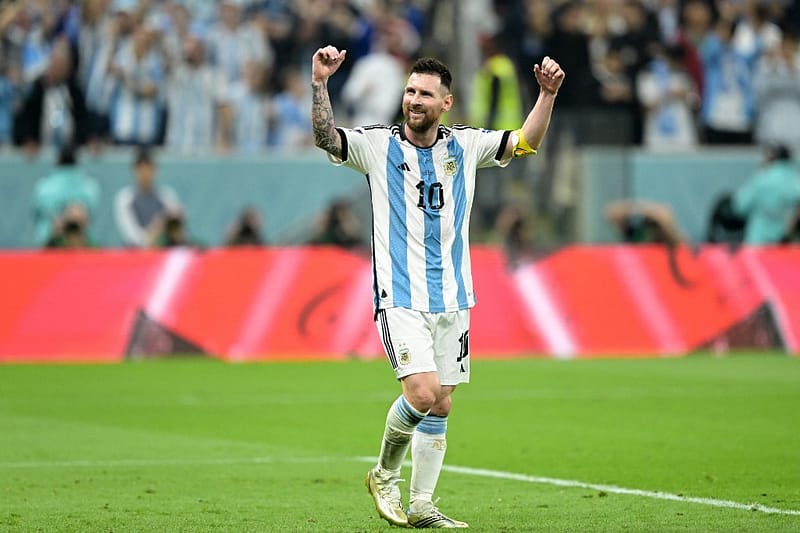

Lionel Messi needed only one night in Miami to remind American soccer how quickly he can turn a tournament match into an event. On August 5, 2026, the 39-year-old scored twice and added an assist as Inter Miami defeated Atlético de San Luis 4-2 at Nu Stadium. His second goal carried him to 14 career Leagues Cup goals, making him the competition’s all-time leading scorer.
The record matters on its own. Fourteen goals in only 12 Leagues Cup appearances is another extraordinary line in a career overflowing with them. But the more important American soccer story is what keeps happening around Messi.
Inter Miami matches still pull crowds. Liga MX opponents become major events in South Florida. MLS road games involving Miami carry extra weight. A tournament created to connect MLS and Liga MX continues to find its most recognizable individual storyline in the player who transformed Inter Miami when he arrived in 2023.
The official MLS account of Messi’s record-breaking night described another Messi masterclass. For American soccer, however, the larger point is that nearly three years after his arrival, the novelty has not disappeared. Inter Miami remains one of the country’s strongest soccer magnets because Messi continues to combine celebrity with meaningful production.
How Messi Turned One Leagues Cup Match Into Another Record Night
Atlético de San Luis did not arrive at Nu Stadium merely to participate in Messi’s latest milestone. The Liga MX side scored first through David Rodríguez in the fourth minute and forced Miami into an early response.
Messi provided it.
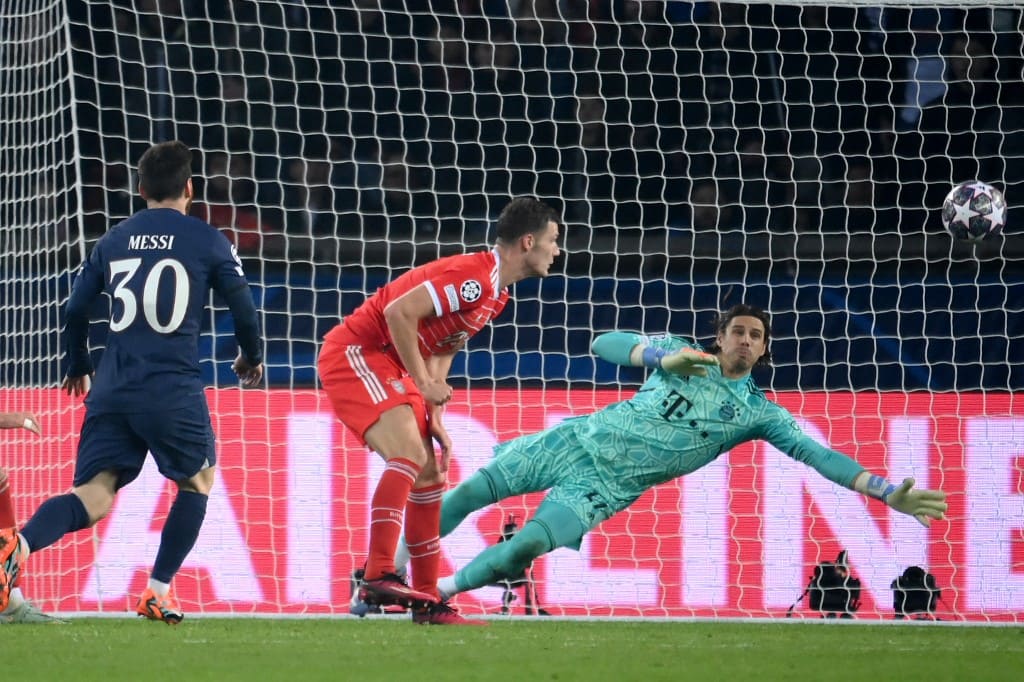
Noah Allen delivered the service for Messi’s first goal, which tied Denis Bouanga atop the Leagues Cup scoring chart. Later in the first half, another Allen delivery found Messi for the goal that moved the Argentine alone to 14.
Messi then supplied a corner for Micael’s headed goal in first-half stoppage time. Telasco Segovia also scored as Miami built a 4-1 halftime advantage before ultimately winning 4-2.
The Inter Miami match report also highlighted Allen’s remarkable role. The 22-year-old homegrown player finished with three assists, showing that the Messi effect inside Miami is not simply about one famous player taking every action himself.
That distinction is important. Messi attracts attention, but the healthiest version of Inter Miami uses that attention to elevate the players around him.
Against San Luis, defenders had to track Messi while Allen repeatedly attacked space from the left. Segovia found openings. Micael became a set-piece target. Miami turned Messi’s gravity into opportunities for several different players.
That makes the spectacle more sustainable than a traveling farewell tour.
Why Fourteen Goals In Twelve Matches Fits The Leagues Cup Story
Leagues Cup has become one of the competitions most closely associated with Messi’s American chapter.
Inter Miami won the tournament in 2023 soon after his arrival, giving the club its first trophy. Miami returned to the final in 2025. In 2026, Messi came back from a demanding summer and immediately added another tournament record.
MLS noted that his 14 Leagues Cup goals came in just 12 appearances. That rate gives the tournament an unusually concentrated Messi history. He has not merely appeared in Leagues Cup. He has repeatedly shaped its biggest moments.
That has value for a competition built around MLS-Liga MX crossover.
A Miami match against Atlético de San Luis can become relevant to soccer followers far beyond Florida or San Luis Potosí because Messi is involved. A Monterrey trip to Miami carries an extra international layer. A Club León game attracts attention that extends beyond either club’s normal domestic audience.
Messi acts as a bridge between several soccer publics at once: MLS supporters, Liga MX followers, Argentine fans, Barcelona-era followers, global casual viewers and American families who may attend because they want to see him once in person.
Few players in American sports can create that exact mixture.
Why The Attendance Numbers Still Matter
The magnet argument becomes more concrete when the crowd numbers are considered.
The August 5 match against Atlético de San Luis drew 23,999 spectators at Nu Stadium. Three days later, the Inter Miami-Monterrey match drew 26,543.
Then 21,318 attended Miami’s final Leagues Cup game against Club León on August 12.
Those numbers should not automatically be credited to Messi alone. Opponents matter. Tournament context matters. Miami’s own growth as a club matters. South Florida’s international soccer culture matters.
But the pattern is difficult to separate from the gravitational force Messi has brought to the franchise.
World Football Idol has previously examined Messi’s broader MLS effect, and the 2026 Leagues Cup provides another version of the same phenomenon. Messi is no longer new to MLS, yet his presence still changes the perceived importance of a match.
That is the more impressive phase of the story.
Initial hype is easy to understand. Sustained attention is harder.
Why Inter Miami Remains Bigger Than One Tournament Result
There is also an important counterpoint to the record: Inter Miami did not win the 2026 Leagues Cup.
Miami lost 2-1 to Monterrey on August 8 and then fell 3-2 against Club León on August 12, ending its tournament before the quarterfinals. Messi returned as a second-half substitute in the León game, but Miami could not rescue its campaign.
That result actually strengthens the argument that Inter Miami’s attraction is no longer tied only to winning trophies.
A club can be a soccer magnet without being unbeatable.
The compelling part is the event itself: Messi in the stadium, Mexican clubs visiting Miami, international fans gathering around the match, and a recognizable group of stars performing inside an American soccer environment.
Inter Miami’s cultural reach has become larger than any single bracket.
That does not mean competitive results are unimportant. They are essential if Miami wants its brand to remain credible rather than becoming purely celebrity-driven. But the Leagues Cup exit showed how the club can lose sporting momentum while continuing to command attention.
That distinction is increasingly important in understanding the Messi era.
How Nu Stadium Has Become Part Of The Attraction
The setting matters too.
Nu Stadium gives Inter Miami’s latest chapter a fresh physical identity in South Florida. The stadium experience puts Messi, Miami’s international roster and visiting teams into an environment designed around a club whose profile has expanded dramatically since 2023.
A Messi match in Miami now combines several attractions at once. There is the football itself. There is South Florida’s Latin American cultural connection. There are traveling supporters from across the United States and abroad. There are Liga MX fan bases with deep roots throughout the country.
Leagues Cup concentrates all of those elements.
That is why a match against Atlético de San Luis can function as more than an ordinary tournament fixture. It becomes a cross-border soccer gathering taking place inside the United States.
Messi is the accelerant.
Why Noah Allen’s Three Assists Tell A Bigger Development Story
One of the most interesting details from the record night was not another Messi statistic. It was Allen’s three assists.
The Inter Miami homegrown defender helped create Miami’s first three goals and twice directly set up Messi.
That carries symbolic value.
The most productive version of the Messi effect should not only sell tickets or generate attention. It should put younger American-developed players into demanding environments alongside some of the most experienced players in world football.
Allen was 22 when he produced his three-assist first half against Atlético de San Luis. He was combining with Messi in a competitive international tournament against a Liga MX opponent.
That is an unusual development environment for an American homegrown player.
Messi’s arrival cannot solve U.S. player development by itself. But it can change the level of daily experience around certain players. Young teammates see the preparation. They learn timing. They experience the attention surrounding major matches. They play in front of larger and more international audiences.
Those benefits are harder to quantify than jersey sales, but they may have longer football value.
Why Messi Still Pulls Attention Away From Miami
Perhaps the strongest sign of Inter Miami’s continued magnetism arrived after the Leagues Cup exit.
On August 15, Miami traveled to GEODIS Park in Nashville for an MLS match against Nashville SC. The home side won decisively, 4-1, with Hany Mukhtar scoring twice, Sam Surridge and Andy Nájar also finding the net, and goalkeeper Brian Schwake saving a Messi penalty.
The official MLS Nashville-Miami match report listed attendance at 30,109.
Again, it would be misleading to attribute all 30,109 spectators to one player. Nashville entered the game leading the Supporters’ Shield race and had developed into one of MLS’s strongest teams. The matchup had genuine sporting significance independent of Messi.
But that is exactly the point.
The mature version of the Messi effect is not that he alone creates an event. It is that his presence can intensify an already meaningful event.
Nashville against Miami becomes a Supporters’ Shield test, a Messi appearance, a rivalry with history dating to the 2023 Leagues Cup final and a showcase involving internationally recognizable talent.
That is healthier for MLS than novelty alone.
How Messi’s Magnetism Has Changed Since 2023
The nature of Messi’s American attraction has evolved.
| Stage | Main Attraction | Wider Effect |
|---|---|---|
| 2023 arrival | Seeing Messi in MLS for the first time | Immediate national and global attention |
| Early Leagues Cup era | Messi producing historic performances | Inter Miami wins its first trophy |
| 2025-26 | Established Miami star playing meaningful competitions | Attention becomes attached to club, opponents and events |
| 2026 record phase | Historical milestones alongside competitive stakes | Messi remains relevant without needing novelty |
The first phase was spectacle.
The current phase is permanence.
People already know Messi plays in Miami. The surprise is gone. What remains is the desire to see what he will do next.
That is a much stronger foundation for lasting attention.
Why The Liga MX Connection Makes Miami More Valuable
Leagues Cup also shows why Inter Miami is uniquely positioned inside North American soccer.
American soccer culture is not a single market. MLS occupies one part of it. Liga MX has enormous support across the United States. European club football commands significant television and digital attention. National teams create another audience entirely.
Messi intersects with all of them.
When Miami plays Monterrey or Club León, the match is not simply MLS versus Liga MX. Messi pulls global attention into a rivalry between two North American leagues.
That is commercially valuable, but it is culturally important too. It encourages different soccer communities in the United States to occupy the same event.
A Liga MX supporter may arrive primarily for Monterrey. A family from South Florida may come for Inter Miami. An Argentine supporter may come for Messi. A young American player may come because this is the highest-profile soccer event nearby.
The stadium brings them together.
Why The Record Still Matters Even After Elimination
Records can become empty marketing tools when they are separated from competition. Messi’s Leagues Cup mark is different because it reflects real influence on the tournament.
Fourteen goals in 12 appearances means he has repeatedly decided games.
His 2026 opener showed the same pattern. San Luis scored first. Messi equalized. Miami took control. He scored again and then created another goal.
That sequence explains why people still organize their attention around him.
There is an expectation that something historically meaningful may happen.
The later elimination does not erase that. Instead, it adds unpredictability. Messi can still break a record while Miami remains vulnerable enough to lose the competition days later.
That tension is good for the tournament. The superstar matters, but the tournament is not predetermined around him.
Why Inter Miami Is Still America’s Biggest Soccer Magnet
Calling Inter Miami America’s biggest soccer magnet is ultimately an argument about gravitational pull rather than league position.
Nashville may lead the Supporters’ Shield race. Other MLS clubs have deeper histories. Several U.S. cities possess enormous soccer cultures. The 2026 World Cup demonstrated that American soccer interest extends far beyond any one player or club.
But Inter Miami currently occupies an unusual intersection that no other American club reproduces quite the same way.
It has Lionel Messi.
It has South Florida.
It has a highly international roster.
It plays in MLS while becoming one of the defining attractions of Leagues Cup.
Its matches can become destination events for both American and international supporters.
And even after years of Messi in the United States, another goal can still become global news because it happens to be No. 14 in Leagues Cup history.
That is what the Atlético de San Luis match really showed.
The record was Messi’s. The larger effect belonged to Inter Miami and American soccer.
The initial shock of Messi coming to the United States has long passed. What remains is more significant: people are still watching, opponents still feel bigger when Miami arrives, stadiums still become event spaces, and another Messi milestone can turn an August tournament night into part of football history.
That is no longer novelty.
It is gravitational pull.