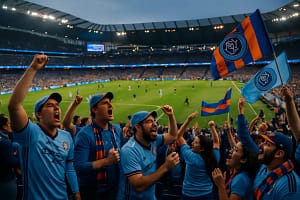


Miami Freedom Park changed the geography of Inter Miami CF’s home life on April 4, 2026, when the club played its first MLS home match at Nu Stadium against Austin FC. The move mattered because it shifted the club’s matchday center from Fort Lauderdale to a permanent Miami venue, giving the team a stadium identity tied directly to the city rather than a temporary home arrangement.
The impact on local sports culture should be read carefully. A new stadium does not create a fan base by itself, and one debut match cannot prove long-term habits. What it can do is alter routines, strengthen civic association, and change how supporters, youth players, visitors, and local businesses interact with a club. The available facts point to a major step for Inter Miami’s local presence, with the strongest evidence coming from the opening date, the venue capacity, and the broader mixed-use development attached to the site.
Why Miami Freedom Park Shifted Inter Miami’s Center
Miami Freedom Park As A Home-City Reset
The stadium opened for Inter Miami’s first home match on April 4, 2026, with Austin FC as the opponent, according to Local 10’s stadium report. That date is central to the sports-culture analysis because the club had previously been associated with home matches in Fort Lauderdale. The shift did not only change the address on a schedule. It gave Miami a matchday site that could carry the club’s colors, supporter rituals, pre-match gathering patterns, and post-match movement inside the city itself.
For a club built in a market with deep international soccer ties, the permanent move into Miami made the team easier to place within the city’s sports identity. Miami’s major pro teams already compete for attention across different parts of the region, and Inter Miami’s stadium move placed MLS more firmly inside that local conversation. The effect is cultural as much as logistical: a fan who attends matches in the city can connect the club more directly with Miami’s food corridors, transit debates, youth soccer networks, and event calendar.
A Stadium Identity Beyond Matchday
The available project details also show why the venue is more than a set of seats. The development includes a public park component, youth athletic fields, and commercial elements listed in the research material. Those surrounding pieces matter because local sports culture is often built outside the 90 minutes of play. Youth fields can bring families to the site on non-match days, and a public park can keep the location in regular civic use rather than limiting it to ticketed events.
That distinction is useful for evaluating stadium impact. Some venues are active only during games and concerts. A mixed-use site can become part of weekly movement patterns. The evidence available so far supports a cautious interpretation: the project has the structure to affect more than MLS attendance, but the depth of that effect will depend on how often residents use the non-stadium spaces and how well those spaces remain accessible.
Capacity, Access, And Matchday Rhythm
The 25,000-Seat Scale
The venue seats about 25,000 spectators, based on Miami Freedom Park’s official project news. That scale is significant for MLS because it is large enough to create a visible major-event atmosphere without reaching the size of an NFL venue. For Inter Miami, the number creates a tighter matchday frame: enough supply for a major soccer crowd, but not so much that the building risks feeling detached from supporter sections and routine league crowds.
Capacity also shapes access. The research notes say season-ticket prices started at about US$40 per match, aimed at keeping access broader. That price point does not guarantee affordability for every household, especially in a high-cost market, but it gives the club a clearer path to building repeat attendance rather than relying only on premium-event demand. In soccer culture, repeat attendance is especially valuable because chants, supporter groups, and pre-match traditions grow through habit.
Traffic Concerns And First-Night Evidence
Transportation was a major concern in the research notes because the site sits near Miami International Airport and has limited main access routes. Opening-night accounts described the first-match experience as smoother than many expected, with some fans reporting acceptable arrival times and improved parking compared with previous home venues. That is encouraging, but it should not be treated as a permanent verdict. A debut match can have unusual staffing, heightened planning, and supporters who arrive earlier than usual.
The practical sports-culture question is whether normal matchdays can repeat that level of function. If arrival and departure remain manageable, supporters are more likely to build predictable rituals around the stadium. If traffic becomes inconsistent, the venue can still be successful, but the matchday culture may tilt toward earlier arrivals, longer post-match stays, or more selective attendance from families and casual fans.
- Team identity: A permanent Miami venue strengthens the club’s connection to the city’s sports calendar.
- Youth participation: Athletic fields on the site can connect professional soccer with local player development spaces.
- Fan routines: Capacity, parking, pricing, and access routes shape whether attendance becomes habitual.
- Civic use: Park space can keep the site active beyond Inter Miami home dates.
How The Venue Changes Local Sports Competition
Soccer’s Place In A Crowded Market
Miami is not a single-team sports market. Inter Miami competes for attention with established professional teams, international events, college sports, and a steady flow of entertainment options. A permanent soccer-specific home gives the club a stronger platform in that competition because the venue itself becomes part of the product. Fans are not only evaluating the opponent and the table. They are evaluating the full night out: access, atmosphere, seating comfort, pre-match options, and how the building feels after a result.
That matters for roster and performance analysis too. A club with a consistent home environment can create sharper routines for players and staff. The research does not provide player-performance data tied to the new venue, so no competitive claim should be overstated. Still, in sports operations terms, reducing the feeling of a temporary home can help align training, branding, supporter engagement, and matchday preparation under one local identity.
Why Stadium Projects Become Cultural Signals
Stadium openings often carry symbolic weight because they ask a city to treat a team as part of civic infrastructure. In Miami’s case, the project came after a voter-approved 2018 referendum and a long lease structure noted in the research material. Those details matter because they show that the venue was not only a private sporting decision. It was tied to public land, public debate, and long-term use questions.
That is why comparisons with other stadium plans can be useful if they stay grounded in facts. For example, the RFK Stadium plan in Washington shows how venue proposals can shape broader sports-culture conversations around access, youth facilities, and neighborhood fit. For more comparative insights, sports fans and city planners can refer to sports reference pages that provide wider context, though it is essential to recognize each city’s unique political and sporting conditions.
What The Opening Says About Inter Miami Support

From Temporary Base To Permanent Ritual
Miami Freedom Park gave Inter Miami a clearer home ritual. That phrase should not be reduced to atmosphere alone. A permanent home affects how fans plan travel, where supporter groups gather, how families decide whether to buy season tickets, and how youth players imagine the pathway from local fields to professional soccer. The research notes described strong fan sentiment around finally having a stadium to call home, which fits the broader pattern: supporters often attach identity to place as much as to results.
The debut match was also described in the research as a sold-out event. A sellout is a meaningful first signal, especially for a club opening a new building, but it is still a single data point. The stronger measure will be repeated demand across varied opponents, weekday dates, weather conditions, and stretches when the team is not defined by novelty. Sports culture becomes durable when attendance habits survive ordinary matchdays.
The Local Development Layer
The inclusion of a public park and youth athletic fields gives the project a local-sports angle beyond first-team matches. If those spaces are used regularly, the site can connect professional soccer to participation culture. That link is especially relevant in South Florida, where soccer’s player base and fan base include many communities with strong ties to the global game.
Still, the analysis should remain cautious. The presence of fields and public space does not automatically mean equal access, high usage, or long-term community trust. Those outcomes require operating details, scheduling, maintenance, and affordability. The facts support the idea that the project has the physical ingredients for broader impact. The next layer of evidence would need to come from usage data, attendance patterns, community programming, and transport performance over time.
Miami Freedom Park And The Next Phase Of Local Sports Culture
Miami Freedom Park’s opening on April 4, 2026, marked a clear before-and-after point for Inter Miami’s relationship with the city. The club moved from a temporary regional arrangement into a venue built to carry its home identity. The stadium’s roughly 25,000-seat capacity, the wider development plan, the public-space component, and the first match against Austin FC all support the same reading: this was a major infrastructure moment for soccer in Miami.
The cultural impact is best described as significant but still developing. The strongest immediate change is identity. Inter Miami now has a Miami home that can anchor supporter rituals, city branding, and matchday routines. The next test is consistency: whether the venue remains accessible, whether pricing keeps repeat attendance within reach, whether traffic remains workable, and whether the public amenities become active parts of local sports life. If those pieces hold, the stadium’s value will be measured not only in MLS match nights, but in how often Miami residents treat the site as part of their normal sports culture.