

For over a decade, the narrative surrounding the modern NFL has been unequivocally dictated by offensive fireworks. Rule changes, schematic evolutions, and quarterback-centric contracts collectively pushed defenses into a reactive, survival-focused posture. Yet, a seismic shift occurred over the course of the recent campaign, capped off by an individual performance that redefined the upper boundaries of defensive impact.
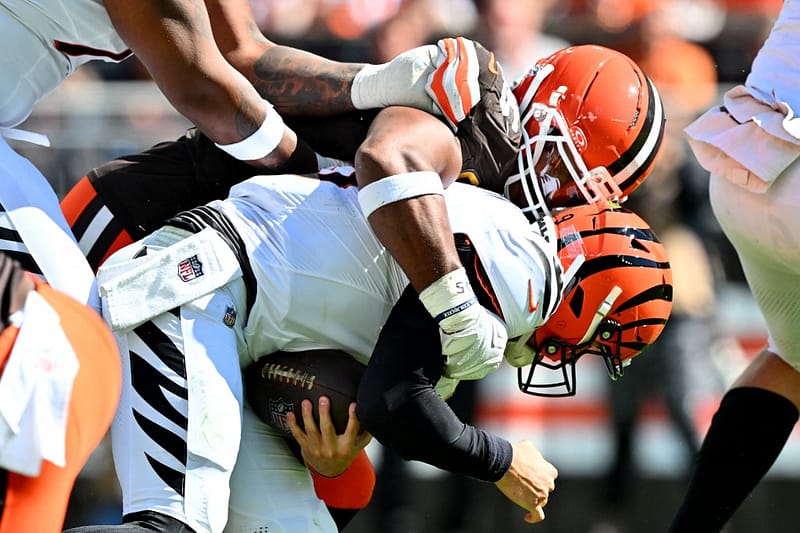
When Cleveland Browns defensive end Myles Garrett brought down Cincinnati Bengals quarterback Joe Burrow in the closing minutes of Week 18, it was more than just a regular-season finale milestone. It was the moment the single-season sack record officially fell, signaling a broader ideological change across the league. Defensive superstars are no longer just supplementary pieces in a quarterback’s world; they are actively dictating the terms of engagement.
This historic campaign forces a fundamental re-examination of roster construction, team identity, and league power balance. As front offices scramble to counter high-flying passing offenses, the premium on elite edge rushers has reached an unprecedented peak. Garrett’s masterclass has set a brand new standard, raising a critical question for the future of the sport: Are defensive superstars driving the NFL once again?
The Historic Threshold of Twenty-Three Sacks
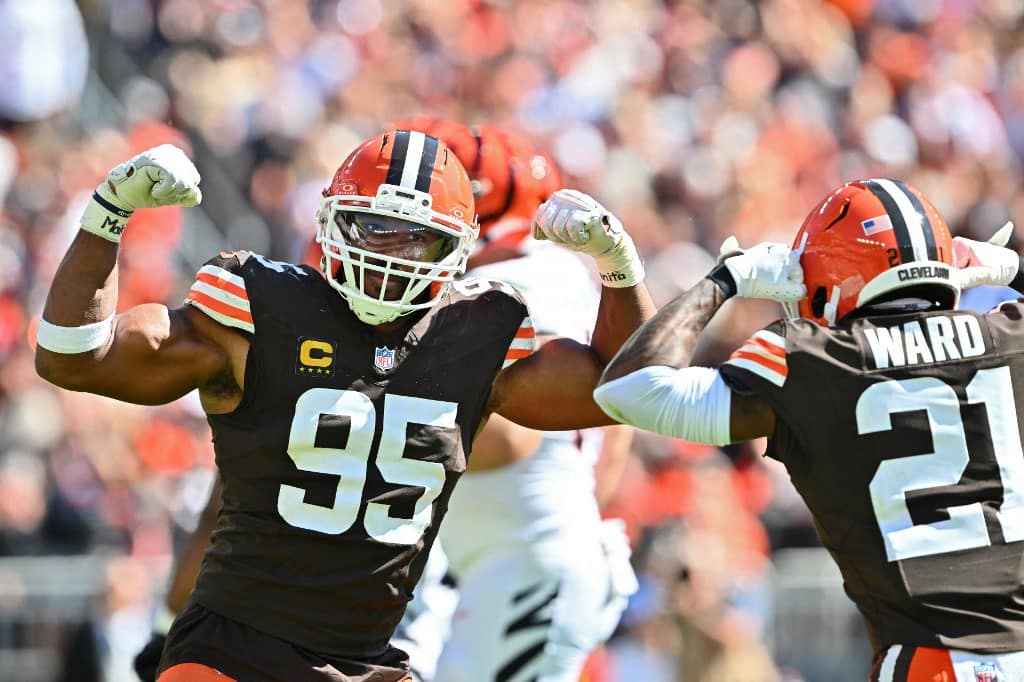
Overcoming the legendary benchmarks set by past generations requires an almost impossible convergence of health, scheme, and supernatural talent. Garrett achieved exactly that by finishing his historic regular season with 23.0 sacks, stand-alone possession of the NFL single-season record. By surpassing the previous mark of 22.5 shared by Michael Strahan and T.J. Watt, the former first-overall pick cemented his status as a defensive deity.
The sheer efficiency of his pass-rushing production tells an even deeper story than the baseline volume. Garrett compiled his 23.0 sacks facing fewer total opposing pass plays than his historical counterparts, proving that his impact was condensed and highly lethal. His campaign was punctuated by a spectacular Week 8 performance against the New England Patriots, where he registered a franchise-record five sacks in a single afternoon.
Beyond the sacks, Garrett led the league with 33 tackles for loss and accumulated 39 quarterback hits. Under the guidance of defensive coordinator Jim Schwartz, who publicly challenged his star defender to elevate his game in the offseason, Garrett operated with a relentless urgency. The resulting film was a weekly clinic on how a singular defender can dismantle a professional offense from the edge.
Dismantling the Modern Passing Meta
For years, offensive coordinators used quick-game concepts, screen passes, and heavy chip blocks to neutralize elite pass rushers. The philosophy was simple: get the ball out of the quarterback’s hands before the pass rush could arrive. Garrett’s record-breaking campaign effectively broke that algorithm by demonstrating that elite power and bend can beat the clock.
To counter his explosive first step, opposing teams routinely dedicated two or three blockers to his side of the formation. This structural adjustment often left standard offensive protections completely compromised. When teams chose not to slide their protection toward Garrett, it resulted in catastrophic plays that instantly shifted game momentum.
This reality has altered how front offices view the structural balance of a modern roster. Teams are realizing that a sustainable championship defense blueprint requires an unstoppable, foundational centerpiece at the line of scrimmage. Without an elite disruptor capable of winning isolated matchups instantly, modern coverage shells eventually break down under the weight of extended passing plays.
Evaluating the All-Time Great Pass Rushing Seasons
To appreciate the magnitude of what occurred, Garrett’s metrics must be weighed against the historical standard-bearers of the modern era. The ability to generate consistent pressure with minimal opportunity separates standard Pro Bowl defenders from transcendent, gold-jacket talents.
| Player (Season) | Total Sacks | Tackles for Loss | Opposing Pass Plays |
| Myles Garrett (2025) | 23.0 | 33 | 540 |
| T.J. Watt (2021) | 22.5 | 21 | 557 |
| Michael Strahan (2001) | 22.5 | 24 | 567 |
| Justin Houston (2014) | 22.0 | 23 | 598 |
The data points to a clear realization: Garrett was forced to maximize a significantly smaller window of opportunity. Modern offenses are throwing shorter, quicker passes, yet Garrett’s sack-per-pass-play ratio remains the highest among modern record-holders. This unprecedented efficiency is exactly why he secured the Associated Press NFL Defensive Player of the Year honors.
Strategic Roster Construction in the Post-Garrett Era
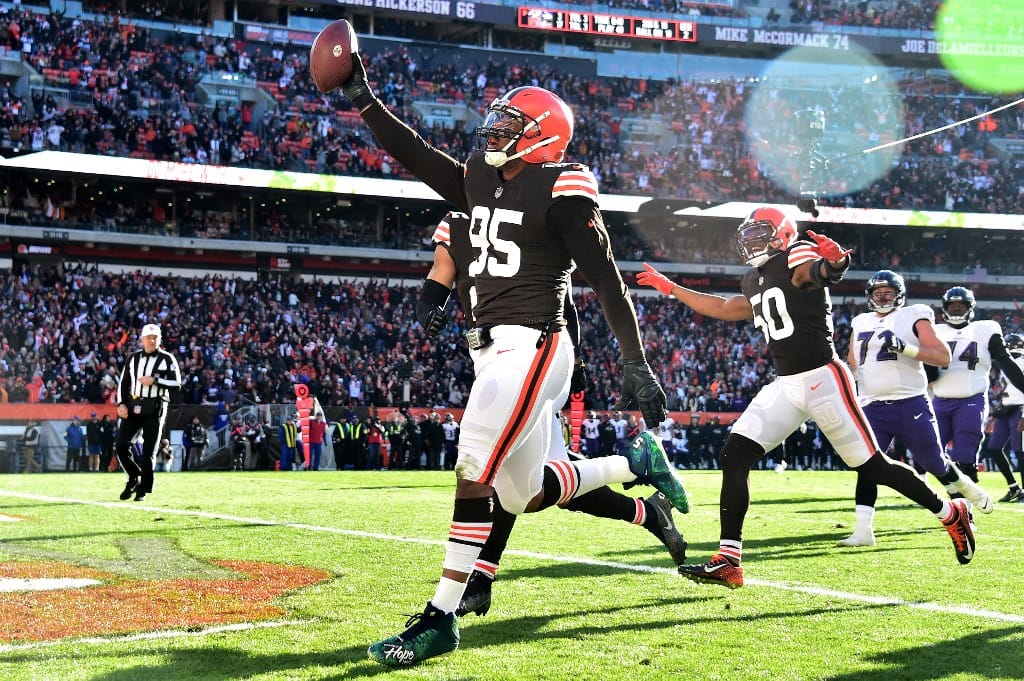
The ripples of this defensive renaissance are transforming how general managers allocate draft capital and salary cap space. In a league defined by copycat strategies, the success of Cleveland’s defensive front has triggered a league-wide scramble for premium defensive line talent. It is no longer sufficient to possess an above-average secondary if the front four cannot manipulate the pocket.
The value of these elite defenders extends far beyond their individual statistical columns. A superstar edge rusher alters the math for the remaining ten players on the field by allowing defensive coordinators to drop seven or eight players into coverage without sacrificing pressure. This tactical flexibility is the ultimate luxury in a league filled with elite quarterback talent.
- Primary Roster Shifts:
- Prioritizing interior defensive linemen who can prevent quarterbacks from stepping up away from edge pressure.
- Investing heavily in versatile safeties who can disguise coverages while the front four handles the rush.
- Valuing athletic edge rushers over traditional, run-stopping defensive ends in early draft rounds.
The Financial Premium on Elite Edge Aggression
As the premium on defensive disruption intensifies, the financial landscape for elite edge defenders is undergoing a massive recalibration. Contracts for premier pass rushers are rapidly ascending toward the financial territory once reserved exclusively for franchise quarterbacks. The market reflects a simple truth: if you do not have the man throwing the ball, you desperately need the man who can take him down.
Garrett’s current contract structure, including his fully guaranteed salary allocations moving into the upcoming seasons, highlights this institutional commitment. Cleveland’s front office, led by general manager Andrew Berry, has been vocal about maintaining this defensive foundation at all costs. Despite persistent external speculation or theoretical trade scenarios, team insiders have maintained that keeping Garrett remains a near 100 percent certainty.
According to official NFL stats and records tracked across the league, the statistical correlation between an elite pass-rush win rate and overall franchise victories has never been stronger. This mathematical reality justifies the massive financial investments teams are making along the defensive line. When an edge rusher can completely eliminate a chunk of the opponent’s playbook, any financial investment is deemed acceptable.
Defensive Identity vs Offensive Urgency in Today’s NFL
The rise of the defensive superstar stands in fascinating contrast to the concurrent offensive desperation gripping many franchises. While half the league actively depletes its resources searching for perimeter weapons and passing efficiency, elite defensive organizations are proving that old-school physical dominance still carries immense weight. A premier defense remains the ultimate equalizer against a high-octane offensive scheme.
This dynamic creates an intriguing philosophical divide across the NFL hierarchy. Organizations that over-index on offensive weaponry frequently find themselves neutralized when encountering a defensive line capable of wrecking a game plan without blitzing. Garrett’s single-handed destruction of offensive lines throughout the year provided a blueprint for how an elite defense can dictate tempo, shorten games, and protect an evolving offense.
Ultimately, the standard has been permanently altered. The quest for the next transcendent pass rusher will dictate the narrative of upcoming draft classes and free-agency cycles. By shattering a historic record under the brightest lights, Myles Garrett did not just rewrite the record books; he reminded the football world that games are still won and lost in the trenches.