
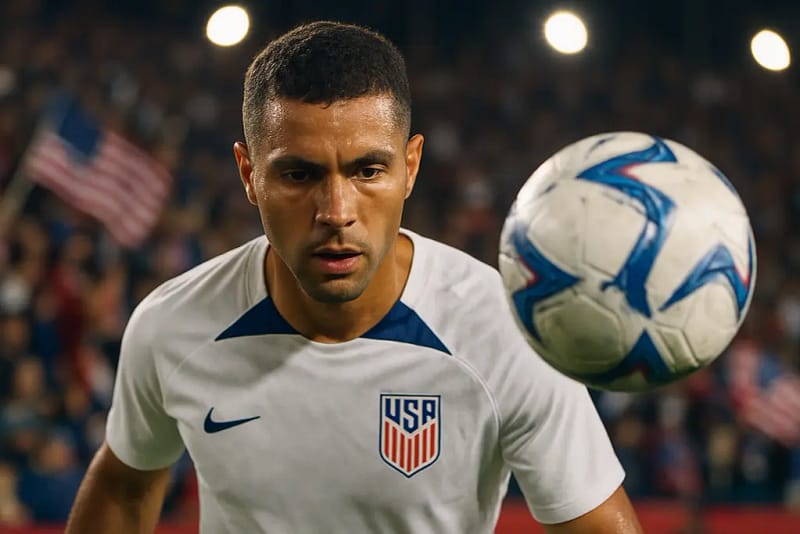

USMNT vs Chile is set for Tuesday, September 29, 2026, at Energizer Park in St. Louis, with kickoff scheduled for 7:00 p.m. Central Time and 8:00 p.m. Eastern Time. From the live match desk, the key point before the first whistle is restraint: no confirmed lineups, live event data, or match incidents are available before kickoff, so this file separates verified match information from the performance questions that can be assessed once the ball is in play.
The fixture sits in a short and useful evaluation window for Mauricio Pochettino’s group. The United States beat Peru 4-1 on September 26, 2026, in Orlando, then turns to Chile three days later before matches against Mexico on October 3 and Canada on October 6. That four-match run gives the staff a compact set of tests, but the evidence available before the Chile match is limited to squad composition, recent result context, opponent profile, and the historical series.
USMNT vs Chile Match Status And Timing
USMNT vs Chile Live Update Baseline
The verified match setting is clear. The United States faces Chile on September 29, 2026, in St. Louis, Missouri, at Energizer Park. U.S. Soccer lists the kickoff time, opponent ranking context, broadcast information, and series record in its official Chile opponent profile. Chile is listed at No. 49 in the FIFA Men’s World Rankings as of September 2026, after a six-place rise from the start of the year.
That ranking note matters because it gives this friendly a different profile from a routine rotation exercise. The United States is not entering a competitive tournament match on September 29, but the staff can still use the fixture to measure decision-making speed, pressing distances, rest-defense shape, and whether younger players can carry the ball progression patterns that appeared in the Peru win.
The broadcast listings for the match include TNT, truTV, HBO Max, Universo, and Peacock. The local layer is also significant: Tim Ream, a St. Louis native and captain during the 2026 World Cup cycle, is scheduled to be honored in pre-match festivities as part of the Impact Match, Presented by New York Life. That ceremony is part of the event context, not a performance variable, but it gives the night a clear local link.
What Can And Cannot Be Treated As Live
This is a live match updates and results file, but as of September 28, 2026, the match has not started. That means there are no goals, cards, substitutions, confirmed starting XIs, or official in-game statistics to report. Once confirmed lineups are available, the first meaningful read will be structural: whether Pochettino keeps a similar possession base to the Peru match, rotates heavily because of the short turnaround, or blends senior players with uncapped options.
The last of those points is grounded in the roster profile. The 28-player squad includes 13 players identified as World Cup 2026 veterans and 13 players who were uncapped at senior level when the roster was announced. The group also includes players from 16 European clubs, with nine competing in European club competitions during the club season. The average age is listed at 22 years and 9 months, which makes this window a development test as much as a results exercise.
Performance Context From The Peru Match
Possession And Shot Volume As The Starting Reference
The most recent U.S. data point is the 4-1 win over Peru on September 26, 2026, in Orlando. The United States had 70 percent possession and a 16-5 advantage in shots. That does not guarantee carryover against Chile, and it should not be treated as proof of a fixed trend after one friendly. It does, however, set a clear reference point for Tuesday: can the U.S. repeat long spells of control, or does Chile’s pressure and spacing break the rhythm earlier?
Several player notes from that Peru result are relevant without stretching them beyond the evidence. Justin Ellis scored on his senior debut. Malik Tillman scored his third goal of 2026. Sebastian Berhalter had both a goal and an assist. Those are concrete production markers, but the next layer is role stability. If any of those players start or enter against Chile, the assessment should focus less on the headline contribution and more on repeatable actions: positioning between lines, pressing response after turnovers, final-third choices, and set-piece involvement.
Our earlier September friendlies preview framed the Peru and Chile games as connected tests, and the short turnaround now gives that view practical value. A 4-1 result can brighten the mood around a young group, but the better read comes from how the same squad handles a different opponent with limited recovery time.
Roster Balance Under A Short Turnaround
With four friendlies packed across September 26, September 29, October 3, and October 6, the staff has to balance evaluation with physical load. The supplied roster facts show a split between experienced tournament players and senior-level newcomers. That creates a useful but delicate selection question: how many World Cup 2026 veterans are needed to stabilize the structure, and how many uncapped players can be tested without weakening the match model?
No injury claims should be made without official confirmation, and none are needed for this analysis. The better evidence-based angle is minutes management. A young roster with players spread across European clubs and domestic environments can offer energy, but international friendlies still demand cohesion. Center-back pairings, midfield spacing, and wide-player pressing triggers are all easier to judge once lineups are confirmed.
Chile Profile And Matchup History
Chile Ranking And Series Edge
Chile enters the St. Louis match with two verified markers that deserve attention. First, Chile is ranked 49th by FIFA as of September 2026. Second, the historical series before this match favors Chile: the U.S. record against Chile stands at three wins, five losses, and three draws. Those numbers should be used carefully. A historical edge does not decide a 2026 friendly, but it does show that this has not been a one-sided matchup for the United States.
For this USMNT vs Chile meeting, the matchup history is more useful as guardrail than forecast. The U.S. cannot treat the opponent as a blank slate, and analysts should not treat the Peru result as a direct predictor. A team can dominate possession in one friendly and face a different tactical rhythm three days later. The live indicators to track after kickoff are practical: first-pass security under pressure, whether the U.S. midfield can receive on the half-turn, and how quickly the back line reacts when attacks break down.
What The First 20 Minutes Should Tell Us
The opening phase should clarify whether the United States can establish field position without forcing vertical passes too early. If the U.S. sees a high share of the ball again, the more meaningful question will be territory and chance quality. Possession without entries into dangerous areas can flatter a team. The Peru match gave a high-volume shot reference, so the Chile match should be judged by whether the U.S. turns control into repeatable attacking situations.
Defensively, the first 20 minutes should show how aggressive the U.S. wants to be after turnovers. With a young squad, counter-pressing decisions can reveal the gap between athletic intent and collective timing. A well-timed press can trap the opponent near the touchline; a late press can open the central channel. That is the type of detail that can be logged live without pretending to know the result before it happens.
Live Update Markers For St. Louis
Data Points To Track After Kickoff
For readers following the match in real time, the most useful update markers are not limited to goals. The first confirmed lineup will define the tactical frame. The first sustained possession spell will show whether the U.S. can settle. The first defensive transition will show whether the midfield and back line are connected. The first substitution window will show whether Pochettino is protecting legs, testing roles, or responding to the match state.
- Confirmed starting XIs and formation once released officially.
- Possession share only after enough match time has passed to make it meaningful.
- Shot quality, not just total shot count, against Chile’s defensive shape.
- Set-piece takers, delivery zones, and second-ball recovery.
- Substitution timing across a four-match international window.
Those are the data points that can separate a live blog from a scoreboard. A 1-0 lead created by repeated entries behind the back line is different from a 1-0 lead built from one isolated moment. The same applies if the United States trails. The update thread should identify whether the issue is buildup pressure, missed final balls, defensive spacing, or set-piece defending rather than relying on scoreline alone.
For readers who follow multi-sport performance analysis, our site offers insights into various sports. NBA Playbook is another platform where we examine performance metrics, providing a different sport’s perspective but maintaining a similar analytical approach.
USMNT vs Chile Match File
The current match file is straightforward: USMNT vs Chile takes place on September 29, 2026, at Energizer Park in St. Louis, with kickoff at 7:00 p.m. CT and 8:00 p.m. ET. Chile enters as FIFA’s No. 49 team in the September 2026 context, and the historical series before kickoff favors Chile at five wins, three U.S. wins, and three draws.
The United States arrives after a 4-1 win over Peru on September 26, backed by 70 percent possession and a 16-5 shot advantage. That result supplies the baseline, not the verdict. The Chile match should be read through confirmed lineups, midfield control, transition defense, and whether the young roster can reproduce useful patterns on short rest.
This file should be updated only with confirmed match events once they occur: lineups, goals, assists when officially credited, cards, substitutions, halftime score, full-time score, and verified team statistics. Until then, the responsible read is that USMNT vs Chile is an evaluation match with clear schedule stakes, a young roster profile, and a useful opponent test in St. Louis.