
The San Francisco 49ers do not usually define themselves through one uncertain offensive line spot. They define themselves through Kyle Shanahan’s system, Brock Purdy’s timing, Christian McCaffrey’s versatility, George Kittle’s physical edge, Trent Williams’ dominance, and a roster built to turn small advantages into explosive plays.
Yet the left guard battle may be the most important offensive question in Santa Clara this summer.
That is not because left guard is glamorous. It is because the 49ers’ offense depends on rhythm, movement, trust, and spacing more than almost any system in football. If the position between Williams and center Jake Brendel settles quickly, San Francisco can enter 2026 with a cleaner offensive structure. If it remains unstable, the offense’s ceiling could shrink before the season even starts.
The 49ers rookies reported July 18, veterans reported July 25, and the team’s 2026 training camp includes 11 open practices at the SAP Performance Facility in Santa Clara. That gives the coaching staff a clear runway to answer one deceptively important question: who can hold the left side of the interior line together?
Why Left Guard Matters More In San Francisco
Some teams can hide a shaky guard spot with quick throws, heavy protection, or a quarterback who thrives outside structure. San Francisco’s offense is different. Shanahan’s system asks linemen to move, reach, climb, angle, communicate, and create timing windows that make the run game and play-action passing game look connected.
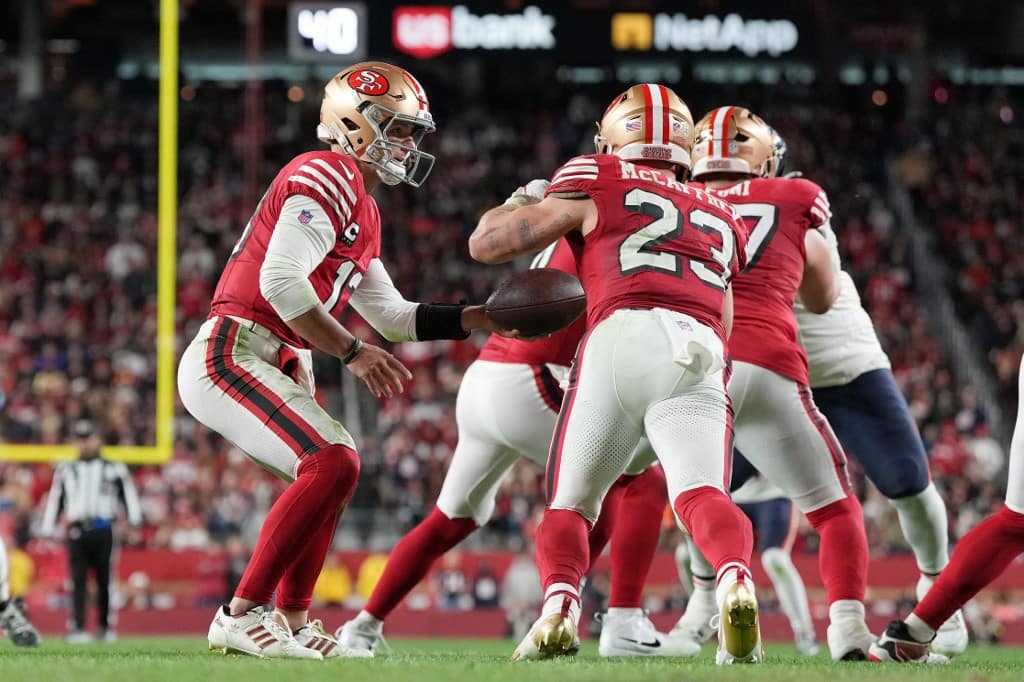
That makes left guard less like a plug-and-play position and more like a rhythm point.
The player who wins the job will line up next to Williams, one of the defining tackles of his generation. That sounds like a gift, and in some ways it is. Williams can erase problems that would overwhelm other lines. But playing next to him also requires precision. The left guard must understand combination blocks, timing with Williams, communication with Brendel, and how the 49ers want the front side of their run game to work.
Recent 49ers camp coverage from Niners Nation identified the starting left guard battle as the competition fans are most focused on, naming Connor Colby, Robert Jones, Carver Willis, and Brett Toth as the candidates in the 49ers left guard battle. That fan attention is not random. Everyone understands that San Francisco’s offense can look completely different when the interior line is unsettled.
How The Battle Shapes Brock Purdy’s Season
Purdy’s best football comes when the offense stays on schedule. He is at his sharpest when he can hit the top of his drop, trust route timing, manipulate linebackers with his eyes, and throw into windows before the defense fully reacts. That version of Purdy is why San Francisco can make its offense look surgical.
Interior pressure disrupts that version faster than almost anything else.
Edge pressure can sometimes be managed by stepping up. Interior pressure removes the stepping lane. It collapses the quarterback’s vision. It forces throws before routes declare. It makes play-action fakes harder to sell. It turns the middle of the field into a problem area instead of an advantage.
That is why the left guard competition matters so much. A weak link at that spot does not just affect one running lane. It affects Purdy’s base, timing, and confidence. If the left guard can anchor, pass off stunts, and stay connected with Williams and Brendel, Purdy gets the environment he needs to play efficient football. If the spot leaks pressure, the whole offense becomes more volatile.
World Football Idol’s earlier analysis of late-July NFL training camp readiness argued that offensive lines often reveal contenders before skill players do. The 49ers are exactly that kind of team. Their stars can still shine, but only if the front gives them rhythm.
Why Christian McCaffrey Needs A Cleaner Interior
The left guard battle also affects McCaffrey, because San Francisco’s run game is built on timing and angles. McCaffrey’s vision is elite, but vision still needs structure. If the play-side guard reaches, climbs, or seals properly, McCaffrey can make defenders wrong. If that block is late or soft, the entire concept can break down before his patience matters.
That is especially important for outside-zone and wide-zone looks, where the 49ers stress defenses horizontally before cutting back. The left guard often has to move in sync with Williams, handle quick defensive tackles, and climb to linebackers without losing leverage. Those details decide whether a run becomes a two-yard grind or a chunk play.
San Francisco also uses McCaffrey as a passing-game weapon, which means protection communication matters. If the left guard cannot identify pressure correctly, McCaffrey may have to stay in protection more often. Every time that happens, the offense loses one of its best receiving mismatches.
That is the hidden cost of offensive-line uncertainty. It does not only create sacks. It can remove weapons from routes, reduce motion flexibility, and make the offense feel heavier.
Connor Colby’s Case For The Job
Connor Colby appears to have early momentum. NBC Sports Bay Area reported that the second-year offensive lineman is in a good position to claim the starting left guard job, noting that he has taken first-team reps early in camp through the Connor Colby left guard update.
That matters because early first-team work can become self-reinforcing. The more snaps Colby gets next to Williams and Brendel, the more communication reps he builds. The more communication reps he builds, the easier it becomes for coaches to trust him. Offensive line chemistry is not built through theoretical upside. It is built through repetition.
Colby’s challenge is proving that early opportunity becomes performance. Taking first-team reps is not the same as winning the job. He has to show he can handle power, process movement, and remain steady when the defense starts layering pressure.
The advantage for Colby is familiarity. He has been in the building. He understands the practice tempo. He knows the system better than a rookie or new veteran might. In a Shanahan offense, that can matter as much as raw physical ability.
Why Robert Jones Brings A Veteran Argument
Robert Jones gives San Francisco a different kind of option. Veteran guards often appeal to coaching staffs because they can reduce volatility. They may not have the same developmental ceiling as younger players, but they understand fronts, protections, and the physical reality of surviving a full season inside.
That veteran case matters if the 49ers believe their roster is built to win now. A team with Purdy, McCaffrey, Kittle, Williams, Fred Warner, and a proven core may not want to live through extended early-season growing pains at left guard. It may prefer the player who makes fewer mistakes, even if another candidate has more long-term upside.
The risk with a veteran option is health and athletic fit. San Francisco asks guards to move, and not every experienced player can execute the full range of Shanahan’s run game. The 49ers do not just need a blocker who can stand in a phone booth. They need one who can flow, redirect, and stay controlled in space.
Jones’ camp will be judged by that balance. Can he offer veteran reliability without reducing the offense’s movement profile? If he can, he may be the safest solution.
Why Carver Willis Is The Upside Play
Carver Willis may be the most intriguing candidate because he brings developmental upside. Sports Illustrated’s 49ers camp-battle preview identified Willis alongside Colby and Jones as one of the key left guard contenders, noting that Willis played left tackle in college and must prove he can transition inside through the 49ers training camp battles.
That transition is not simple. Playing guard in the NFL is a different physical and mental job than playing tackle in college. Everything happens faster inside. Defensive tackles are more powerful. Stunts arrive quickly. The pocket is tighter. Hand placement has to be immediate. Mistakes are harder to hide.
But the upside is real. A former tackle can bring length, movement skill, and pass-protection habits that may translate well once the interior timing clicks. If Willis adapts quickly, he could give the 49ers a younger solution with growth potential.
The question is whether San Francisco can afford the learning curve. A rookie left guard next to Williams could be protected in some ways, but opponents will test him early. If Willis wins the job, it will likely mean he has shown coaches that his upside is arriving faster than expected.
Where Brett Toth Fits Into The Competition
Brett Toth is the kind of candidate who matters in training camp because line depth rarely stays theoretical. Even if he is not the favorite, he can shape the competition by pushing the others and proving he can handle multiple interior responsibilities.
Versatility is valuable in San Francisco. Game-day offensive line numbers are limited, and the 49ers need backups who can survive at more than one spot. Toth’s path may be less about winning the starting job outright and more about proving he can be trusted if injuries or performance issues force movement later.
That matters because offensive-line competitions do not always end in August. Sometimes a team starts with one answer, changes by Week 4, and changes again by December. The 49ers need more than a starter. They need a depth structure that can survive the season.
Toth’s camp can therefore influence the ceiling and the floor. If he looks reliable, San Francisco has more flexibility. If the competition produces only one playable guard, the margin gets thinner.
The Left Guard Battle At A Glance
The 49ers do not need a superstar at left guard. They need the right fit. That means movement ability, communication, pass-protection steadiness, and chemistry with Williams and Brendel.
| Candidate | Main Argument | Main Camp Question |
|---|---|---|
| Connor Colby | Early first-team reps and system familiarity | Can he turn opportunity into steady performance? |
| Robert Jones | Veteran experience and lower volatility | Can he move well enough for Shanahan’s system? |
| Carver Willis | Athletic upside and tackle background | Can he transition inside fast enough to start? |
| Brett Toth | Depth value and versatility | Can he become a trusted game-day interior option? |
That table shows why this is not a simple best-player battle. It is a fit battle. The 49ers have to decide which player best protects the offense’s identity.
Why The Titans Joint Practice Could Be A Turning Point
San Francisco’s official 2026 open camp schedule includes one joint practice with the Tennessee Titans. That could become a decisive checkpoint for the left guard competition.
Joint practices matter because they remove the comfort of familiar teammates. Offensive linemen face different pass-rush styles, different fronts, different cadences, and new physical matchups. Coaches can see how a player responds when the practice script changes and the opponent has no interest in protecting confidence.
For the left guard candidates, that Titans practice could reveal more than several normal camp sessions. Can Colby handle unfamiliar movement? Can Jones win against different defensive tackle traits? Can Willis process quickly against an NFL front he has not practiced against daily? Can Toth hold up when versatility is tested?
The 49ers’ first preseason game comes Aug. 15 against Tennessee, so the joint-practice week will give the staff both controlled and live evaluation opportunities. For a position battle built on trust, that matters.
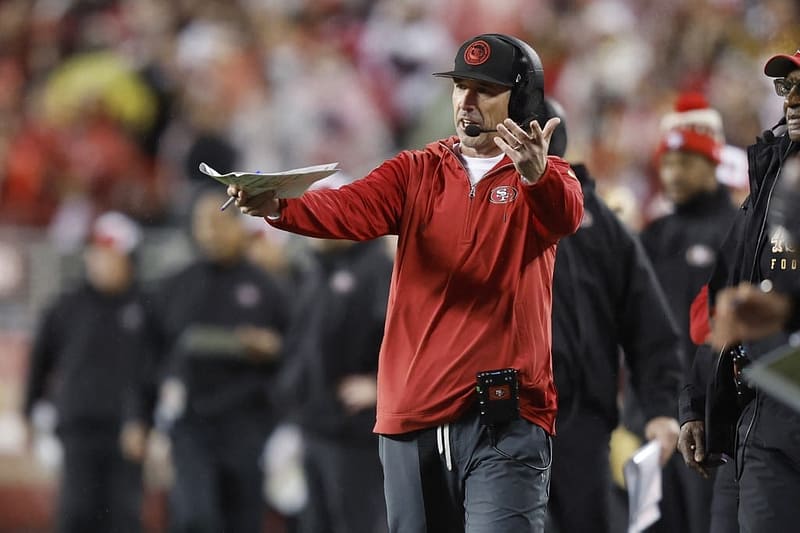
How Kyle Shanahan’s Limited Camp Role Adds Another Layer
San Francisco’s camp also has an unusual coaching context. NBC Sports Bay Area reported that Shanahan is recovering from a July 14 car accident and missed the start of training camp, with assistant head coach Brandon Staley taking on camp-leading duties while Shanahan works through recovery. General manager John Lynch said the coach will still be involved, but his physical absence changes the early rhythm of camp through the Shanahan recovery update.
That matters for the offensive line because Shanahan’s system is detail-heavy. Offensive line coach Chris Foerster will be central regardless, but the head coach’s usual daily presence helps reinforce standards, tempo, and offensive vision.
The 49ers have enough veteran leadership to handle that challenge, but it still adds pressure to settle key competitions clearly. The less confusion there is at left guard, the easier it is for the offense to keep moving while Shanahan’s role ramps back toward normal.
Why San Francisco’s Offensive Ceiling Depends On A Quiet Answer
The 49ers do not need left guard to become a headline in September. In fact, the best outcome is that nobody talks about it. That would mean the offense is functioning, Purdy is comfortable, McCaffrey is finding lanes, Williams is playing his usual dominant role, and the line is communicating cleanly.
The danger is the opposite. If left guard remains a weekly issue, it becomes the kind of small weakness that opponents attack over and over. Defensive coordinators will test the interior. They will run stunts toward the uncertainty. They will create third-down pressure looks to see whether the 49ers can pass them off. They will force San Francisco to spend resources helping one spot, which weakens the offense elsewhere.
That is why this battle could decide the ceiling. San Francisco’s stars can carry a lot, but they still need structure. A stable left guard gives Shanahan the full menu. An unstable one forces adjustments before the season’s hardest games arrive.
What A Successful 49ers Camp Would Show
A successful left guard competition would produce clarity without panic. The 49ers should know by mid-to-late August which player fits best next to Williams, which backup gives them the most flexibility, and whether the position requires outside help.
The signs would be practical: cleaner run fits, fewer communication errors, stronger interior pass protection, better stunt pickup, and comfort in play-action timing. The winner does not need to dominate every rep. He needs to make the offense feel like itself.
That is the key. The 49ers’ offensive ceiling is not built on one guard becoming a star. It is built on one guard allowing everyone else to be what they already are.
Why This Battle Could Define The 49ers’ Season Before Week 1
San Francisco’s 2026 season will be discussed through bigger names. Purdy. McCaffrey. Kittle. Williams. Shanahan. Warner. The NFC West race. The opener in Australia against the Los Angeles Rams. But the left guard battle may quietly shape how much of that star power can translate.
If the 49ers find the right answer, their offense can enter the season with rhythm, balance, and trust. If they do not, one interior spot could complicate everything: the run game, the passing game, protection calls, personnel usage, and Purdy’s comfort.
That is what makes this such an important camp story. It is not flashy, but it is foundational.
The 49ers’ offensive ceiling may not be decided by the loudest practice highlight in Santa Clara. It may be decided by the quietest position battle on the line.