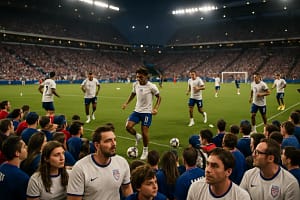
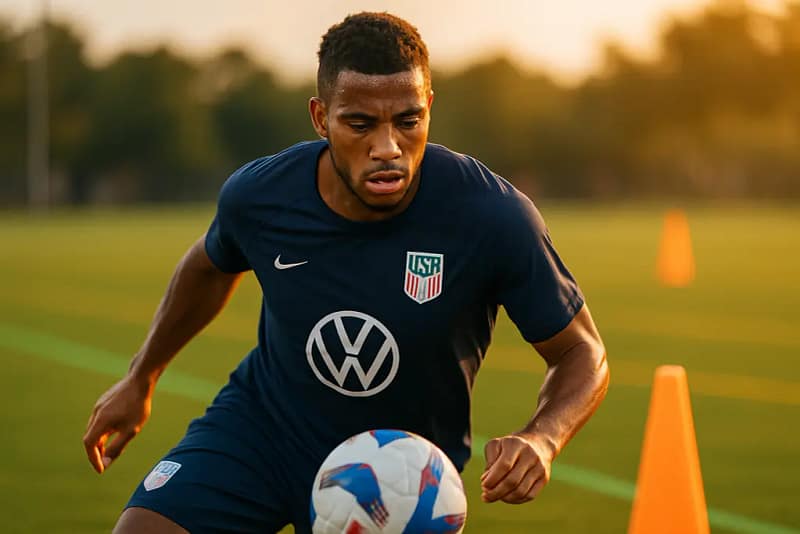

As of September 23, 2026, the USMNT September Friendlies are still ahead, with the United States set to open its first post-World Cup set of matches under head coach Mauricio Pochettino in a four-game home friendly window, according to Soccer America’s datebook. That timing matters because these matches are not tournament fixtures, yet they can still provide useful evidence about selection hierarchy, role clarity and how the next cycle begins after the 2026 FIFA World Cup.
USMNT September Friendlies Schedule And Stakes
Why USMNT September Friendlies Matter Now
These USMNT September Friendlies sit in an early-cycle space where the result is only part of the evaluation. The coaching staff can test combinations without competitive-table pressure, but the matches still carry value because Peru and Chile offer different kinds of South American opposition. Peru arrives as a familiar opponent with a balanced all-time scoring profile against the United States, while Chile brings a head-to-head edge in the historical series.
The United States has two immediate questions to answer. First, how much continuity does Pochettino keep from the group that carried the previous cycle? Second, how quickly does he introduce younger players into meaningful minutes? Friendly windows can be misleading if read only through the scoreline, so the sharper read will come from roles: who starts centrally, who is trusted to build from deeper areas, and which players are used to protect or chase the match after halftime.
Dates, Venues And Kickoff Windows
The match against Peru is scheduled for Saturday, September 26, 2026, at Inter&Co Stadium in Orlando, Florida, with kickoff at 4:30 p.m. ET. The Chile match follows on Tuesday, September 29, 2026, at Energizer Park in St. Louis, Missouri, with kickoff listed at 7:00 p.m. CT and 8:00 p.m. ET; the September schedule details are listed by AS USA’s fixture guide.
The short turnaround from Saturday to Tuesday should shape the player-usage plan. It would be risky to treat either lineup as a fixed first-choice group because rotation is a normal part of a two-match window. A player starting against Peru may be managed differently against Chile, not necessarily because of form, but because friendlies often give coaches a way to inspect multiple partnerships in defense, midfield and wide areas.
For readers seeking a broader sports perspective within the same network, My All Time Best provides an extensive context, while this preview remains focused on the specific soccer questions surrounding these two fixtures.
Peru Matchup And Tactical Questions
Menezes And Peru Context
Peru’s situation gives the opener a measured but useful edge. The research notes identify Mano Menezes as Peru’s head coach and state that Peru did not qualify for the 2026 FIFA World Cup. That does not make Peru a soft opponent. It does, however, frame this match as a test of how the United States handles a team that may value structure, compact spacing and controlled possession phases while working under a coach with his own reset to manage.
The U.S. record against Peru stands at three wins, two losses and two draws in seven all-time meetings, with the last meeting ending 1-1 on October 16, 2018. The aggregate goal count from those seven meetings is level at seven goals each. Those numbers point to a matchup that has not been one-sided historically, so the Orlando game should not be assessed through possession alone. Chance quality, set-piece defending and how the United States responds when Peru slows tempo may tell more than raw territory.
What The U.S. Can Measure
The first item to watch is the U.S. midfield spacing. Against South American opposition, loose distances between the No. 6, No. 8 and attacking line can create transition exposure. If Tyler Adams is involved, his positioning can give a clue about whether Pochettino wants a single pivot, a more protected double-pivot look, or a flexible midfield that changes shape between possession and defending.
The second item is fullback behavior. Sergino Dest and Antonee Robinson, both listed among the veteran names in the research notes, are natural reference points because their attacking instincts can stretch opponents. The question is not only whether they get forward, but whether the rest defense behind them is stable when possession turns over. In a friendly, that balance is often more revealing than the number of crosses attempted.
Chile Test In St. Louis
Historical Edge And Home Response
Chile leads the all-time head-to-head series against the United States with five wins, while the U.S. has three wins and there have been three draws. The most recent meeting was a 1-1 draw on March 26, 2019. That history does not predict the September 29 result, but it does set a useful benchmark: the United States has a chance at home to show whether the post-World Cup group can control a match against an opponent with a favorable historical record in the fixture.
Because the Chile match comes three days after Peru, the context will depend partly on what happens in Orlando. If Pochettino uses a veteran-heavy lineup in the first match, St. Louis may become the better setting for younger players or fringe options to claim minutes. If he rotates heavily from the start, the Chile match may be used to bring back more established players and evaluate late-window sharpness.
Second-Match Signals
The second match in a window often reveals coaching priorities. A staff that repeats the same center-back pairing may be prioritizing defensive cohesion. A staff that changes the front line may be searching for pressing angles, wide combinations or a different central striker profile. Since this is a friendly window, the most useful evidence may come from the substitution pattern rather than the starting XI alone.
Watch for whether the United States can keep its pressing shape after halftime. Friendly matches can lose rhythm after substitutions, but that is part of the test. If younger players enter and the structure remains clear, that would give the staff practical evidence that the player pool can absorb tactical instructions quickly.
Roster Balance Under Pochettino
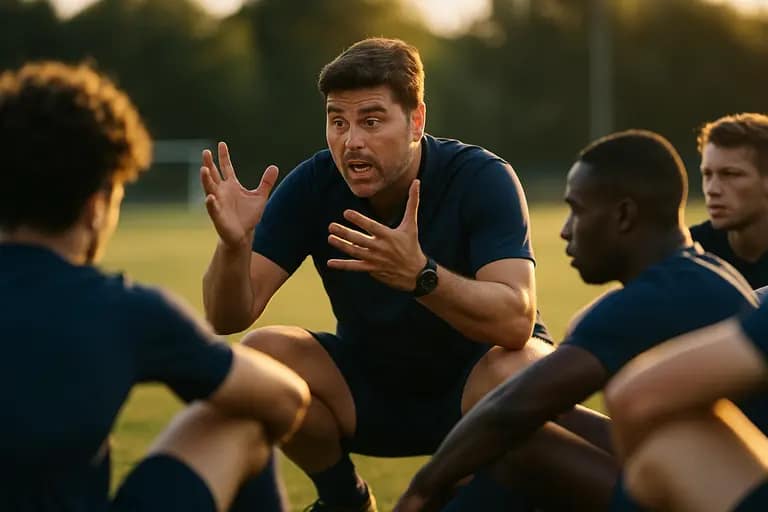
Veterans, Youth And Debut Watch
For the USMNT September Friendlies, the roster conversation centers on balance. The research notes list veteran players including Tyler Adams, Sergino Dest, Chris Richards and Antonee Robinson, along with youth, most notably Cavan Sullivan, who is 16 and set to debut. A separate player watch breaks out that theme in more detail, but the short version is clear: this window can show which younger players are being tested around established starters rather than isolated in low-stakes minutes.
Sullivan’s case will draw attention because the notes identify him as 16 during these matches and among the youngest players to appear for the senior U.S. team, with Freddy Adu as the recent historical reference point. The cautious read is to avoid turning one appearance into a projection. A debut can be valuable as exposure, but the better evaluation is how he is used: central or wide, early or late, with starters or with a rotated group.
Rotation Without Overclaiming Fitness
Player fitness and rotation are valid watch points, but the safest analysis avoids assuming injury or workload limits unless they are confirmed by official team information. In a two-match window, rotation can reflect planning rather than concern. The United States may use one set of players to start against Peru and another mix against Chile simply to test depth and partnerships.
Chris Richards’ role is one example of how to read the matches without stretching beyond the evidence. If he starts either game, the focus should be on the defensive line’s spacing, communication and ability to handle counters. If he does not start both, that alone should not be treated as a negative signal. Friendly minutes need context, especially at the start of a new cycle.
USMNT September Friendlies Match Read
What Would Count As Useful Evidence
The main value of the USMNT September Friendlies will come from repeatable patterns. Scorelines matter, but they can be distorted by substitutions, late-game fatigue and experimental lineups. The stronger indicators are whether the United States creates chances through planned movement, whether the midfield protects the back line, and whether young players look connected to the team structure.
- Against Peru: watch midfield control, fullback balance and defensive transition moments.
- Against Chile: watch rotation choices, second-half structure and whether the U.S. can improve against an opponent with a historical edge.
- Across both matches: watch how veterans and young players are paired, not only who receives minutes.
No live result is available yet because both matches remain upcoming as of September 23, 2026. The cautious read before kickoff is that these fixtures are less about declaring a finished depth chart and more about gathering early evidence for Pochettino’s next phase. Peru provides the first test in Orlando on September 26. Chile follows in St. Louis on September 29. Together, they give the United States a compact window to measure continuity, experimentation and early-cycle discipline.