
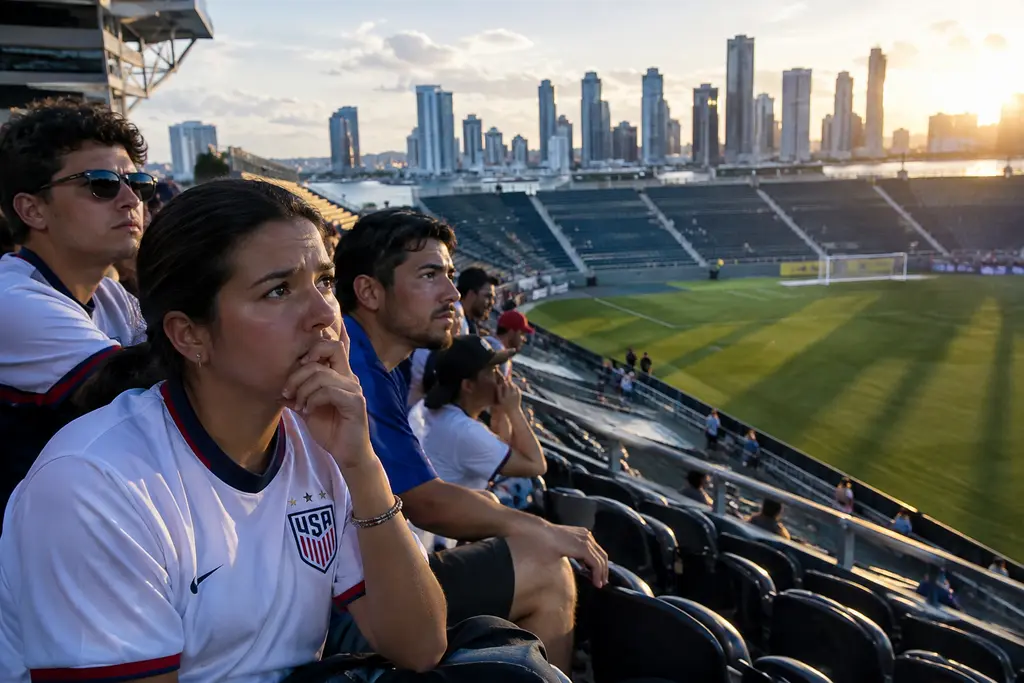

USMNT Haiti Miami is now more than a fixture label. It is a venue-policy case study inside the 2026-27 Concacaf Nations League quarterfinals, after Concacaf approved Haiti’s first leg against the United States for Nu Stadium in Miami rather than Sabina Park in Kingston, Jamaica. The decision, announced on October 22, 2026, came through an exceptional hosting arrangement requested by the Haitian Football Federation because Haiti cannot stage the match at home under current security conditions, according to Concacaf’s venue approval.
The match is scheduled for Saturday, November 14, 2026, at 4:30 pm ET at Nu Stadium in Miami. The return leg is scheduled for Sunday, November 17, 2026, at TQL Stadium in Cincinnati. That creates an unusual two-leg structure: Haiti is the nominal home team in South Florida, while the United States keeps its planned home leg in Ohio three days later.
For a neutral reader, this may look like a routine venue change. For the teams and supporters, it changes the practical meaning of home advantage. Haiti gains access to a city with a significant Haitian community. The United States reduces the travel strain that would have come with a first leg in Jamaica. Concacaf gets a compliant venue for a knockout tie that still needs to proceed within the tournament calendar.
Why The USMNT Haiti Miami Move Matters
USMNT Haiti Miami And Home-Field Signals
The USMNT Haiti Miami shift tests how home-field identity works when a federation cannot host inside its own territory. Haiti remains the home side on paper for the first leg, but the match is being played in the country of its opponent. That is not a normal home-leg condition in a two-match knockout series.
Home advantage usually rests on several connected factors: local familiarity, crowd composition, reduced travel, routines around training, and the emotional force of playing in front of supporters who identify with the host team. In this case, those factors are divided. Haiti does not get a domestic venue. The United States does not have to cross into the Caribbean between legs. Miami’s Haitian community, though, gives Haiti a more meaningful support base than a neutral site with little connection to the team.
That last point matters for fan engagement, but it should be handled carefully. A large local Haitian population does not automatically produce a pro-Haiti stadium. Ticket access, pricing, club and federation outreach, match timing, and local U.S. supporter turnout will affect the atmosphere. The supported fact is demographic: Miami-Dade County had approximately 102,508 people reporting Haitian origin in the 2024 ACS 1-year estimate, according to the U.S. Census Bureau table on Haitian origin in Miami-Dade.
What The Move Changes Competitively
The venue change reduces one major burden for the United States: moving between Jamaica and Cincinnati inside a short window. With the first leg in Miami and the second leg in Cincinnati, the travel profile is more direct than a Kingston-to-Cincinnati turnaround would have been. That does not decide the tie, but it does shape recovery, training rhythm, and staff planning between November 14 and November 17.
For Haiti, the competitive picture is less tidy. The team loses the symbolism and conditions of a true home match, but it gains a host city with a Haitian community large enough to make the first leg feel less detached than a standard neutral-site match. Nu Stadium’s listed capacity is 26,700 seats, which places the match in a controlled venue size rather than a cavernous building where atmosphere can dissipate if sales lag.
The tension is clear: the arrangement solves a staging problem without fully restoring traditional home advantage. That is why the match is important beyond the scoreline. It shows how regional soccer bodies try to preserve competitive structure when security concerns remove one federation’s ability to host.
Concacaf’s Policy Choice And Haiti’s Hosting Constraints
The Exceptional Arrangement
Concacaf’s October 22 decision did not create a blanket relocation rule for every match without review. The Haiti-specific measure allows the Haitian Football Federation to request home matches in the territory of the opposing member association, or elsewhere in the United States, rather than being limited to Caribbean alternatives. Each match still needs separate approval, agreement from the opposing member association, and a stadium that satisfies Concacaf standards.
That case-by-case structure is significant because it keeps the governing body from treating emergency venue solutions as automatic. It also gives opposing federations a formal role in the process. In this instance, the result is a Haiti home leg in Miami, followed by the United States home leg in Cincinnati as planned.
From a tournament-administration perspective, this is the most practical part of the decision. The two-leg quarterfinal format stays intact. The dates remain close together. The first-leg host identity remains attached to Haiti, even if the geography does not match the label.
Security Context And Sporting Continuity
The research record ties the relocation to the ongoing security situation in Haiti, including political instability, gang violence, and the takeover of Stade Sylvio Cator in 2024. Haiti has not been able to host home matches inside its own territory since July 2021, following the assassination of President Jovenel Moïse. Those conditions explain why the decision cannot be judged as a normal site preference.
Sporting continuity matters here. A national team without a secure home venue still has to play official matches, protect player safety, meet broadcast and competition requirements, and give supporters a path into the event where possible. The Miami placement responds to those needs, though it cannot replace the civic meaning of hosting in Port-au-Prince.
There is a cultural cost in that gap. National-team matches are not only athletic events. They are public rituals, especially for countries whose fans use football to mark identity across borders. A relocated home leg can preserve participation in a competition, but it also reminds supporters why the team is playing away from home in the first place.
Fan Culture, Diaspora Support, And Miami’s Matchday Role
Diaspora Presence Without Guaranteed Atmosphere
USMNT Haiti Miami carries a fan-culture question that is easy to overstate and too important to ignore. Miami-Dade’s Haitian community gives Haiti a visible base near the venue. That creates the conditions for a meaningful Haitian turnout, especially compared with a site that lacks a strong Haitian population.
Still, atmosphere is not a census table. Supporter turnout depends on practical details: sale windows, transport, group coordination, family scheduling, federation messaging, and how many U.S. supporters treat Miami as an accessible home-market match. The safest analytical read is that Miami improves Haiti’s chance of community presence, not that it guarantees a home-crowd advantage.
This is where popular sports culture and tournament logistics meet. For Haitian supporters in South Florida, the match offers proximity to a national-team fixture that would otherwise be inaccessible for many. For U.S. supporters, it is a competitive match on American soil that is officially listed as the opponent’s home leg. Both groups can read the same venue in different ways.
Information Flow For Supporters
Clear scheduling information matters because venue moves can confuse supporters. The first leg is Haiti vs. United States on November 14 in Miami. The second leg is United States vs. Haiti on November 17 in Cincinnati. The order, host designation, and venue identities are the key points for anyone tracking travel or match coverage.
For readers comparing related match information, our separate verified quarterfinal update tracks the tie structure and confirmed match context. Network readers who follow broader sports listings can also find related site references through a related site in the same network.
The fan-engagement lesson is simple: venue relocation changes more than a map pin. It changes who can attend, which communities feel represented, how supporters organize, and how “home” is understood in a tournament that depends on national identity.
Travel, Recovery, And The Two-Leg Rhythm

Why Three Days Between Legs Matters
The November 14 to November 17 gap leaves little room for logistical friction. Teams must move, recover, train, manage media obligations, and prepare tactical changes from the first leg. A Miami-to-Cincinnati sequence is not effortless, but it is simpler for the United States than moving from Kingston to Cincinnati after a first leg in Jamaica.
That matters most in the details. Staff can plan post-match recovery sooner. Equipment movement becomes less complicated. Players avoid an international transit leg between matches. Coaches can spend more of the short turnaround on review and preparation rather than travel management.
For Haiti, the same schedule still includes a second-leg trip to Cincinnati. The difference is that the first leg in Miami may reduce some practical burdens compared with staging the match elsewhere in the Caribbean. The team’s bigger issue remains competitive: it must build a home-leg performance in a venue that is supportive only if the local crowd makes it so.
Roster And Match Planning Effects
No responsible analysis should turn a venue move into a prediction about lineups or results without confirmed roster information. The clearer point is that travel conditions shape planning. Coaches weigh recovery, substitutions, pressing intensity, and risk tolerance differently in two-leg ties because the aggregate score carries from one match to the next.
A first leg in Miami may affect how both staffs manage the opening match’s tempo. The United States gets a more familiar domestic environment, even as it is formally the away team. Haiti gets a diaspora-adjacent site, even without territorial home advantage. That split makes the first leg tactically interesting, but the evidence does not support firm claims about how either team will play.
What USMNT Haiti Miami Reveals About Venue Policy
USMNT Haiti Miami is best understood as a compromise between competitive order, safety, and fan access. Concacaf kept the quarterfinal structure, Haiti retained nominal home status for the first leg, and Miami provided a venue with both logistical utility and a Haitian community presence. None of that makes the arrangement identical to a match in Haiti.
The decision also shows why venue policy is now part of match analysis. Where a match is played can affect travel burden, crowd composition, training rhythm, and the public meaning of the fixture. In this case, the move gives the United States a less demanding route between legs while giving Haiti a realistic chance to draw support from South Florida’s Haitian community.
The fair reading is cautious. The relocation did not hand either side a guaranteed advantage. It altered the conditions around the tie. Haiti’s “home” leg became a diaspora-linked event in Miami. The United States received a shorter domestic travel pattern before Cincinnati. Concacaf preserved the competition calendar under an approved exceptional arrangement. That is the real significance of the venue shift before the ball is played on November 14, 2026.