
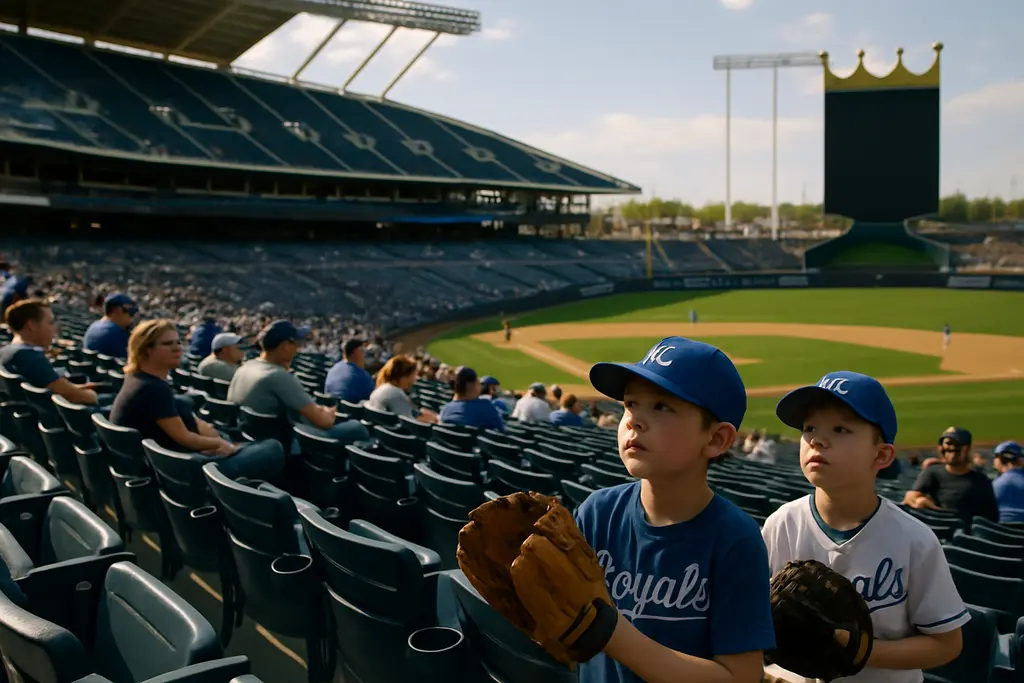

Royals Stadium Funding moved from concept to policy framework on August 20, 2026, when the Kansas City Council approved a financing structure for a new Royals ballpark in the Crown Center/Washington Square Park area. The vote placed the city inside a larger stadium and district plan whose economics depend on attendance, event use, lease length, private investment, and whether stadium-linked revenues perform as planned.
The project is not only a baseball venue decision. It is a sports-business test for how a mid-market MLB city prices public participation in a downtown stadium project. The city committed $600 million toward a $1.9 billion stadium project, with $90 million designated for city infrastructure costs and $510 million expected to be raised through city-supported bonds, according to the official Kansas City Council announcement. That split matters because infrastructure spending and bond repayment risk do not affect the public balance sheet in the same way.
Why Royals Stadium Funding Carries Public Risk
Royals Stadium Funding And Bond Exposure
The central economic question is not whether Kansas City receives a new venue. The harder question is how much exposure the city accepts if revenue projections miss their targets. The research record states that the city’s $600 million contribution is structured through bond financing backed by stadium-generated revenues rather than the city’s general fund. That design lowers the direct claim on normal municipal operations, but it does not erase repayment risk.
The cited risk is specific: the stadium district needs to generate enough tax increment financing revenue to cover debt service. If that revenue falls short, other city funds may be tapped to repay the bonds. That is the pressure point for taxpayers. A financing model can be built around stadium-related income, but the model still depends on the performance of a new district, event calendar, and surrounding development.
For a sports market, that makes the project different from a simple team relocation or stadium renovation. Kansas City is being asked to treat the ballpark as an anchor for wider district activity. If that activity grows as projected, the city may capture enough revenue to justify the structure. If it underperforms, the public side carries more practical risk than the phrase “stadium-generated revenues” may suggest.
Infrastructure Versus Team-Controlled Value
The $90 million infrastructure portion is easier to understand as public spending because streets, utilities, transit access, and surrounding public works can serve more than the baseball club. The $510 million bond-backed portion is more sensitive because repayment is tied to the success of stadium-linked economic activity. That distinction should guide how fans and residents read the deal.
A ballpark can create high-visibility event days, but MLB home dates are finite. The Royals would need strong attendance, credible non-baseball programming, and district spending to support the broader economics. Kansas City’s agreement also gives the city 5% of net profits from all non-baseball events at the new stadium. That provision gives the public side a direct upside channel, though its value depends on how many events the venue hosts and how profitable those events are.
The Stadium District And Private Investment Mix
A Downtown Baseball District With Hallmark
The stadium sits inside a larger public-private district concept. The Royals and Hallmark Cards unveiled a plan to bring baseball downtown as part of a development described by MLB.com as a $3 billion district, with the ballpark at its core and Hallmark as a project partner through the official Royals and Hallmark plan. That framing is central to the economics: the stadium is not being judged only as a place to play 81 home games, but as an anchor for surrounding development.
The research record states that the remaining funding sources include about $540 million from the State of Missouri and other public sources, plus $911 million from the Royals, Hallmark, and other private investment. It also states that taxpayers would be responsible for about 56% of the total $2.05 billion stadium-plus-development cost. That public share is high enough to require careful scrutiny, even with private capital attached.
For a related discussion of the city commitment, infrastructure obligations, lease terms, and a 2030 target, see our Kansas City infrastructure analysis. Stadium economics rarely turn on one number; the practical outcome usually depends on which party controls revenue streams, which public costs are fixed, and which projections need to be met year after year.
Why The 2030 Target Matters Economically
The project aims for an Opening Day in 2030, while demolition work on the current facility was planned to begin in 2027. The Royals’ lease at Kauffman Stadium runs through the 2030 season, according to the research record. That timing creates a planning challenge because construction, demolition, lease alignment, and operating transition all need to fit within the same economic timetable.
From a roster and fan-experience standpoint, a new stadium can change revenue potential through premium seating, sponsorship inventory, concessions, and event hosting. The research provided here does not include those line-item projections, so any evaluation should stay within the documented funding structure. The supported point is narrower: Kansas City’s model requires a downtown district to carry part of the repayment logic, not merely a new playing surface for the club.
Attendance Assumptions And Event Revenue
The 26,000-Fan Benchmark
The research notes state that Kansas City projected the new stadium would draw an average of nearly 26,000 fans per game, based on a revenue and impact study released in early October 2026. That figure is a key operating assumption because baseball economics rely on repeated attendance over a long home schedule. A few marquee weekends cannot support a 30-year stadium framework on their own.
For analysis, the nearly 26,000-fan figure should be treated as a benchmark rather than a guarantee. Attendance depends on team performance, ticket pricing, location access, weather, opponent draw, downtown habits, and the quality of the game-day district. The research does not provide sensitivity ranges, so it is not possible to say from the supplied facts how the model performs if average attendance lands materially below that level.
This is where Royals Stadium Funding becomes a baseball operations issue as well as a civic finance issue. A competitive roster can improve demand, but public repayment structures should not assume ideal on-field conditions over three decades. Baseball cycles move through contention, retooling, injuries, player development gaps, and payroll decisions. A stable financing model needs resilience across those cycles.
Non-Baseball Events As A Secondary Test
The city’s 5% share of net profits from non-baseball events creates a secondary revenue test. Concerts, neutral-site sports, community events, and other uses can help justify a year-round stadium district. Still, the research only confirms the city’s profit-share provision; it does not provide a confirmed event calendar, annual event count, or profit forecast.
That limitation matters. Non-baseball event income can be valuable, but it is often less predictable than scheduled MLB inventory. The agreement gives Kansas City a defined participation point, yet the economic impact will depend on actual bookings and cost structure. A cautious assessment should separate the existence of the clause from the size of the future return.
Community Benefits And Lease Structure

The 30-Year Lease Commitment
The stadium agreement includes a 30-year lease between the Royals and the city, with options for five additional two-year periods that could extend the commitment to 40 years. For Kansas City, that length matters because public stadium funding is easier to defend when the team’s location commitment matches the repayment and development horizon.
A 30-year lease does not remove economic risk, but it helps align the team’s presence with the public financing period. The city is not funding a short-term venue arrangement. It is tying public participation to a long stadium cycle, which gives the project more time to generate district activity, but also extends the period during which projections must hold up.
Community Payments As Part Of The Deal
The Royals committed to a Community Impact Partnership Agreement requiring at least $55 million in community benefits over the stadium lease term, according to the research record. The agreement includes $24 million up front, with allocations listed in the research as $5 million for homelessness services, $5 million for the Negro Leagues Baseball Museum, and $14 million for the arts. The remaining amount is to be paid annually at a minimum of $1.03 million, escalated by CPI.
Those commitments are relevant because stadium deals are often judged not only by construction cost, but by the distribution of benefits beyond the team and developer. The community package gives Kansas City defined obligations to measure. It should still be viewed separately from bond repayment. Community payments can improve public value, but they do not by themselves answer whether the financing model produces enough revenue to service debt safely.
Sports infrastructure coverage also overlaps with design, construction, and site-planning questions; a related network resource, CAD/CAM Net, offers insights into these project workflows from a technical perspective. For Kansas City, the sports-side issue remains the same: the stadium’s economics will be judged by public exposure, lease security, and actual district performance.
Royals Stadium Funding As Kansas City’s Sports Test
Royals Stadium Funding now gives Kansas City a defined model to evaluate: a $600 million city commitment, a larger public-private district, a 30-year lease with extension options, a community benefits package, and a revenue structure that depends on stadium-linked performance. The public case rests on whether the ballpark can help generate enough activity to support the debt framework without shifting pressure onto other city funds.
The cautious reading is that Kansas City secured several protections and upside channels, including the lease term, the community agreement, infrastructure designation, and a share of non-baseball event profits. The risk is that those protections still depend on execution. Attendance has to be strong enough, the district has to produce tax revenue, and non-baseball use has to carry real value.
Royals Stadium Funding should therefore be assessed less as a single stadium vote and more as a long-term sports-business contract between a city, an MLB club, and private development partners. The framework approved on August 20, 2026, answered how Kansas City intends to participate. The economic results will be measured by whether the district delivers the revenues that the financing model requires.