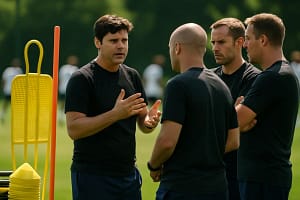
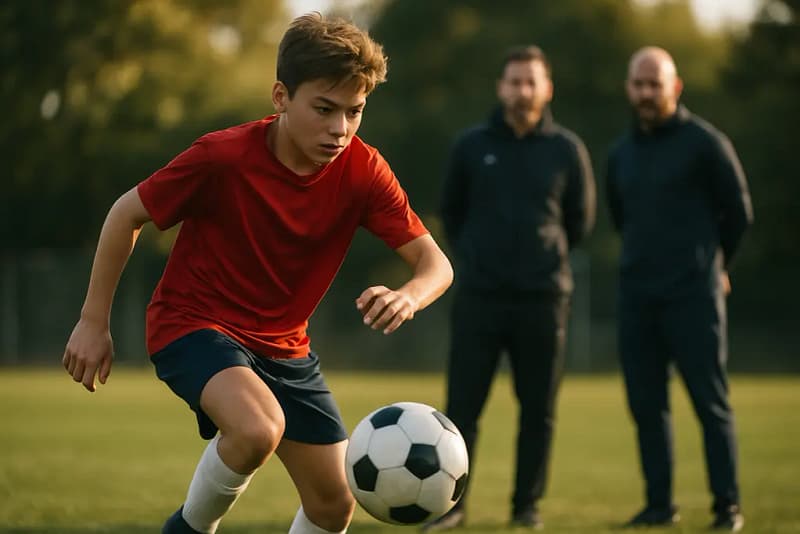

The USMNT youth strategy before the November friendly matches can only be judged through the confirmed evidence available as of September 28, 2026. That evidence centers on Mauricio Pochettino’s September-October fall camp, not on verified November opponents, dates, or venues. The useful question, then, is not whether a specific November lineup is already clear. It is whether the fall roster choices have created a meaningful framework for evaluating young players before the next international window.
Pochettino’s 28-player fall squad included 13 uncapped players, with U.S. Soccer presenting the group as part of a camp built around fresh evaluation and youth inclusion through its uncapped players briefing. That is a large integration move by senior-team standards. It does not guarantee that the teenagers and early-20s players will become regulars, but it gives the staff a structured way to compare potential with the habits required at senior level.
What USMNT youth strategy Signals Before November
Why USMNT youth strategy Starts With Camp Scale
The clearest signal is volume. Calling in 13 uncapped players in a 28-man squad changes the purpose of a camp. It makes evaluation part of the main event rather than a side project. The reported average age of the September-October roster, 22 years and nine months, also matters because it marked a sharp move away from the older World Cup 2026 group described in the research record.
That scale brings benefits and limits. The benefit is direct exposure: young players hear senior-team tactical language, train with established internationals, and learn how staff members judge daily standards. The limit is that a crowded evaluation pool can reduce individual clarity. A teenager who plays 20 minutes in one match and trains well for a week may still leave the staff with more questions than answers.
This is why the USMNT youth strategy should be read as a sorting process, not a coronation. Youth national-team experience helps, and the research notes indicate that several uncapped players have prior U-20 or U-17 World Cup backgrounds. Senior international football still asks different questions: speed of decision-making, duel management, tactical restraint, and emotional control when the match stops being friendly in tone.
The Veteran Frame Around The Teenagers
A youth-heavy camp still needs anchors. Tyler Adams and Antonee Robinson, each listed in the research notes with 58 caps, offered that reference point. Their presence matters less as a public symbol than as a daily comparison. Young players can see what the staff accepts from senior professionals in recovery work, training tempo, communication, and match preparation.
The omissions also shaped the evaluation environment. Christian Pulisic was left out of the fall roster, while Weston McKennie and Folarin Balogun also missed the group, with The Guardian reporting McKennie’s injury and Balogun’s lack of club minutes as part of the selection context in its roster analysis. Those absences opened space, but they also removed some of the normal senior reference points in attack and midfield.
For fan engagement, that changes the emotional reading of friendlies. Supporters often want immediate answers from young prospects. A staff has to be more patient. If a player looks promising but uneven, that may still be useful information. If a player looks physically ready but tactically loose, that may explain why another camp is needed before a larger role is realistic.
Player Development Versus Match Readiness
Cavan Sullivan As The Main Stress Test
Cavan Sullivan is the standout case because his profile is both young and productive. The research record credits the 16-year-old with seven goals and a team-leading 12 assists, including secondary assists, through 24 league matches. It also notes that he became the youngest MLS player to record goal contributions in seven consecutive games.
Those numbers justify attention, but they do not settle the senior-team question. A player can be ahead of his age group and still need protection in senior international environments. The staff’s task is to separate three things that can look similar from the outside: talent, readiness, and role fit. Talent gets a player into camp. Readiness determines whether he can handle the pace and contact. Role fit decides whether he helps the team structure or merely adds excitement.
The USMNT youth strategy around Sullivan should therefore be measured by usage, not only by selection. Does he receive minutes against tired legs, a start with defined pressing duties, or a central role that asks him to manage tempo? Each choice would tell a different story about trust.
Why Omissions Raised The Stakes
Leaving out a longtime face of the team like Pulisic made the fall camp easier to read as a reset. It also raised the standard for interpretation. If senior attackers are absent, young players may get more touches, but those touches come in a team that may lack its usual attacking reference. A bright action in that setting should be noticed, but it should not be treated as proof of a settled place.
Balogun’s absence for lack of club minutes, as reported in the roster context, also sends a development message. Pochettino’s staff appears to be treating match rhythm and role clarity as relevant selection factors. That can be healthy if applied consistently. It tells young players that reputation is not enough and tells veterans that a past role does not remove present evaluation.
There is a cultural layer here, too. Pochettino’s approach, as reflected in the research notes, places weight on mindset, humility, and professionalism. For teenagers and early-20s players, that matters because national-team promotion can create public momentum before the player has built a full senior résumé. A cautious staff should welcome energy without letting hype set the pace.
How Fans Should Read November Friendlies
No Confirmed November Detail In This Record
The November matches named in the topic are not supported here by confirmed opponents, venues, or kickoff dates. That limits any tactical preview. It would be unsound to project opponent-specific lineups or match plans without that schedule evidence. What can be evaluated is the process Pochettino has already put in motion through the September-October camp.
For readers tracking the senior-team pool, the key is to watch for repeatable signs rather than isolated highlights. A single dribble, pass, or recovery run can excite a crowd. Coaches tend to value whether the player repeats the correct behavior under pressure. That distinction often separates a popular prospect from a trusted international option.
- Role clarity: whether a young player understands where he fits without slowing team shape.
- Physical response: whether he handles duels, second balls, and recovery runs at senior pace.
- Decision speed: whether he moves the ball early enough against organized pressure.
- Game state control: whether he can protect a lead, chase a goal, or manage a tense spell without forcing plays.
This is also where cross-sport roster thinking can help. Development is not only about who has the highest ceiling; it’s about who can carry a defined role in a team setting. Our related network site NBA Playbook explores evaluation strategies for young players that similarly emphasize understanding roles and earning trust, applicable here even though the sport-specific demands differ.
For a deeper roster companion on this same national-team cycle, the broader USMNT roster analysis gives useful context on how experience and youth were balanced in the fall squad.
USMNT youth strategy Before November Friendlies
What USMNT youth strategy Still Cannot Answer
The biggest unanswered question is selection continuity. A youth-heavy camp can introduce players, but integration requires second and third looks. If the November window includes another large youth group, that would suggest a sustained evaluation phase. If the staff shifts back toward more established names, September-October may read more like a controlled audition.
The second question is positional need. The research record identifies prominent young attackers and wide players, but a national-team reset cannot be built only around exciting ball carriers. The United States also needs clarity in midfield balance, defensive cover, striker usage, and how fullbacks support possession. Youth integration works best when it fills tactical needs rather than simply rewarding prospect status.
The third question is fan expectation. The American audience has become more familiar with academy prospects, MLS teenagers, and dual-path development stories. That makes camps like this more engaging, but it can also shorten patience. A 16-year-old call-up should not be judged by the same standard as a 58-cap senior player. At the same time, senior-team minutes are earned, not gifted.
The cautious read is that Pochettino has made a real evaluation move without providing enough evidence yet to call it a settled generational shift. The USMNT youth strategy has a logical foundation: broaden the pool, test high-upside players, keep a few senior anchors, and link present friendlies to longer-term tournament planning. Its success before the November friendlies will depend on whether the staff turns exposure into clear roles, and whether the young players show that their promise can survive the demands of senior international football.